

Introduction
Aquaculture is the fastest-growing sector of animal food production and plays a critical role in global food security by supplying high-quality animal protein to the rapidly growing global population (Little et al., 2016). Since 2015, more than half of the world’s edible seafood has been produced through aquaculture, and this proportion is expected to increase further as the global population approaches 9 billion by 2050 (Mekouar, 2024). However, the continued expansion of aquaculture is strongly constrained by its reliance on fishmeal (FM), a finite marine resource derived largely from wild-caught forage fish. Although FM is highly valued for its balanced amino acid profile, high digestibility, and palatability, its global supply has stagnated while demand continues to rise, leading to price volatility, environmental concerns, and competition with direct human consumption (Tacon & Metian, 2008). Notably, FM production still depends heavily on industrial reduction fisheries, which account for approximately one-quarter of global fish landings, thereby raising long-term sustainability concerns (Barkin & DeSombre, 2013; Mekouar, 2024). Collectively, these challenges have intensified global efforts to identify alternative protein sources that can partially or fully replace FM without compromising animal performance, health, or product quality (Kim et al., 2019).
To address this challenge, extensive research has investigated a range of alternative protein sources for aquafeeds, including plant-based ingredients such as soybean and corn meals (Hussain et al., 2024), animal by-products such as feather meal, blood meal, and poultry by-product meal (Yu, 2023), and, more recently, insect-derived products (Devic, 2016). Among these alternatives, insect meals have drawn increasing attention due to their high feed conversion efficiency, limited land and water requirements, and capacity to upcycle organic waste streams into nutrient-dense biomass. Importantly, insects constitute a natural dietary component for many fish species, particularly salmonids, further supporting their suitability as sustainable aquafeed ingredients (Baldi et al., 2022).
Within this context, black soldier fly (Hermetia illucens) larvae meal (BSFLM) has emerged as one of the most promising candidates for large-scale aquafeed production. The BSFLM is characterized by a high crude protein content (approximately 30%–58% on a dry-weight basis), a favorable essential amino acid profile comparable to that of fishmeal (FM), and relatively high digestibility in feeding trials (English et al., 2021). In contrast to many plant-based protein sources, which are often deficient in methionine, lysine, or arginine, BSFLM provides a more balanced amino acid profile, potentially reducing the need for extensive amino acid supplementation (Lu et al., 2022). In addition, the nutritional composition of BSFLM can be modulated through larval rearing substrates, allowing flexibility in lipid content and fatty acid profiles. From a sustainability perspective, BSFL production aligns strongly with circular bioeconomy principles by converting low-value organic by-products into high-value feed ingredients, thereby reducing the environmental burdens associated with waste disposal and marine resource exploitation (Franco et al., 2025).
Over the past decade, a rapidly expanding study of in vivo feeding trials has evaluated BSFLM as a partial or complete replacement for FM across a wide range of aquaculture species, including freshwater and marine finfish (Cummins Jr. et al., 2017; Rawski et al., 2020). Collectively, these studies have reported variable outcomes depending on species, life stage, inclusion level, BSFLM processing method (e.g., full-fat vs. defatted), and overall diet formulation strategy. In many cases, moderate inclusion levels of BSFLM have supported growth performance and feed efficiency comparable to those of FM-based diets, while some studies have also reported enhanced immune or antioxidant responses (Belghit et al., 2019; Paredes et al., 2025). Conversely, excessive inclusion levels have occasionally resulted in reduced growth, altered lipid deposition, or changes in product quality, underscoring the importance of species-specific tolerance thresholds and appropriate formulation adjustments (Rawski et al., 2020).
Several studies have proposed mechanistic explanations for the effects mediated by BSFLM, including the roles of chitin, antimicrobial peptides, and medium-chain fatty acids such as lauric acid, which may influence immune function, gut microbiota composition, and antioxidant capacity (Wang et al., 2025; Xie et al., 2024). The reported responses include alterations in immune-related gene expression, antioxidant enzyme activities, and biomarkers such as superoxide dismutase, catalase, glutathione peroxidase, lysozyme, and inflammatory cytokines (Abd El-Gawad et al., 2025; Abdel-Latif et al., 2021). However, these mechanistic interpretations remain difficult to generalize due to substantial heterogeneity in experimental design, outcome selection, biomarker reporting, and trial duration. Moreover, long-term feeding trials, assessments of reproductive performance, and evaluations of sensory or market-relevant product quality remain underrepresented in the current literature.
Despite the substantial number of primary research, existing reviews of BSFLM in aquaculture are largely narrative in nature or focus narrowly on growth performance within limited taxonomic groups, such as salmonids (English et al., 2021). To date, no systematic review has comprehensively synthesized evidence across the major biological domains that determine the practical feasibility of FM replacement, including nutritional adequacy, growth and feed utilization, immune and physiological responses, and product or fillet quality. Furthermore, methodological heterogeneity among studies such as inconsistent reporting of BSFLM composition and immune biomarkers complicates cross-study comparisons and weakens the development of evidence-based recommendations for commercial aquafeed formulation.
Therefore, a structured and transparent synthesis of the available evidence is required to clarify the biological performance of BSFLM across aquaculture species, identify species and system-specific inclusion thresholds, and highlight critical research gaps. To address these needs, this manuscript presents a PRISMA-guided systematic review evaluating BSFLM as a sustainable alternative to fishmeal in aquaculture. Specifically, this review aims to synthesize evidence on the effects of BSFLM on (i) growth performance and feed utilization, (ii) immune and physiological responses, (iii) product and fillet quality, and (iv) key factors determining optimal inclusion levels across aquatic species. By integrating biological outcomes with sustainability considerations, this review seeks to provide robust, industry-relevant guidance for aquafeed formulation and to inform future research directions in sustainable aquaculture nutrition.
Materials and Methods
This study was conducted as a systematic review to synthesize evidence on the use of BSFLM as a dietary ingredient and fishmeal replacement in aquaculture feeds. This systematic review was conducted and reported in accordance with the PRISMA 2020 guidelines. The review protocol was not prospectively registered (e.g., PROSPERO or other registries), as this study was initiated prior to formal registration. However, the review question, eligibility criteria, search strategy, and outcome domains were predefined before study selection and were applied consistently throughout the review process to minimize selection bias and post hoc decision-making.
The study screening was performed in two stages: (i) title and abstract screening and (ii) full-text assessment. The studies were included if they met all of the following criteria:
-
Conducted as in vivo feeding trials in fish (freshwater and marine);
-
Evaluated BSFLM (full-fat, defatted, or partially defatted) as a dietary ingredient and/or FM replacement;
-
Reported at least one extractable biological outcome measured in fish following dietary BSFLM inclusion, related to growth performance, feed utilization, health or physiology, immune or antioxidant responses, gut morphology or microbiota, product or fillet quality, or disease challenge;
-
Published as full-text, peer-reviewed articles in English.
The studies were excluded if they were review articles, in vitro experiments, non-aquatic animal studies, or lacked extractable outcome data. Eligible outcomes included growth performance indices (e.g., weight gain, specific growth rate, and feed conversion ratio), feed utilization metrics, health or physiological indices (e.g., hematology or serum biochemistry), immune or antioxidant responses, gut morphology or microbiota, product or fillet quality, and disease-challenge outcomes. A total of 39 articles met the inclusion criteria and were included in the final database. Twenty articles (15 at title/abstract + 5 at full-text) were excluded, primarily because (i) no variables of interest were reported, (ii) the study did not involve an in vivo feeding trial, or (iii) the full text was not available.
A systematic literature search was conducted to identify peer-reviewed in vivo aquaculture feeding trials evaluating BSFLM as a dietary ingredient and/or a replacement for fishmeal (FM). No restrictions were applied to publication year, and eligibility was limited to full-text articles published in English. Searches were conducted in Web of Science, Scopus, PubMed, and Google Scholar, with the final search completed on 15 November 2025. Reference lists of eligible articles were manually screened to identify additional eligible studies.
The search strategy combined terms related to (i) the BSFLM ingredient, (ii) aquafeed use or fishmeal replacement, and (iii) biological outcomes. The primary search string applied in Web of Science and Scopus was as follows: (“Hermetia illucens” OR “black soldier fly” OR “BSF larvae” OR “BSFL”) AND (“aquafeed” OR “fish feed” OR “fishmeal replacement”) AND (“growth” OR “feed utilization” OR “immunity” OR “antioxidant” OR “health” OR “fillet quality” OR “product quality”).
Equivalent syntax modifications were applied for searches conducted in PubMed and Google Scholar. To minimize the risk of missing relevant studies, the reference lists of included articles and relevant review papers were manually screened to identify additional eligible studies not identified through database searches. All retrieved records were exported to reference management software (Mendeley) for consolidation and duplicate removal prior to screening. Titles and abstracts were screened initially, followed by full-text assessment to determine final eligibility. The studies were included if they reported at least one relevant biological outcome related to growth performance, feed utilization, health status, immune response, antioxidant capacity, or product quality. Review articles, conference abstracts, in vitro studies, and non-feeding trials were excluded. The study selection process was conducted in accordance with the PRISMA guidelines.
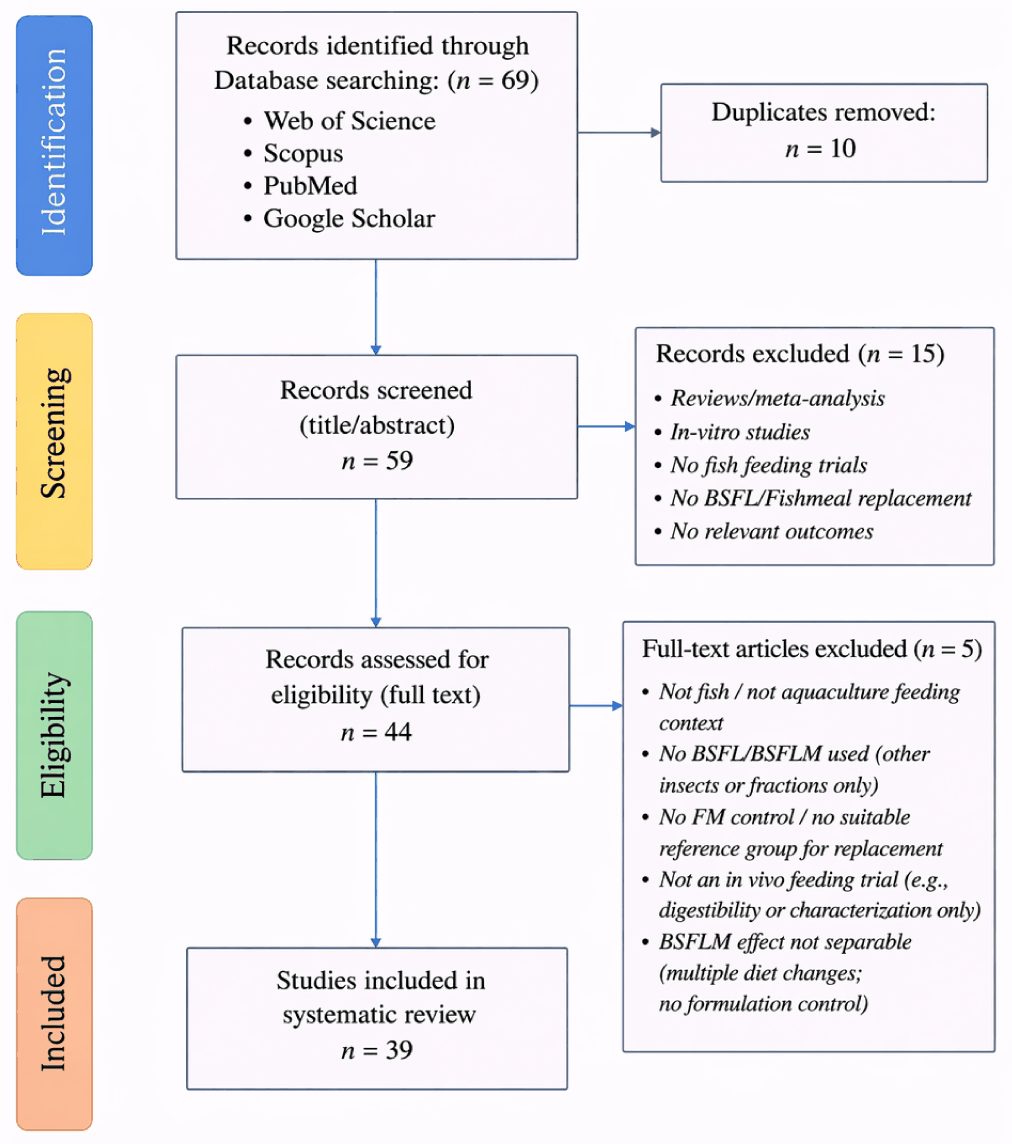
The study selection followed a two-stage screening approach: (i) title and abstract screening and (ii) full-text eligibility assessment, based on predefined inclusion and exclusion criteria (section study selection and eligibility criteria). Two reviewers independently screened titles/abstracts and subsequently assessed full texts for eligibility. Disagreements were resolved through discussion, and a third reviewer adjudicated when consensus could not be reached. Reasons for exclusion were recorded at the full-text stage. A total of 69 records were identified across all sources, of which 59 unique records remained after automated and manual de-duplication using Mendeley. Title/abstract screening excluded 15 records as clearly ineligible, and 44 records advanced to full-text assessment. Full texts were evaluated for eligibility, leading to the exclusion of 5 articles due to the absence of an in vivo feeding trial, failure to evaluate BSFLM as a dietary ingredient or fishmeal replacement, lack of extractable outcomes relevant to this review, or unavailability of the full text. Ultimately, 39 studies met all eligibility criteria and were included in the qualitative synthesis. Data were extracted using a predefined framework capturing species, diet formulation, BSFLM form and inclusion level, trial duration, and reported biological outcomes. The complete study selection process is illustrated in the PRISMA flow diagram (Fig. 1).
The methodological quality of included studies was evaluated using a customized risk-of-bias framework tailored to aquaculture feeding trials (Table 1). Each study was assessed across eight domains, including randomization, replication, clarity of diet formulation, BSFLM characterization, outcome measurement, selective reporting, statistical analysis, and disclosure of conflicts of interest. For each domain, studies were classified as low, unclear, or high risk of bias according to predefined criteria. A study was considered low risk when the relevant methodological feature was explicitly described and appraised appropriate, unclear risk when reporting was insufficient to permit judgment, and high risk when the method was inappropriate, absent, or likely to introduce bias. Two reviewers independently assessed risk of bias for all included studies using the prespecified tool. Discrepancies were resolved through discussion, and a third reviewer resolved disagreements when consensus could not be reached. To ensure consistency, the reviewers’ pilot-tested the assessment tool on a subset of studies before full evaluation. Overall study risk was categorized as low when at least six domains were rated as low risk, moderate when three to five domains were rated as low risk, and high when two or fewer domains were rated as low risk. The risk-of-bias assessments were used qualitatively to contextualize the strength of evidence rather than to exclude studies.
The extracted data were synthesized primarily using structured evidence tables and narrative synthesis. Outcomes were first organized into predefined domains: (i) growth performance and feed utilization, (ii) health/physiology, including hematology, serum biochemistry, gut and liver histology, and digestive indices, (iii) immune and antioxidant responses, and (iv) product or fillet quality. For each study, both dietary BSFLM inclusion level (% or g kg−1 diet) and fishmeal replacement level (% FM or FM-protein replacement) were extracted and recorded as originally reported, as the nutritional equivalence of these metrics was not consistent across studies. When studies reported comparable growth and feed-utilization endpoints, results were harmonized by using the authors’ reported definitions and units, such as final body weight (FBW), weight gain (WG) or weight gain rate (WGR), specific growth rate (SGR), feed intake (FI), feed conversion ratio (FCR), protein efficiency ratio (PER), survival rate (SR), and apparent digestibility coefficients (ADC). Immune, antioxidant, physiological, and product-quality outcomes were not numerically pooled because biomarker selection, tissues sampled, analytical methods, and reporting formats varied substantially among studies.
The narrative synthesis was conducted within predefined groupings based on taxonomic category (freshwater vs. marine finfish), BSFLM processing form (full-fat, defatted, or partially defatted where available), and outcome domain. Within each grouping, findings were compared across graded inclusion or replacement levels. The direction of effect was judged relative to the study-specific control diet as improvement, no clear change, or impairment, based on the authors’ statistical comparisons and biological interpretation. For summary tables using direction symbols, effects were assigned relative to the study-specific control diet as follows: ↑, significant increase; ↓, significant decrease; ↔, no significant difference; and ↑↑, marked or significantly greater increase. Effect directions were assigned from extracted study results rather than from author conclusions alone and were based on the statistical comparisons reported in the original studies, typically at p < 0.05. The consistency was evaluated qualitatively according to whether similar effect directions were repeatedly observed across studies within the same species group, BSFLM form, and outcome domain, with particular attention to whether responses were maintained at low-to-moderate inclusion levels and became adverse only at higher replacement levels. Where endpoint responses within a study were mixed, this was stated explicitly rather than simplified into a single overall favorable or unfavorable effect. Because of substantial methodological and biological heterogeneity across studies, including differences in species, life stage, rearing system, diet formulation strategy, BSFLM composition and processing, and endpoint selection, no meta-analysis was performed. Accordingly, no effect-size pooling, subgroup meta-analysis, sensitivity meta-analysis, or publication-bias assessment was undertaken. Only studies meeting the predefined eligibility criteria were included in the formal synthesis and data extraction, whereas additional references were cited only to provide background context or mechanistic interpretation.
Results
The systematic literature search identified 69 records across all databases. After removal of duplicates and exclusion of records that did not meet the predefined inclusion criteria, 39 studies were included in the qualitative synthesis. The study selection process was conducted in accordance with the PRISMA 2020 guidelines and is illustrated in the PRISMA flow diagram (Fig. 1). At the full-text stage, studies were most commonly excluded because they did not report extractable fish-level biological outcomes within the predefined review domains, did not involve an in vivo feeding trial, or did not evaluate BSFLM as a dietary ingredient or fishmeal replacement.
The 39 included studies comprised in vivo feeding trials conducted across a broad range of aquaculture species, including both freshwater and marine finfish. Overall, the evidence base encompassed diverse aquaculture systems, with a greater number of studies conducted in freshwater species, while marine species were also consistently represented across multiple experimental designs. Most studies focused on juvenile life stages, with relatively few trials extending into later grow-out phases.
The experimental durations ranged from short-term trials (4–6 weeks) to longer feeding experiments exceeding 10–12 weeks, depending on species and study objectives (Henry et al., 2015). The BSFLM was incorporated in either full-fat or defatted forms, with dietary inclusion levels ranging from low (< 10%) to high (> 30%–50%) (Belghit et al., 2019; Lock et al., 2016). The fishmeal replacement strategies varied considerably among studies. Some trials applied percentage-based replacement without complete nutritional rebalancing, whereas others employed iso-nitrogenous and iso-lipidic formulations to maintain comparable nutrient composition across treatments (Henry et al., 2015).
In line with PRISMA requirements to describe how evidence was grouped for synthesis, sustainability-oriented studies informing the rationale for BSF larvae bioconversion were organized into an evidence map spanning eight recurring categories: global drivers, waste-stream scale, policy context, insects as a sustainable feed pathway, substrate-dependent performance and environmental footprint, comparative decomposition efficiency, emissions and life cycle assessment (LCA) metrics, and contaminant mitigation. Global driver studies framed the urgency of alternative protein pathways by projecting substantially increased environmental burdens associated with food and feed demand by 2050 and identifying livestock production as a major contributor to agricultural emissions, with mechanistic links to land degradation, habitat loss, and greenhouse gas impacts (Thornton et al., 2024). The studies addressing waste streams and policy context characterized the magnitude of organic wastes generated by food-service systems and emphasized European policy directions toward the prevention and valorization of organic wastes under the EU Waste Framework Directive, thereby providing a regulatory foundation for circular waste-to-protein strategies. Several studies further identified substrate type as a key moderator of system performance, reporting that BSF bio-transformation emissions and larval productivity vary with substrate availability and diversity, and that larval growth, conversion efficiency, and nutrient composition respond directly to bio-waste type. The comparative waste-processing evidence demonstrated rapid waste reduction by larvae relative to conventional aerobic decomposition processes (approximately one week vs. ~45 days), accompanied by lower CO2 emissions and substantial conversion of feed biomass into protein, lipid, and chitin-rich larval biomass (Mertenat et al., 2019). The emissions-focused studies further reported low CH₄ and N2O outputs when larvae were reared on selected food wastes, as well as comparatively lower environmental impacts than conventional protein sources, such as soybean meal and fishmeal, particularly when BSF were reared on manure or food waste substrates, alongside quantitative LCA-type indicators for municipal waste systems. Finally, residue-mitigation studies documented significant degradation of tetracycline and insecticide residues during larval rearing on contaminated manure, suggesting potential public health and environmental co-benefits beyond waste reduction alone. The PRISMA-aligned evidence map summarizing these findings is presented in Table 2.
The BSFLM is increasingly recognized not only as a sustainable replacement for fishmeal, but also as a functional feed ingredient with the potential to enhance innate and mucosal immunity in fish (Hender et al., 2021). This functional potential is primarily attributed to the presence of bioactive components in BSFLM, including chitin and chitosan-like fractions, antimicrobial peptides, and relatively high levels of lauric acid (C12:0), which can interact with the gut microbiota and host immune system (Hender et al., 2021; Linh et al., 2024). These compounds have frequently been associated with improved intestinal barrier function, modulation of microbial communities, and stimulation of non-specific immune defenses, such as lysozyme activity, respiratory burst, and phagocytosis (Weththasinghe et al., 2021b).
Across marine fish species, multiple feeding trials have reported enhanced non-specific immune responses and/or improved survival following bacterial challenge when BSFLM replaces a moderate proportion of dietary fishmeal (Hender et al., 2021; Linh et al., 2024; Weththasinghe et al., 2021b). In European seabass (Dicentrarchus labrax), replacement of 25%–50% of fishmeal with BSFLM increased phagocytic activity and index, serum lysozyme activity, and respiratory burst, upregulated immune and stress-related genes (e.g., IL-1β, IL-10, hsp70), and significantly improved survival following Vibrio alginolyticus challenge (Abdel-Latif et al., 2021). Similarly, in barramundi (Lates calcarifer), diets containing 10% BSFL in poultry by-product meal-based formulations enhanced serum immune parameters and immune-related gene expression after infection, while improving survival against Vibrio harveyi at moderate inclusion levels; however, excessive poultry by-product replacement impaired growth and health (Chaklader et al., 2019).
In freshwater fish, BSFLM has generally been shown to support mucosal immune responses without compromising growth when included at appropriate levels and within balanced dietary formulations. In Nile tilapia (Oreochromis niloticus), graded replacement of fishmeal with BSFLM from 10% up to 100% increased skin mucus lysozyme and peroxidase activities while maintaining growth performance and hematological stability (Tippayadara et al., 2021). In yellow catfish (Pelteobagrus fulvidraco), replacement of approximately 25% of fishmeal protein with BSFL-derived protein resulted in the most favorable immune index, particularly elevated serum lysozyme activity, suggesting an optimal response at moderate replacement levels rather than maximal substitution (Xiao et al., 2018).
Importantly, the immunostimulatory effects of BSFLM are dose and context-dependent rather than universal. In salmonids, systemic immune responses to BSFLM inclusion have generally been modest or variable, despite reported improvements in intestinal morphology and selected gut health indicators. Moderate BSFLM inclusion improved intestinal histological features, whereas its effects on immune parameters in skin mucus or splenocytes were limited (Weththasinghe et al., 2021b). Consequently, recent reviews typically frame BSFLM as a potential immunomodulatory ingredient rather than a consistent immunity enhancer, with benefits most evident at low-to-moderate inclusion levels and dependent on processing method (defatted vs. full-fat), dietary chitin level, fatty acid balance (particularly eicosapentaenoic acid [EPA] and docosahexaenoic acid [DHA]), and appropriate amino acid supplementation. The immunomodulatory effects of BSFLM on fish are presented in Table 3.
| Study (species) | BSFLM inclusion/replacement tested | Immune outcomes reported | References |
|---|---|---|---|
| European seabass (Dicentrarchus labrax) | BSFLM replaced 25%, 35%, 50% of dietary fishmeal | ↑ phagocytic activity/index, ↑ serum lysozyme, ↑ respiratory burst; ↑ IL-1β/IL-10/hsp70 expression; ↑ survival after Vibrio alginolyticus challenge | Abdel-Latif et al. (2021) |
| Atlantic salmon pre-smolt (Salmo salar) | BSFL meal replaced 6.25%, 12.5%, 25% of protein (plus paste diets) | Mainly gut-health improvements; 12.5% tended to ↑ plasma lysozyme and ↑ phagocytic tendency; overall immune effects described as “minor” | Weththasinghe et al. (2021b) |
| Barramundi (Lates calcarifer) | PBM diets supplemented with 10% HI larvae (45% PBM+HI vs 90% PBM+HI) | Moderate PBM+HI improved survival vs Vibrio harveyi; ↑ serum immunity and immune-related gene responses after infection (extreme PBM level impaired health) | Chaklader et al. (2019) |
| Nile tilapia (Oreochromis niloticus) | Fishmeal replaced by BSFLM at 10%–100% | ↑ skin mucus lysozyme and peroxidase; growth/hematology not negatively affected | Tippayadara et al. (2021) |
| Yellow catfish (Pelteobagrus fulvidraco) | Best response at ~25% fishmeal protein replacement by BSFL protein | Reported improvement in immune indexes (e.g., ↑ serum lysozyme at optimal replacement) | Xiao et al. (2018) |
| Koi carp (Cyprinus carpio var. koi) | BSFLM diets 50–200 g/kg (5%–20% inclusion) | Immune gene transcripts (e.g., TNF-α, IL1, IL10, hsp70) upregulated at higher BSFLM levels; lysozyme/peroxidase changes small | Linh et al. (2024) |
The BSF larvae generally exhibit higher crude protein (CP) and crude fat (CF) contents compared with other insect species commonly used in animal feed formulations, including the mealworm beetle (Tenebrio molitor) (Bußler et al., 2016), cricket (Gryllus campestris) (Rothman et al., 2014), drone fly (Eristalis tenax) (Kuntadi et al., 2018), and various beetle species (Huang et al., 2018) (Table 4). Previous studies have reported that BSF larvae can contain protein and fat levels as high as 64% and 30%, respectively, depending on rearing conditions (St-Hilaire et al., 2007a; Zheng et al., 2012).
| Insects | Composition (%) | References |
|---|---|---|
| BSF (Hermetia illucens) | CP: 42.0; CF: 36.2 | Huang et al. (2018) |
| Drone fly (Eristalis tenax) | CP: 40.9; CF: 5.8 | Barroso et al. (2014) |
| Cricket (Gryllus campestris) | CP: 32.6; CF: 29.2 | Kuntadi et al. (2018) |
| Mealworm beetle (Tenebrio molitor) | CP: 38.3; CF: 26.7 |
The nutritional composition of BSF larvae is strongly influenced by both the quality and quantity of the rearing substrate (Nguyen et al., 2015). For example, St-Hilaire et al. (2007a) reported higher protein content in larvae reared on swine manure (43.6%) compared with those fed cattle manure (42.1%). Similarly, Nguyen et al. (2015) demonstrated that larvae fed fish offal and liver-based substrates contained higher protein and lipid levels than those reared on conventional chicken feed. In terms of lipid accumulation, several studies have reported higher fat contents in larvae reared on cattle manure (34.8%) compared with chicken (27.9%) and swine manure (26.4%), as summarized in Table 5.
| Item | CP/CF code (%, CP/CF)1) | References |
|---|---|---|
| Chicken feed | 47.9/14.6 | Bosch et al. (2014); Oonincx et al. (2015) |
| Restaurant waste | NR/39.2 | Zheng et al. (2012) |
| Fruits & vegetables | 26.63–38.5/30.84–33.10 | Cardinaletti et al. (2019); Nguyen et al. (2015) |
| Fish | 57.9/34.6 | Nguyen et al. (2015) |
| Cattle manure | 42.1/34.8 | Li et al. (2011) |
| Chicken manure | 40.1/27.9 | Arango et al. (2004) |
Adapted from Barragan-Fonseca et al. (2017).
Furthermore, the CP content of BSF larvae is strongly influenced by the processing method. Higher CP concentrations have been reported in highly defatted larvae compared with partially defatted and full-fat forms (Cardinaletti et al., 2019; Schiavone et al., 2017), as summarized in Table 6. Defatting is typically achieved through a multi-step process involving freezing and mechanical size reduction to facilitate lipid release, followed by pressing under controlled temperature conditions (approximately 60°C for 60 min) and subsequent low-temperature oven drying (around 60°C for 20 h) prior to grinding into meal (Kroeckel et al., 2012). In addition to increasing relative protein concentration, defatting substantially reduces lipid content, thereby improving handling characteristics and facilitating feed formulation, grinding, and pelletization processes in aquafeed production.
| Meal type | Crude protein (g/kg DM) | Organic matter (g/kg DM) | Ether extract (g/kg DM) | Dry matter (g/kg diet) | Chitin (g/kg DM) | Gross energy (MJ/kg DM) | References |
|---|---|---|---|---|---|---|---|
| BSF highly defatted meal | 655 | 907 | 46 | 985 | 69 | 21.2 | Schiavone et al. (2017) |
| BSF partially defatted meal | 553 | 901 | 180 | 942 | 50 | 24.4 | |
| BSF full-fat meal | 308 | - | 331 | 791 | - | - | Cardinaletti et al. (2019) |
The essential amino acids (EAAs) are critical nutrients considered in the selection of aquafeed ingredients, as they play fundamental roles in growth, reproduction, and disease resistance in aquatic organisms. The amino acid composition of BSF larvae is influenced primarily by larval processing methods. In particular, defatting achieved through mechanical or chemical removal of lipids has been reported to increase the relative amino acid concentration of dried BSF larvae meal (Renna et al., 2017).
Overall, most studies suggest that the amino acid composition of BSF larvae meal remains relatively stable across different production systems (Table 7). Several reports have noted a relatively low methionine content in BSF larvae meal compared with fishmeal. Nevertheless, BSF larvae meal exhibits a high overall protein quality and, when compared with soybean meal, contains higher levels of alanine, methionine, histidine, and tryptophan, although it is relatively lower in arginine (Barragan-Fonseca et al., 2017).
Adapted from Spranghers et al. (2017).
The BSFLM is characterized by a high proportion of monounsaturated fatty acids (MUFAs) and generally lower proportions of polyunsaturated fatty acids (PUFAs) compared with other commonly used insect meals, such as housefly maggots, mealworms, and adult crickets. Several studies have reported that BSFL lipid fractions consist of approximately 58%–72% saturated fatty acids (SFAs) and 19%–40% combined mono- and polyunsaturated fatty acids (Makkar et al., 2014; Surendra et al., 2016). In particular, BSF larvae are rich in lauric acid (C12:0), palmitic acid (C16:0), and oleic acid (C18:1), which are key contributors to their distinctive lipid profile (Surendra et al., 2016).
The fatty acid composition of BSF larvae is strongly influenced by the type and quality of the rearing substrate. Larvae fed lipid-rich animal-based substrates tend to accumulate higher total lipid levels, which may enhance feed palatability for fish compared with larvae reared on plant-based substrates (Wang & Shelomi, 2017). For example, BSF larvae reared on fish offal have been reported to exhibit lower proportions of monounsaturated fatty acids compared with those fed swine manure, indicating that substrate composition significantly modulates larval fatty acid profiles (Wang & Shelomi, 2017).
Notably, the substrate manipulation can improve the nutritional value of BSF larvae lipids for aquaculture applications. Feeding larvae with fish by-products has been shown to increase the levels of n-3 polyunsaturated fatty acids in larval tissues (Renna et al., 2017). Similarly, St-Hilaire et al. (2007b) reported elevated concentrations of nutritionally desirable fatty acids, including α-linolenic acid (ALA), EPA, and DHA, when larvae were reared on waste materials from fish-processing plants. Overall, BSF larvae oil exhibits a favorable balance between saturated and unsaturated fatty acids (Makkar et al., 2014) (Table 8), supporting its suitability for meeting the diverse fatty acid requirements of different fish species (Table 9).
| FA (% lipid) | Larvae | References | |
|---|---|---|---|
| Saturated FA | Lauric (C12:0) | 29–61 | Liu et al. (2017); Oonincx et al. (2015) |
| Myristic (C14:0) | 7–10 | ||
| Palmitic (C16:0) | 8–17 | ||
| Stearic (C18:0) | 1–3 | ||
| Monounsaturated FA | Palmitoleic (C16:1n-7) | 3–7 | |
| Oleic (C18:1n-9) | 8–18 | ||
| Polyunsaturated FA | Linoleic (C18:2n-6) | 4–17 | |
| Alpha-linolenic (C18:3n-3) | 0–2 | ||
| Total | Unsaturated FAs | 18–22 | |
| Total | Saturated FAs | 58–80 |
Adapted and modified from Larouche (2019).
Adapted from Taşbozan & Gökçe (2017).
The proximate composition and chitin content of BSFL reared on different substrates are summarized in Table 10. The larval body composition was strongly influenced by the type of feeding substrate. The CP content (calculated using a nitrogen-to-protein conversion factor of 6.25) and lipid content of BSF larvae ranged from 30.8%–59.8% and 21.6%–40.7% (dry matter basis), respectively. The highest CP level was observed in larvae reared on brewery by-products.
| Feeding substrate | Substrate1) (DM; CP; CL) | BSF (DM; CP; CL; Chitin) | |
|---|---|---|---|
| Food waste | 17.7; 20.2; 19.4 | 41.0; 39.5; 38.1; 8.1 | Hosseindoust et al. (2023) |
| Tofu byproduct | 24.1; 29.2; 11.2 | 42.9; 43.5; 22.0; 8.7 | |
| Vegetable | 11.1; 13.1; 8.6 | 38.0; 22.7; 34.5; 7.1 | |
| Chicken feed | 25.8; 17.5; 5.3 | 38.7; 41.2; 33.6; 6.2 | Spranghers et al. (2017) |
| Digestate | 24.3; 24.6; 6.2 | 38.6; 42.2; 21.8; 5.6 | |
| Vegetable waste | 12.7; 8.6; 2.1 | 41.0; 39.9; 22.1; 5.7 | |
| Restaurant waste | 26.2; 15.7; 13.9 | 38.1; 43.1; 38.6; 6.7 | |
| Vegetable + fruit waste2) | 8.3; 12.0; 2.6 | 22.0; 41.9; 26.3; 6.2 | Meneguz et al. (2018) |
| Fruit waste | 13.2; 4.6; 2.8 | 28.3; 30.8; 40.7; 5.6 | |
| Winery byproduct | 35.8; 11.7; 7.9 | 26.5; 34.4; 32.2; 5.3 | |
| Brewery byproduct | 23.2; 20.1; 8.7 | 29.1; 53.0; 29.9; 1.4 | |
| Chicken feed | 31.2; 19.5; 4.5 | 29.5; 43.6; 32.9; 5.1 | Eggink et al. (2022) |
| Mixed feed3) | 28.7; 20.6; 3.4 | 26.2; 43.4; 27.0; 5.1 | |
| Brewery by-product | 31.2; 26.1; 9.8 | 22.8; 59.8; 22.4; 4.7 | |
| Mussels | 26.2; 19.9; 3.4 | 20.6; 48.4; 21.6; 2.6 | |
| Rapeseed cake | 31.7; 30.9; 12.7 | 29.1; 51.5; 24.5; 4.7 | |
| Shrimp waste | 20.0; 22.6; 7.4 | 21.8; 49.5; 22.9; 4.1 |
Table 11 summarizes the mineral composition of BSFLM. The BSF is rich in essential macro and trace minerals, with calcium (Ca) being the most abundant element, ranging from 1.9–35.7 g kg−1. Copper (Cu) concentrations ranged from 0.01–0.02 g kg−1, while iron (Fe) levels varied widely from 0.01–0.25 g kg−1. The magnesium (Mg) content ranged from 1.0–3.4 g kg−1, and manganese (Mn) ranged from 0.02–0.34 g kg−1. The phosphorus (P) concentrations ranged from 1.0–11.5 g kg−1, potassium (K) from 1.7–11.0 g kg−1, sodium (Na) from 0.71–5.0 g kg−1, and zinc (Zn) from 0.01–0.09 g kg−1.
| Feed type | Minerals | References | ||||||||
|---|---|---|---|---|---|---|---|---|---|---|
| Ca | Cu | Fe | Mg | Mn | P | K | Na | Zn | ||
| FF | 31.20 | 0.01 | 0.25 | 2.59 | 0.22 | 4.39 | 6.21 | 0.71 | 0.09 | Spranghers et al. (2017) |
| DF | 13.0 | 0.02 | 0.13 | 3.0 | 0.05 | 8.0 | 11.0 | 5.0 | 0.09 | Yildirim-Aksoy et al. (2020) |
| FF | 1.9 | 0.01 | 0.01 | 1.0 | 0.03 | 1.0 | 1.7 | 3.3 | 0.01 | Shumo et al. (2019) |
| FF | 21.4 | 0.01 | 0.02 | 3.9 | 0.02 | 11.5 | 13.5 | 1.3 | 0.01 | Shah et al. (2022) |
| FF | 35.65 | 0.01 | 0.14 | 3.35 | 0.34 | 7.04 | 9.15 | 1.56 | 0.09 | Smets et al. (2020) |
However, alongside the accumulation of nutritionally important minerals, BSFL can also bioaccumulate potentially toxic elements, including barium (Ba), mercury (Hg), and molybdenum (Mo), depending on the larval rearing substrate. This raises important safety considerations for the use of BSFLM in feed and food production systems and underscores the need for careful substrate selection and regulatory monitoring (Proc et al., 2020).
Across the included studies, substantial heterogeneity in biological outcomes was closely associated with variation in BSFLM production and processing practices. The differences in larval rearing substrates were frequently reported and contributed significantly to variability in BSFLM nutritional composition, including CP content, lipid fraction, fatty acid profiles, and chitin levels (Barragan-Fonseca et al., 2017). Several studies further indicated that substrate-dependent differences in lipid quality and digestibility influenced growth performance and feed utilization at comparable inclusion levels (Dumas et al., 2018; Li et al., 2016).
The processing methods represented an additional major source of heterogeneity among studies. In particular, defatted BSFLM was more consistently associated with maintained or improved growth performance and feed efficiency at moderate inclusion levels compared with full-fat BSFLM, especially in carnivorous fish species (Dumas et al., 2018). By contrast, high inclusion levels of full-fat BSFLM occasionally resulted in reduced growth or altered lipid deposition, suggesting interactive effects among dietary lipid load, formulation strategy, and species-specific metabolic capacity. However, detailed descriptions of processing conditions were inconsistently reported across studies, limiting robust quantitative comparisons.
In addition, the heterogeneity in experimental design and diet formulation strategy particularly the distinction between BSFLM ingredient inclusion level and fishmeal replacement ratio further contributed to variability in reported outcomes. Several studies implemented percentage-based fishmeal replacement without maintaining isonitrogenous and iso-lipidic diets, whereas others adopted nutritionally equivalent substitution frameworks (Dumas et al., 2018). This methodological inconsistency likely underlies divergent biological responses observed at similar nominal inclusion levels across species and trials.
Overall, the heterogeneity arising from BSFLM production, processing, and formulation practices represents a major constraint for cross-study synthesis. Greater standardization and transparent reporting of larval substrates, processing methods, and nutritional composition are therefore essential to improve evidence comparability and to refine species-specific inclusion benchmarks for aquafeed formulation.
The BSFLM has been extensively evaluated as a FM alternative across a wide range of freshwater and marine aquaculture species, encompassing diverse trophic guilds, digestive physiologies, and production stages. Across studies, BSFLM inclusion levels typically ranged from low (≤ 10% of diet) to complete FM replacement, with outcomes assessed in terms of growth performance, feed utilization, physiological health, immune competence, antioxidant capacity, gut and liver morphology, product quality, and, in some cases, economic and sustainability indicators.
In Nile tilapia (O. niloticus), multiple trials consistently demonstrated a high tolerance to both full-fat and defatted BSFLM. In fingerlings, complete replacement of FM protein (up to 100%) using either full-fat or defatted BSFLM did not impair growth performance, feed utilization, or survival, although mild immune activation and limited hepatic or intestinal histological adaptations were observed at full replacement, particularly with defatted BSFLM (Sangsawang et al., 2024). Similarly, juvenile tilapia tolerated graded inclusion of full-fat BSFLM up to 100% FM replacement without adverse effects on growth, feed efficiency, or hematological profiles, while skin mucus immunity (lysozyme and peroxidase activities) was maximized at intermediate replacement levels (40%–60%) (Tippayadara et al., 2021). When defatted BSFLM was used at 33%–100% FM protein replacement, tilapia exhibited enhanced innate immunity, antioxidant status, and anti-inflammatory hepatic cytokine profiles, resulting in increased resilience to Streptococcus iniae challenge (Abd El-Gawad et al., 2025).
In cyprinids, responses were species-dependent; in Jian carp (Cyprinus carpio var. Jian), full-fat BSFLM supported complete fishmeal replacement without adverse effects on growth or feed efficiency, but progressively reduced n-3 long-chain polyunsaturated fatty acids (PUFA) and serum antioxidant capacity at high replacement levels (Zhou et al., 2018). In contrast, defatted BSFLM maintained growth and feed utilization only up to 50% FM protein replacement; higher levels (≥ 75%) induced intestinal and hepatopancreatic histological disruption and increased stress-related gene expression despite unchanged growth metrics (Li et al., 2017). Juvenile koi carp (Cyprinus carpio var. koi) exhibited improved growth and immune gene expression at high BSFLM inclusion (200 g kg−1), while feed conversion and survival remained unaffected even at full FM replacement (Linh et al., 2024). Common carp also tolerated high replacement levels (up to 75% FM and fish oil co-replacement) with improved growth and protein efficiency, although economic efficiency declined as BSFL inclusion increased (Teye-Gaga & Bársony, 2025).
Among catfish species, African catfish (Clarias gariepinus) fingerlings-maintained growth and feed efficiency up to 50% FM replacement with full-fat BSFLM, whereas complete replacement reduced feed intake and growth without altering hematological indices (Adeoye et al., 2020). In yellow catfish (P. fulvidraco), performance was optimal at low to moderate replacement levels (≤ 20%–25% FM replacement), while higher inclusion (≥ 30%) reduced growth, worsened feed conversion, and altered oxidative and immune parameters (Hu et al., 2017; Xiao et al., 2018).
In salmonids, juvenile rainbow trout (Oncorhynchus mykiss) tolerated partially defatted BSFLM at up to 50% FM replacement without impairing growth, survival, or gut morphology, although fillet lipid composition shifted toward higher saturated fatty acids and reduced EPA and DHA (Renna et al., 2017). Comparable results were observed when defatted BSFLM replaced approximately 46% of FM, maintaining growth and sensory quality but reducing protein utilization efficiency and altering lipid profiles (Stadtlander et al., 2017). Full-fat BSFL inclusion at similar replacement levels activated intestinal immune signaling and hepatic lipid accumulation without compromising growth, indicating metabolic and inflammatory sensitivity at higher inclusion (Cardinaletti et al., 2019).
Other freshwater and ornamental species exhibited broadly comparable dose-dependent responses to BSFLM inclusion. In Eurasian perch (Perca fluviatilis), dietary inclusion levels of 20%–40% BSFLM supported normal growth performance and body condition, whereas higher inclusion (60%) was associated with reduced growth and condition factor (Stejskal et al., 2020). In Siberian sturgeon (Acipenser baerii), BSFLM inclusion across a range of 5%–30% improved feed conversion efficiency and intestinal morphology, while also enhancing sustainability indicators (FIFO < 1); economic efficiency was maximized at moderate inclusion (~10%) levels (Rawski et al., 2021). Zebrafish (Danio rerio) and goldfish (Carassius auratus) generally tolerated low to moderate BSFLM inclusion (10% to ~40%), with immune modulation occurring before any decline in growth at higher replacement levels (Fan et al., 2024; Kamalii et al., 2023).
In European seabass (D. labrax), both full-fat and defatted BSFLM consistently supported up to 50% FM replacement without impairing growth, feed efficiency, or survival (Abdel-Tawwab et al., 2020; Moutinho et al., 2021). At moderate inclusion (25%–50%), BSFLM enhanced innate immunity, antioxidant enzyme activities, and disease resistance against V. alginolyticus, although lipid peroxidation increased at higher inclusion levels (Abdel-Latif et al., 2021). Long-term assessments further showed reduced feed costs and preserved fillet quality, supporting the economic viability of BSFLM in seabass production.
Atlantic salmon (Salmo salar) post-smolts have been among the most intensively studied species. Full-fat BSFLM enabled complete FM replacement (up to 100%) without major losses in growth, nutrient digestibility, gut health, or sensory quality in several trials, although increased hepatosomatic indices and reduced n-3 PUFA content were observed at the highest inclusion levels (Bruni et al., 2020; Lock et al., 2016). Studies using partially defatted BSFLM confirmed that 33%–100% FM replacement-maintained growth and feed efficiency, with only minor changes in fatty acid composition and sensory attributes (Belghit et al., 2019). Low-to-moderate inclusion of BSFL meal or paste (6.25%–12.5% of dietary protein for BSFL meal; 3.7%–6.7% of dietary protein for BSFL paste) improved gut histology and reduced enterocyte steatosis, whereas higher inclusion levels elicited localized intestinal immune responses without evidence of systemic inflammation (Weththasinghe et al., 2021a).
In other marine species, tolerance thresholds differed, with turbot (Psetta maxima) exhibiting limited capacity to utilize defatted BSFLM, as growth depression occurred at dietary inclusion levels exceeding ~33%, likely due to poor chitin digestibility (Kroeckel et al., 2012). In contrast, defatted BSFLM maintained growth and gut health at modest fishmeal protein replacement levels, with tolerance observed at ~14% in turbot and up to ~40% in red sea bream (Pagrus major) fingerlings; in turbot (Scophthalmus maximus), however, full-fat BSFLM was less well tolerated at the same replacement level (Takakuwa et al., 2022; Zhao et al., 2023).
In gilthead seabream (Sparus aurata), tolerance to defatted BSFLM was strongly dependent on both inclusion level and life stage: FM-free diets were viable only at low inclusion (~8%), whereas higher inclusion (≥ 16%) impaired growth and gut morphology in juveniles; in contrast, grow-out fish tolerated ~11% defatted BSFLM with maintained growth and fillet quality, and juveniles sustained growth even at 100% fishmeal protein replacement, although higher inclusion was accompanied by shifts in physiological and health-related markers (Moutinho et al., 2024; Randazzo et al., 2021; Rimoldi et al., 2024).
Among marine carnivorous fishes, tolerance to BSFLM is generally constrained and strongly species-specific. In Japanese seabass (Lateolabrax japonicus), defatted BSFLM supported growth performance and feed utilization only at low dietary inclusion levels (~9%–10% of the diet, corresponding to ~30% fishmeal replacement), whereas higher inclusion was associated with impaired growth, intestinal morphological alterations, and reduced antioxidant capacity (Wang et al., 2019).
In yellowtail kingfish (Seriola lalandi), partial substitution of fishmeal with BSFLM at moderate levels (~20%–25% fishmeal replacement) maintained growth and feed efficiency; however, higher replacement levels (≥ 50%) led to reduced feed intake and growth depression, indicating limited tolerance to elevated BSFLM inclusion (Pilmer et al., 2025). Similarly, in yellowtail (Seriola quinqueradiata), partially or completely defatted BSFLM was well tolerated at dietary inclusion levels of 10%–20% (corresponding to ~11%–22% fishmeal replacement), with preserved growth performance, feed efficiency, and nutrient digestibility, whereas inclusion at 30% of the diet (~33% fishmeal replacement) resulted in reduced growth, impaired feed conversion, and decreased protein and energy digestibility (Ido et al., 2021).
In hybrid grouper (Epinephelus fuscoguttatus × Epinephelus lanceolatus), dietary BSFLM inclusion up to ~20%–30% maintained growth and feed efficiency, whereas higher inclusion (≈ 50%) induced oxidative stress responses and compromised growth, indicating a narrow margin between optimal and excessive inclusion (Chen et al., 2024).
The carnivorous marine fishes exhibit a moderate but clearly bounded tolerance to BSFLM, with adverse effects emerging beyond species-specific inclusion thresholds. In barramundi (L. calcarifer), partial fishmeal replacement at approximately 30%–55% achieved using partially defatted BSFLM (≈ 22% of the diet) or full-fat BSFLM at 12% dietary inclusion maintained growth performance, feed efficiency, gut integrity, and immune competence; however, complete fishmeal replacement (100% FM replacement achieved with 12% full-fat BSFLM) resulted in reduced feed intake, growth depression, intestinal degeneration, and elevated hepatic stress responses (Chaklader et al., 2019; Hender et al., 2021).
In golden pompano (Trachinotus ovatus), growth and feed utilization were preserved at inclusion levels up to ~20% of the diet, while higher inclusion (≥ 30%) was associated with impaired growth performance and increased oxidative stress and inflammatory responses (Yu et al., 2023b). Similarly, red drum (Sciaenops ocellatus) tolerated low to moderate BSFLM inclusion (10%–20% of the diet, corresponding to ~30%–40% fishmeal replacement) without detrimental effects on growth or feed efficiency; however, inclusion levels ≥30%–35% impaired nutrient digestibility and elevated stress-related biomarkers (Hender et al., 2021).
In olive flounder (Paralichthys olivaceus), replacing 50% of fishmeal (70%→35%) with a diet containing 3.5% full-fat BSFL meal plus 0.5% BSFL oil-maintained growth performance and feed utilization, with no adverse changes in intestinal or hepatic histology and no deterioration of gut microbial diversity, although chymotrypsin activity was reduced (Seo et al., 2022).
Collectively, these studies demonstrate that BSFLM can partially or completely replace fishmeal across a broad spectrum of freshwater and marine aquaculture species, with the highest tolerance observed in omnivorous species such as tilapia and carp, and lower tolerance in strictly carnivorous marine fish. Outcomes are strongly modulated by BSFLM type (full-fat vs. defatted), inclusion level, dietary formulation strategy, and species-specific digestive capacity, particularly with respect to chitin utilization and lipid metabolism. While moderate BSFLM inclusion frequently enhances immune competence, antioxidant defenses, and sustainability indicators, excessive replacement can compromise fatty acid quality, gut integrity, and growth efficiency. These findings underscore the importance of species-specific optimization and standardized BSFL production and processing to ensure consistent performance in aquaculture systems. A summary of BSFLM use as a fishmeal replacement across freshwater and marine species is presented in Table 12.
| Species, life stage | Experimental design | BSFLM dietary inclusion level | Fishmeal replacement level | BSFLM type | Outcome domains reported | References |
|---|---|---|---|---|---|---|
| Nile tilapia (Oreochromis niloticus) – fingerlings | Indoor aquarium tank system (aerated, daily 50% water exchange) | 5.25%, 10.25%, 15.5%, and 20.0% of diet | Partial to high FM replacement (25%, 50%, 75% and 100%) | Full-fat (FBSF) & defatted (DBSF) |
• Growth performance: ↔ final weight, ↔ WG, ↔ ADG, ↔ SGR, ↔ survival (25%–100%) • Feed utilization: ↔ FI, ↔ FCR, ↔ FE, ↔ condition factor (25%–100%) • Health / physiology: ↔ plasma metabolites overall; ↑ WBC and ↑ BUN at 100% DBSF • Immune indicators: ↔ RBC/WBC ≤ 75%; ↑ WBC and ↑ intraepithelial leukocytes at 100% DBSF • Antioxidant/stress physiology: ↔ ALT, ↔ ALP at all levels (no oxidative stress markers assessed) • Gut morphology: ↔ villus structure ≤ 75%; ↑ epithelial height and ↑ villus width at 100% DBSF • Liver histology: ↔ normal ≤ 75%; ↑ blood congestion (100% FBSF) and ↑ hepatocyte vacuolation (100% DBSF, limited) • Product/body composition: ↔ whole-body proximate composition • Disease resistance: NA (no challenge test) |
Sangsawang et al. (2024) |
| Practical implication: Fishmeal can be replaced by full-fat or defatted BSF larvae meal up to 100% without compromising growth or feed efficiency in Nile tilapia fingerlings; however, complete replacement—particularly with defatted BSF—induces mild immune-histological and hepatic adaptations without functional impairment. | ||||||
| Nile tilapia (Oreochromis niloticus) – juveniles | Indoor flow-through tank system with continuous water supply and aeration | 0, 10, 20, 40, 60, 80, 100 g/kg diet | 0%, 10%, 20%, 40%, 60%, 80% and 100% replacement of dietary FM | Full-fat BSFLM |
• Growth performance: (↔ FBW, ↔ WG, ↔ DWG, ↔ SGR, ↔ RGR, ↔ SR 0–100%; ↑ final total length at 20%) • Feed utilization & digestibility: (↔ total feed intake, ↔ feeding rate, ↔ FCR, ↔ feed efficiency, ↔ total digestibility 0%–100%; ↑ apparent protein digestibility with increasing BSFLM, max ↑ at 100%) • Somatic indices/condition: (↔ CF, ↔ HSI, ↔ VSI, 0%–100%) • Hematology: (↔ RBC, ↔ Hb, ↔ HCT, ↔ MCV, ↔ MCH, ↔ MCHC, ↔ RDW-CV, ↔ PLT, 0%–100%) • Leukocytes: (↔ WBC, ↔ neutrophil %, ↔ lymphocyte %, ↔ monocyte %, 0%–100%) • Skin mucus innate immunity: (↑ lysozyme + ↑ peroxidase with BSFLM; peak ↑↑ at 40%–60%) • Dose–response regression: (linear fits ↔/non-significant across growth metrics; quadratic fits mostly ↔/non-significant with only WG/DWG showing borderline trend) |
Tippayadara et al. (2021) |
| Practical implication: BSFLM can replace fish meal up to 100% in Nile tilapia without impairing growth, feed use, survival, or hematology; 40%–60% gives the highest mucus immunity (lysozyme and peroxidase), and 100% gives the highest apparent protein digestibility. | ||||||
| Nile tilapia (Oreochromis niloticus) – juveniles | Indoor flow-through tank system with continuous water supply and aeration | 0, 66, 200 g/kg diet | 0% (control), 33% FM protein replaced (66 g DBSFM/kg; FM reduced from 200 →134 g/kg), 100% FM protein replaced (200 g DBSFM/kg; FM 0 g/kg) | Defatted BSFLM |
• Hemogram: (pre: ↔ RBC/Hb/PCV/MCV/MCH/MCHC; Post: 33%–100% → ↑ RBC/Hb/PCV/MCHC + ↓ MCV/MCH) • Leukogram: (pre: 100% → ↑ WBC/lymphocytes; post: 33%–100% → ↑ WBC/lymphocytes/heterophils; monocytes ↔) • Serum proteins: (pre: 100% → ↑ total protein, albumin/globulin ↔; post: 33%–100% → ↑ total protein/albumin/globulin) • Stress biomarkers: (pre: glucose ↔, 100% → ↓ cortisol; post: 33%–100% → ↓ glucose/cortisol) • Innate immunity (serum): (pre & post: 33%–100% → ↑ lysozyme + ↑ phagocytosis; phagocytosis ↓ post vs pre in all groups) • Oxidative/antioxidant status (liver & spleen): (pre: TAC/MDA ↔; 100% → ↑ liver SOD & ↑ spleen CAT; 33% → ↓ liver CAT; 33%–100% → ↑ spleen GPx; post: 33%–100% → ↑ TAC/CAT/SOD/GPx + ↓ MDA in liver & spleen [spleen TAC strongest at 100%]) • Hepatic cytokine genes: (pre: 100% → ↑ IL-1β, others ↔; post: 33%–100% → ↓ IL-1β/TNF-α + ↑ TGF-β1/IL-10) |
Abd El-Gawad et al. (2025) |
| Practical implication: Defatted BSFLM at 66–200 g/kg (33%–100% FM-protein replacement) enhances Nile tilapia resilience to Streptococcus iniae challenge by improving immune system. | ||||||
| Jian carp (Cyprinus carpio var. Jian) – juveniles | Indoor flow-through tank system with continuous water supply and aeration | 0, 35, 70, 105, 140 g/kg of diet | 0%, 25%, 50%, 75% and 100% FM replacement (FM: 100 → 0 g/kg; BSFLM: 0 → 140 g/kg) | Full-fat BSFLM |
• Growth performance: (↔ FBW, ↔ WG, ↔ SGR, ↔ FI, ↔ FCR across 0%–100% FM replacement; ↔ SR = 100% in all groups) • Feed utilization: (↔ feed intake and ↔ feed conversion efficiency across 0%–100%; no appetite/efficiency penalty at full replacement) • Health/physiology (somatic indices): (↔ CF, ↔ IFI, ↔ KI, ↔ VI, ↔ SI across 0%–100%; ↑ HI at ~75% only [others ↔]) • Health/physiology (serum biochemistry): (↔ GOT/GPT, ↔ TP/ALB/GLO, ↔ GLU, ↔ T-CHO/TAG/HDL-c/LDL-c across 0%–100%) • Antioxidant/stress physiology: (serum: ↔ MDA across most groups; ↓ MDA at 100% vs 25% (R100 < R25 only); ↓ T-AOC at 100% vs all other groups) • Product/fillet quality: (↔ proximate composition in whole body/muscle/hepatopancreas; fatty acids shift with BSFLM: ↑ SFA (12:0/14:0/16:0) and ↓ unsaturated FA including ↓ n-3 PUFA, ↓ EPA (20:5n-3), ↓ DHA (22:6n-3) as replacement increases) • Disease resistance: (↔ survival; no pathogen challenge performed) |
Zhou et al. (2018) |
| Practical implication: Full-fat BSFLM can fully replace fish meal in Jian carp without compromising performance, but complete replacement reduces n-3 fatty acids (EPA/DHA) and serum antioxidant capacity. | ||||||
| Jian carp (Cyprinus carpio var. Jian) – juveniles | Indoor flow-through tank system with continuous water supply and aeration |
0%, 2.6%, 5.3%, 7.9%, 10.6% of diet (≈ 0, 26, 53, 79, 106 g/kg diet) |
0%, 25%, 50%, 75%, 100% replacement of FM protein | Defatted BSFLM |
• Growth performance: (↔ FBW, ↔ WGR, ↔ SGR, ↔ FI across 0%–100%) • Feed utilization: (↔ FCR, ↔ PER across 0%–100%) • Health/physiology: (somatic indices) (↔ CF, ↔ HSI, ↔ VSI, ↔ IFI, ↔ RGL across 0%–100%; ↔ mortality = none) • Tissue composition & serum biochemistry: (↓ hepatopancreas lipid at 25–100% vs control; ↔ muscle/whole-body lipid; ↓ serum cholesterol at 25–100%; ↔ ALT/AST, ↔ TP/ALB/GLO/A: G, ↔ glucose, ↔ TG across diets) • Antioxidant/stress physiology: (↑ CAT at 75%–100%; ↔ SOD and ↔ MDA across 0%–100%) • Digestive capacity: (↔ intestinal amylase/trypsin/lipase across 0%–100%) • Gut morphology & hepatopancreas histology: (intestine: 75%–100% → pathological disruption/debris vs ≤ 50% regular; hepatopancreas: ↓ vacuolation/lipid deposits in DBSFLM groups vs control; 100% → irregular hepatocytes + apoptotic features) • Molecular stress marker: (hepatopancreas): (↑ hsp70 mRNA at 75%–100%; ↔ at 25%–50% vs control) • Disease resistance: (not assessed; no pathogen challenge) |
Li et al. (2017) |
| Practical implication: Stable ≤ 50% FM-protein replacement with defatted BSFLM; ≥ 75% triggers stress markers and intestinal histological disruption despite unchanged growth. | ||||||
| Yellow catfish (Pelteobagrus fulvidraco) – juveniles | Indoor tank system with flow-through water exchange and aeration | 0, 56, 85, 113, 141, 169 g/kg diet | 0%, 10%, 15%, 20%, 25% and 30% replacement of FM protein with BSF protein (FM decreased 300 → 210 g/kg) | Full-fat BSFLM |
• Growth performance: (↔ final weight & ↔ WGR at ≤ 20%; ↓ final weight at 30%; ↓ WGR at 25%–30%) • Feed utilization/survival: (↔ FCR at ≤ 25%; ↑ FCR at 30%; survival > 97% overall; ↑ survival in most BSFL groups vs control [BSF15 ↔ vs control]) • Digestibility (ADCs): (BSF10 ↔ vs control; ↓ ADCs from ≥ 15% for multiple nutrients/amino acids, lowest at 30%) • Product/body composition: (↔ whole-body & muscle moisture/protein/lipid; ↑ muscle ash at 25%; muscle ↓ Met + ↓ Phe at 25% vs control) • Plasma/oxidative-related parameters: (30% → ↑ CHO + ↑ NO + ↓ inhibition of superoxide radical anion generation vs control) |
Hu et al. (2017) |
| Practical implication: BSFLM is effective up to 20% FM replacement; 25%–30% reduces growth, worsens FCR at 30%, and alters plasma oxidative markers. | ||||||
| Yellow catfish (Pelteobagrus fulvidraco) – juveniles | Indoor tank system operating as a flow-through (open) system with daily bottom siphoning | Larvae meal in diet (dry matter basis): 0%, 5.50%, 10.8%, 16.5%, 22.3%, 34.3%, 46.2%, 58.5% of diet | FM protein replaced with BSFL meal protein at 0%, 13%, 25%, 37%, 48%, 68%, 85% and 100% | Full-fat BSFLM |
• Growth performance: (↑ WGR/SGR at 13%–48% vs control; highest at 25%; ↓ WGR/SGR at ≥ 68% with strongest depression at 85%–100%) • Feed utilization (protein use & conversion): (↑ PER at 13%–48%; ↔ FCR at 13%–68% (lower numerically at 13%–48%); ↑ FCR at 85%–100%; ↓ PER and ↓ PPV at 100%) • Survival: (↔ SR across diets; 98.9%–100%) • Health/physiology (body indices): (↔ CF, ↔ VSI, ↔ HSI across 0%–100%) • Product/body composition: (↔ moisture and ↔ ash; ↓ crude protein at 85%–100%; ↓ crude lipid at 37%–48% (lowest at 37%)) • Immune/antioxidant indices: (serum lysozyme: 13%–25% > 100%; serum SOD: ↑ at 25%; hepatopancreas SOD ↔; phagocytic %: ↓ at 85%–100%; phagocytic index ↔) |
Xiao et al. (2018) |
| Practical implication: Effective ≤ 48% FM-protein replacement (best at 25%, 10.8% BSFL); performance begins to decline at ≥ 68%, and immune capacity is most reduced at 85%–100%. | ||||||
| African catfish (Clarias gariepinus) – fingerlings | Indoor flow-through tank system with bottom cleaning | 0, 37.5, 75.0, 150.0 g/kg of diet | 0%, 25%, 50%, 100% fishmeal replacement with BSFLM | Full-fat BSFLM |
• Growth performance: (↔ FBW, ↔ SGR, ↔ MGR at 25%–50%; ↓ FBW + ↓ SGR + ↓ MGR at 100% vs 0%–50%) • Feed intake & feed utilization: (↔ FI, ↔ FCR, ↔ PER at 25%–50%; ↓ FI + ↑ FCR + ↓ PER at 100% vs 0%–50%) • Health/physiology (somatic indices): (↔ HSI, ↔ VSI, ↔ condition factor across 0%–100%) • Survival: (↔ survival across diets; ~76.7%–88.3%, no significant differences) • Hematology:(↔ hemoglobin, ↔ RBC, ↔ hematocrit/PCV, ↔ WBC, ↔ neutrophils/lymphocytes/basophils/eosinophils/monocytes, ↔ MCV/MCH/MCHC across 0%–100%) |
Adeoye et al. (2020) |
| Practical implication: BSFLM can replace fishmeal up to 50% in African catfish fingerlings without performance loss; 100% replacement reduces intake and growth and worsens FCR, with hematology unchanged. | ||||||
| Rainbow trout (Oncorhynchus mykiss) – juveniles | Indoor tank-based recirculating aquaculture system (RAS) | 0%, 20%, 40% of diet | 0%, 25%, 50% fishmeal substitution | Partially defatted BSFLM |
• Growth & feed performance: (↔ survival, ↔ FBW/WG/SGR, ↔ FI/feeding rate, ↔ FCR, ↔ PER across 0%–50%) • Somatic indices & fillet physical traits: (↔ condition factor, ↔ carcass yield, ↔ HSI/VSI/perivisceral fat index; ↔ fillet pH24 and color L*/a*/b*/hue/chroma) • Fillet proximate composition: (↔ crude protein; ↑ dry matter + ↑ ether extract at 25%–50%; ↓ ash at 25% vs control [50% intermediate]) • Fillet fatty acids & lipid indices: (BSFLM ↑ → ↑ SFA (notably ↑ C12:0 and ↑ C14:0) with ↓ MUFA and ↓ PUFA, including ↓ n-3 (↓ EPA/↓ DHA) and ↓ n-6; ↓ PUFA/SFA and ↑ AI at ≥ 25%, and ↓ n-3/n-6 plus ↑ TI at 50%) • Digestibility (ADC): (↔ ether extract ADC and ↔ gross energy ADC; ↑ dry matter ADC + ↑ crude protein ADC at 25% vs 50% [control intermediate]) • Gut morphology: (↔ intestinal villus height) |
Renna et al. (2017) |
| Practical implication: BSFLM can replace fishmeal up to 50% in juvenile rainbow trout without performance loss, but it increases fillet lipid and shifts fatty acids toward higher saturated fat and lower EPA/DHA, worsening lipid quality. | ||||||
| Rainbow trout (Oncorhynchus mykiss) – juveniles | Indoor tank system operating as a recirculating aquaculture system (RAS) | 28.1% of diet (≈ 281 g/kg diet) | ~50% of fishmeal; specifically, 46% of fishmeal | Defatted BSFLM |
• Growth performance: (↔ final BW, ↔ PWG, ↔ SGR, ↔ FCR, ↔ mortality between control vs BSFLM) • Feed/nutrient utilization: (↓ protein use with BSFLM: ↓ PER, ↓ PPV; ↑ lipid use with HIM: ↑ LER, ↑ LPV) • Health/physiology (morphometrics & fat indices): (↔ VSI, ↔ HSI, ↔ intraperitoneal fat/fat coverage between diets) • Body composition (whole fish proximate): (↔ moisture, ↔ crude protein, ↔ crude lipid, ↔ ash, ↔ gross energy between diets) • Fatty acid profile (fish): (BSFLM vs control/initial: ↑ SFA driven by ↑ C12:0 (lauric) + ↑ C14:0 + ↑ C16:0; ↓ UFA:SFA ratio; ↓ linoleic acid; both groups ↓ ARA/EPA/DHA vs initial, but ↓ EPA/DHA more pronounced with BSFLM) • Product/sensory quality (organoleptic): (↔ odour, ↔ texture, ↔ taste; ↑ darker fillet colour with BSFLM) |
Stadtlander et al. (2017) |
| Practical implication: Defatted BSFLM (28.1% diet; 46% FM replacement) maintains trout growth and sensory quality, but lowers protein utilization and shifts fillet lipids toward higher saturated fat with slightly darker color. | ||||||
| Rainbow trout (Oncorhynchus mykiss) – juveniles | Indoor tank-based recirculating aquaculture system (RAS) | 0, 105, 210 g/kg diet (0%, 10.5%, 21.0% of diet) | 0%, 25%, 50% fishmeal replacement (FM decreased 420 → 315 → 210 g/kg) |
Full-fat BSFL |
• Performance & plasma: (↔ growth metrics/FCR; ↔ cholesterol/TG/glucose/TP/albumin) • Molecular (liver/intestine): (liver: ↑ hsp70 at 50%, others ↔; mid-intestine: ↑ IL-10/tnf-α/tlr-5 at 25%–50%; hind-intestine: ↑ IL-10 at 25% only) • Histology/morphometry: (liver: ↑ lipid accumulation at 50%, glycogen ↔; intestine: ↔ inflammation, ↓ mid-intestine fold length at 25%–50%, ↑ hind-intestine mucous cells at 50%) • FTIR liver signature: (↑ total lipids at 25%–50%, ↓ saturated-chain indices at 25%–50%, ↓ proteins at 50% only, carbs highest at 50%/lowest at 25%) |
Cardinaletti et al. (2019) |
| Practical implication: Full-fat BSFL supports up to 50% fishmeal replacement without growth loss, but 25%–50% causes gut fold shortening and immune gene activation, and 50% also induces liver lipid/stress changes. | ||||||
| Koi carp (Cyprinus carpio var. koi) – juveniles | Indoor tank system using biofloc technology | 0, 50, 100, 150, 200 g/kg diet | 0%, 25%, 50%, 75%, 100% fishmeal replacement | Full-fat BSFLM |
• Growth: (4 wk: ↑ WG at 200 g/kg only, ↔ SGR/FCR/SR; 8 wk: ↑ WG + ↑ SGR at 200 g/kg, ↔ FCR/SR) • Innate enzymes (mucus/serum): (↔ lysozyme and ↔ peroxidase at 4 & 8 wk; trends only at 150–200, ns) • Immune/stress genes (8 wk; spleen & intestine): ↑ TNF-α, ↑ IL1, ↑ IL10 with BSFLM; ↔ spleen hsp70 (ns) and ↔ intestinal TGF-β (ns) |
Linh et al. (2024) |
| Practical implication: Full-fat BSFLM can fully replace fishmeal in juvenile koi without harming FCR or survival; 200 g/kg improves growth and elevates immune-gene expression, while lysozyme/peroxidase remain unchanged. | ||||||
| Common Carp (Cyprinus carpio) – juveniles | Indoor tank system with recirculating aquaculture system (RAS) | 0%, 10%, 20%, 30% of diet | 0%, 25%, 50%, 75% (FM and FO co-replaced) | Defatted BSFLM |
• Growth performance: (↑ final weight + ↑ WG + ↑ SGR at 75% vs control; 25%–50% intermediate) • Feed intake & utilization: (↔ FCR across diets, but linear trend ↓ with increasing BSFL; ↑ FI at 75%; ↑ PER at 50%–75% [highest at 75%]) • Survival & condition: (↔ SR, ↔ condition factor) • Economics: (↑ diet cost with BSFL; ↑ ECR (worst at 75%); ↓ EPI in all BSFL groups vs control; ↓ profitability as BSFL increases) |
Teye-Gaga & Bársony (2025) |
| Practical implication: Defatted BSFLM+BSFL oil supports up to 75% FM+FO replacement with improved growth and no impairment of survival or FCR. | ||||||
| Eurasian perch (Perca fluviatilis) – juveniles | Indoor recirculating aquaculture system (RAS) | 0, 200, 400, 600 g/kg diet (0%, 20%, 40%, 60% inclusion of BSFLM) | 0%, 20%, 40%, 60% FM protein replaced by BSFLM in isonitrogenous, iso-lipidic, isoenergetic diets |
Partially defatted BSFLM |
• Growth performance: (↔ final BW/WG/SGR at 20%–40%; ↓ final BW + ↓ WG + ↓ SGR at 60%) • Feed utilization/intake: (↔ FCR and ↔ PER at 20%–40%; ↑ FCR + ↓ PER at 60%; FR differed among diets) • Somatic indices: (↓ HSI at 60%; ↔ SSI/VSI/PFI; ↓ K at 60% [lowest; significantly lower than at least 20%]) • Splenic lipidosis: (control: present at low frequency; 20%–60% BSFLM: ↓/absent) • Whole-body proximate: (↔ dry matter/protein/ether extract; ↑ ash + ↓ organic matter + ↓ gross energy at 60%) • Whole-body fatty acids: (BSFLM ↑ → ↑ SFA, ↓ MUFA, ↓ PUFA, ↓ n-3, ↓ n-6, ↓ n-3/n-6; strongest at 60%) • Hematology: (↔ Hb/HCT/RBC and ↔ MCV/MCH/MCHC across diets) • Survival/uniformity: (↔ survival ~98%–99%; ↔ ICV/FCV across diets) |
Stejskal et al. (2020) |
| Practical implication: Partially defatted BSFLM is safe at 20%–40% inclusion in juvenile Eurasian perch, but 60% reduces growth/efficiency and condition despite unchanged survival/hematology and improved FIFO. | ||||||
| Siberian sturgeon (Acipenser baerii) – fingerlings | Indoor tank system in a recirculating aquaculture system (RAS) | 0%, 5%, 10%, 15%, 20%, 25%, 30% of diet (0, 50, 100, 150, 200, 250, 300 g BSFL/kg feed) | Replacement FM and FO up to 61.3% of fish meal and 95.4% of fish oil (across 5%–30% BSFL levels) | Full-fat BSFLM |
• Sustainability (marine-ingredient dependence): (BSFL ↑ → ↑ FCE; ↓ FMU/FOU and ↓ FIFO dose-dependently; all BSFL diets FIFO < 1, lowest at 30%) • Economics/profitability: (BSFL ↑ → ↑ feed cost; ↓ ECR and ↑ EPI/PRO vs control; profitability best at 10% [15% close]) • Health/physiology (somatic & gut indices): (↑ CF at 10%–30%; ↑ VSI at 20%–30%; ↔ HSI; ↑ PCI at 5%–30%; gut length metrics mostly ↔; ↑ PL/GIT at 25% only; ↓ DL/GIT at 5%–30%) • Gut morphology (histology): (↑ villus height at 10% and 20%–30% [max 25%–30%]; ↑ villus surface at 20%–30% [max 25%]; villus width ↑ at 20% but ↓ at 30%; ↔ muscular layer thickness) • Liver histology: (↔ congestion/necrosis/fibrosis/vacuolization/fat vacuoles; no diet effect) |
Rawski et al. (2021) |
| Practical implication: The inclusion of 5%–30% BSFLM improves sustainability (FIFO < 1) and FCE; best profit at ~10%; supports gut development without liver pathology. |
| B. Marine & brackish finfish | ||||||
|---|---|---|---|---|---|---|
| Species, life stage | Experimental design | BSFLM dietary inclusion level | Fishmeal replacement level | BSFLM type | Outcome domains reported | References |
| European seabass (Dicentrarchus labrax) – Juveniles | Indoor tank system with recirculating water exchange (semi-RAS) | 0%, 7.3%, 10.1%, 14.8% of the diet | 0%, 25%, 35%, 50% FM protein replacement | Full-fat BSFLM |
• Innate immunity: (↑ phagocytic activity + ↑ phagocytic index at 25%–50% [no differences among BSFLM groups]; ↑ respiratory burst + ↑ lysozyme at 25%–50% [35% = 50%]) • Antioxidant/oxidative status: (↑ SOD + ↑ CAT + ↑ GSH-Px at 25%–50%; ↑ MDA at 35%–50% vs control/25%) • Hepatic gene expression: (↑ IL-10 + ↑ IL-1β + ↑ hsp70 at 25%–50%; highest at 50%) • Disease resistance (Vibrio alginolyticus challenge): (↓ mortality: 75% (control) → 55% (25%) → 40% (35%) → 35% (50%); ↑ RPS at 25%–50%, best at 50%) |
Abdel-Latif et al. (2021) |
| Practical implication: Full-fat BSFLM (25%–50% FM-protein replacement) boosted seabass innate immunity and disease resistance, but 35%–50% also increased serum MDA. | ||||||
| European seabass (Dicentrarchus labrax) – juveniles | Indoor tank system with recirculating/continuous water exchange | 0, 72.5, 101.0, 148.0 g/kg diet | 25%, 35%, 50% replacement of fishmeal (FM: 210 → 157.5 → 138.6 → 105 g/kg) | Full-fat BSFLM |
• Growth performance: (↔ final BW, ↔ WG/WG%, ↔ SGR across 0%–50%) • Feed intake & efficiency: (↔ FI, ↔ FCR across 0%–50%) • Somatic indices: (↔ CF, ↔ HSI, ↔ VSI, ↔ SSI, ↔ KSI) • Whole-body composition: (↔ moisture, ↔ crude protein, ↔ total lipids, ↔ ash) • Hematology: (↔ RBC/Hb/Ht and ↔ MCV/MCH/MCHC; ↔ WBC and ↔ differential counts) • Serum biochemistry: (↔ glucose; ↔ TP/ALB/GLO; ↔ ALT/AST) • Survival: (↔ SR = 100% in all groups) • Economics: (BSFLM ↑ → ↓ feed cost and ↑ cost reduction/ton gain, max ~15.6% at 50%) |
Abdel-Tawwab et al. (2020) |
| Practical implication: Full-fat BSFLM can replace up to 50% fishmeal protein in seabass with unchanged performance and health indices, while lowering feed cost | ||||||
| European seabass (Dicentrarchus labrax) – juveniles | Indoor tank-based recirculating aquaculture system (RAS) | 0%, 6.5%, 13.0%, 19.5% of diet (0, 65.0, 130.0, 195.0 g/kg) | 0%, 15%, 30%, 45% replacement of dietary fishmeal (FM decreased from 32.4% → 27.5% → 22.7% → 17.8% of diet) |
Defatted BSFLM |
• Performance & indices: (↔ growth/performance up to 19.5%; ↔ K/HSI/VSI/MFI; ↔ carcass & fillet yields) • Fillet quality & shelf-life: (proximate mostly ↔, but ↓ moisture at 6.5% & 19.5%; color ↔; pH ↑ with BSFLM; FA groups largely ↔ but ↑ n-6 PUFA and ↓ n-3 PUFA at higher BSFLM; CD ↑ at 13%–19.5% and ↑ with storage; TBARS ↓ in BSFLM diets and ↑ with storage) • Liver oxidative status: (liver lipid & FA ↔; SOD ↓ in all BSFLM diets; CAT ↓ (lowest at mid-levels); GPx/GR ↔; liver TBARS HM0 highest and ↓ at 6.5%–13% [19.5% intermediate]) |
Moutinho et al. (2021) |
| Practical implication: BSFLM up to 19.5% (45% FM replacement) maintains seabass performance/yields and lowers fillet + liver TBARS, but reduces liver SOD/CAT and at 19.5% increases n-6 and lowers n-3 after chilled storage. | ||||||
| Atlantic salmon (Salmo salar) – post-smolt | Indoor tank-based recirculating aquaculture system (RAS) | (A): 0, 50, 100, 250 g/kg diet; (B): 0, 50, 250 g/kg diet | (A): 0%, 25%, 50%, 100% FM replacement; (B): 0%, 25%, 100% FM replacement (control FM = 200 g/kg) |
Full-fat BSFLM (A) ~255 g/kg lipid, (B) ~170 g/kg lipid) |
• Diet composition/lipids: (BSFLM ↑ → ↓ EPA + DHA and ↓ n-3/n-6, ↑ 12:0; diet TBARS ↔ in A but ↑ in B) • Growth performance: (A: ↔ growth increase (ΔG) across 25%–100% FM replacement despite ↓ final BW at A100; B: ↓ growth at 25% and ↓↓ at 100%) • Feed intake & utilization: (BSFLM ↑ → ↓ FI (dose-related); ↓ FCR in BSFLM diets except B100 (B100 not improved)) • Somatic indices/condition: (A: ↔ CF/HSI/VSI at 25%–50% but ↑ HSI + ↑ VSI at 100%; B: ↑ HSI + ↑ VSI at 25%–100% and ↓ CF at 100%) • Protein retention & digestibility: (↔ PPV; ↔ apparent digestibility of fatty acids and amino acids) • Whole-fish composition/FA: (whole-fish 12:0 ↔; ↓ whole-fish n-3/n-6 with increasing BSFLM A) • Histology: (↔ liver and intestinal morphology; no diet-related inflammation reported) • Sensory: (↔ fillet sensory attributes among FM100, A100, and B25) • Contaminants/minerals: (diet) (BSFLM ↑ → ↓ several marine-linked contaminants; ↓ dietary P with highest IM, with B100 near minimum requirement) |
Lock et al. (2016) |
| Practical implication: Full-fat BSFLM supported up to 100% fishmeal replacement without net growth loss in diet set A (but 100% increased HSI/VSI and lowered n-3 quality), whereas diet set B reduced growth from 25% replacement onward. | ||||||
| Atlantic salmon (Salmo salar L.) –post-smolt | Indoor tank system in a recirculating aquaculture system (RAS) | 0%, 4.91%, 9.84%, 14.75% of diet (≈ 0, 49.1, 98.4, 147.5 g/kg diet) | 0%, 33%, 66%, 100% substitution of fishmeal (10% → 6.67% → 3.33% → 0%) | Full-fat BSFLM |
• Fillet physical quality: (↔ pH, ↔ WHC, ↔ color L*/a*/b*, ↔ skin thickness, ↔ texture profile metrics across 0%–100%) • Proximate composition: (↔ water, ↔ ash, ↔ total lipids; crude protein ↑ at BSFM66 vs 100) • Fatty acids—polar fraction: (↔ ΣSFA; ↓ ΣMUFA and ↓ Σn-6 PUFA with higher BSFM; Σn-3 PUFA ↔ overall; ↓ C18:3n-3 with higher BSFM) • Fatty acids—neutral fraction: (↑ ΣSFA and ↑ Σn-3 PUFA with higher BSFM; ↓ ΣMUFA and ↓ Σn-6 PUFA with higher BSFM) • Volatile compounds (PTR-ToF-MS): (↔ VOC profile; no diet separation by ANOVA/PCA) • Consumer response: (↔ overall liking and ↔ liking of appearance/odor/flavor/texture; ↔ re-consumption intent) |
Bruni et al. (2020) |
| Practical implication: Up to 100% fishmeal substitution with full-fat BSFLM preserved salmon fillet quality and consumer liking, while shifting lipids toward higher SFA and lower MUFA/n-6. | ||||||
| Atlantic salmon (Salmo salar L.) –post-smolt | Indoor recirculating aquaculture system (RAS) | BSFL meal (IM diets): 0%, 8.07%, 16.13%, 32.27% of diet (0%/6.25%/12.5%/25% of dietary protein); BSFL paste (IP diets): 0%, 19.8%, 35.12% of dietary protein) |
Fishmeal level (% of diet): 25.00 (control) → 23.24%, 21.48%, 17.69% (BSFM) and 20.27%, 16.62% (BSFP) Equivalent FM reduction vs control: 7.0%, 14.1%, 29.2% (BSFLM) and 18.9%, 33.5% (BSFP) |
Full-fat BSFLM and paste |
• Gut histology: (PC steatosis ↓ at 6.25–12.5IM and 3.7–6.7IP; 25IM ↔/higher like controls; DI mostly ↔, but mild DI changes in Control-1 and Control-2/3.7IP, absent in IM diets and 6.7IP) • Local immunity: (ELISA) (DI: IgM ↓ in 6.25IM & 25IM; IFNγ ↑ in 25IM; IgD/IL-1β ↔; paste: DI IgM ↓ in 3.7IP; Skin mucus: IM ↔, but 3.7IP shows ↓ IgD and ↓ IFNγ vs 6.7IP/controls) • Systemic markers: (plasma FRAP/ALT/AST/CK/CRP/lysozyme ↔ overall; contrasts: lysozyme ↑ in 12.5IM vs 6.25IM; FRAP ↑ in 6.7IP vs Control-2; CRP ↓ with IM level; FRAP ↑ with paste level; spleen cell markers + HK phagocytosis ↔) • Skin mucus proteomics: (overall minor differences; 25IM shows distinct protein signatures) |
Weththasinghe et al. (2021b) |
| Practical implication: Low–moderate BSFL protein substitution (meal: 6.25%–12.5% of dietary protein; paste: 3.7%–6.7%) supports gut health with minimal systemic change, while 25% meal substitution (25IM) and 3.7% paste substitution (3.7IP) show the clearest local immune/gut flags. | ||||||
| Atlantic salmon (Salmo salar L.) – post-smolt | Indoor tank system in a recirculating aquaculture system (RAS) | 0, 50, 100, 150 g/kg diet (BSFM) | 0%, 33%, 66%, 100% replacement of dietary fishmeal (control = 100 g/kg) | Partially defattedBSFLM |
• Growth & feed use: (↔ final BW/WG/SGR/DGI/FI/FCR; ↔ CF/HSI/VSI; ↔ PPV/LPV) • Digestibility & gut function: (↔ ADC protein/lipid/AA/FA; ↔ LAP/trypsin; ↔ bile acids) • Body & liver status: (↔ whole-body proximate/AA; ↔ liver lipid droplets and ↔ liver lipid classes) • Fatty acids: (diet & whole-body: ↑ 12:0; ↑ EPA + ↑ DHA and ↑ n-3/n-6; ↓ some MUFA/n-6; FAPV: ↓ EPA and ↓ DHA with BSFM) • Blood chemistry: (Hb/ALT/FFA/TAG/chol/TP/Na⁺ ↔; ↓ AST with BSFM; glucose ↑ at IM66 only) • Sensory: (overall ↔; IM100: ↑ baked rancid odor; IM66: ↓ cooked color intensity) |
Belghit et al. (2019) |
| Practical implication: Partially defatted BSFLM at 50–150 g/kg (33%–100% FM replacement) sustained salmon growth/efficiency and digestibility, while mainly altering fatty-acid profiles and causing only minor sensory changes at the highest inclusion. | ||||||
| Turbot (Psetta maxima) – juvenile | Indoor tank‐based flow-through recirculating aquaculture system (RAS) | 0%, 17%, 33%, 49%, 64%, 76% of diet (0, 165, 332, 486, 640, 756 g kg–1) | 0%, 17.8%, 35.9%, 52.2%, 69.2%, 81.7% replacement of fishmeal protein | Defatted BSFL |
• Growth performance: (FI largely ↔ at ≤ 33% then ↓ at ≥ 49%; growth ↓ in all HM diets vs control; FCR ↔ at ≤ 33% then ↑ at ≥ 49%) • Survival: (↔ no mortality) • Nutrient retention: (↓ energy retention from > 17%; ↓ lipid retention from ≥ 33%; ↓ PER/GPRE at ≥ 49%) • Body composition: (protein/ash ↔; ↓ body lipid + ↑ moisture and ↓ gross energy with higher HM) • Digestibility/chitin: (↓ diet ADCs with HM; chitinase not detected and no chitinolytic activity observed) |
Kroeckel et al. (2012) |
| Practical implication: Defatted BSFL meal is feasible at low levels (≤ 33% diet; ~36% FM-protein replacement); ≥ 49% depresses intake and growth and worsens FCR/retention, consistent with limited digestibility and no detectable chitin digestion. | ||||||
| Turbot (Scophthalmus maximus L.) – juvenile | Indoor tank system in a recirculating aquaculture system (RAS) | 0% (FM control), 12.12% defatted BSFLM (DF diet), 16.36% full-fat BSFLM (FF diet) of diet | 14% of fishmeal protein in the FM diet replaced by BSFLM (same FM protein replacement in both DF and FF diets) | Defatted BSFLM (DF); full-fat BSFLM (FF) |
• Growth performance (12 wk): (DF: ↔ FBW/WG/SGR/FE vs FM; FF: ↓ FBW/WG/SGR/FE vs FM; ↔ FI; ↔ survival ~99%–100%) • Intestinal histology: (overall morphology ↔; perimeter ratio ↓ in FF; DF ↔ vs FM) • Gut microbiota: (α-diversity ↔; community structure: DF~FM, FF separated; genera shifts: DF ↑ Bacillus and ↓ Candidatus_Arthromitus/Chryseobacterium/[ Eubacterium]_fissicatena_group; FF ↓ Lactobacillus/Dubosiella/Bifidobacterium and ↑ Chryseobacterium; FF vs DF ↑ Lachnoclostridium/Romboutsia/Aeromonas/Chryseobacterium) • Mucosal barrier/cytokine genes: (distal intestine) (tight junction: tricellulin ↑ in DF and FF; claudin-3 ↑ in DF vs FF; cytokines: TGF-β ↓ in FF vs FM; ↔ IL-1β and ↔ TNF-α) |
Zhao et al. (2023) |
| Practical implication: Defatted BSFLM supported normal performance at 14% fishmeal-protein replacement, but full-fat BSFLM at the same replacement level reduced growth and shifted gut/mucosal indicators unfavorably. | ||||||
| Barramundi/Asian seabass (Lates calcarifer) – juvenile | Recirculating aquaculture system (RAS) using indoor tanks | 12% of diet (120 g kg–1), fixed inclusion in both test diets | ~54% (45PBM + HI diet) and 100% (90PBM + HI diet) replacement of fishmeal ingredient, achieved using PBM + BSFLM together | Full-fat BSFL |
• Growth performance: (↑ growth at ~54% FM replacement; FI ↔ and FCR ↔/↓ at ~54% FM; ↓ growth with ↓ FI and ↑ FCR at 100% FM replacement) • Survival: (↔ at ~54% FM; ↓ at 100% FM replacement) • Biometric indices: (HSI/VSI/SI/RGL ↔; ↓ IFI at ~54% FM; ↓ CF at 100% FM replacement) • Intestinal morphology: (↑ absorptive structures & acidic mucins at ~54% FM; ↓ absorptive structures at 100% FM replacement) • Liver health & stress: (↔ at ~54% FM; ↑ hsp70/90, ↑ AST/GLDH, liver necrosis at 100% FM replacement) • Disease resistance: (↑ post-challenge survival & innate immunity at ~54% FM; ↓ survival at 100% FM replacement) |
Chaklader et al. (2019) |
| Practical implication: Partial FM replacement using 12% full-fat BSFLM maintains growth and health, whereas 100% FM replacement compromises performance. | ||||||
| Barramundi/Asian seabass (Lates calcarifer) – juvenile | Indoor tank system in a recirculating aquaculture system (RAS) | Partially defatted BSFLM: (221 g/kg diet in HiP; 219 g/kg in HiPO; BSFL oil: 10.5 g/kg in HiO and HiPO | 30% of fishmeal protein replaced by BSF protein; 30% of fish oil replaced by BSF oil (HiO, HiPO) in isonitrogenous, isocaloric diets | Partially defatted BSFLM + extracted BSFL oil |
• Growth & feed utilization: (FBW/WG/SGR/FCR ↔; survival ↔ at 30% FM protein and/or FO replacement). • Serum biochemistry: (glucose, AST, GLDH, cholesterol, triglycerides ↔; ↑ serum urea with BSFL oil inclusion). • Innate immunity: (lysozyme ↔; ↑ serum bactericidal activity with BSFL protein). • Stress & immune gene expression: (hepatic hsp70/90 ↔; ↑ intestinal IL-1β and IL-10; IL-8/TNF-α ↔). • Gut & skin mucosa: (↑ intestinal and skin mucin cell numbers; villus and muscular thickness ↔). • Muscle lipid quality: (SFA/MUFA/PUFA ↔; ↑ lauric acid; ↑ n-3/n-6 ratio in HiP; AI/TI ↑ but <1). |
Hender et al. (2021) |
| Practical implication: Partially defatted BSFLM ± BSFL oil safely replaces 30% FM protein and/or FO in juvenile barramundi without adverse effects. | ||||||
| Gilthead seabream (Sparus aurata) – juvenile | Indoor tank system with flow-through filtered seawater | BSFLM: 16.2%, 32.4%, 8.1% of diet (g/100 g) | 100% (test diets formulated without fish meal; FM present only in FM-rich control CF) |
Partially defatted BSFLM |
• Growth & feed utilization: (FBW/WG/SGR ↔ at 8.1% BSFLM, ↓ at 16.2–32.4%; FCR ↔ at 8.1% then ↑ at ≥16.2%; FI ↓ at highest inclusion). • Survival: (↔ across all BSFLM levels). • Somatic indices: (HSI/VSI ↔ at 8.1–16.2%; ↓ HSI at 32.4% BSFLM). • Body composition: (protein and ash ↔; ↓ body lipid and ↑ moisture with increasing BSFLM). • Digestive physiology: (digestive enzyme activities ↔ at low inclusion; ↓ protease/lipase at highest BSFLM). • Gut morphology & microbiota: (intestinal villus structure ↔ at 8.1%; ↓ villus height/absorptive area and ↓ microbial diversity at 32.4% BSFLM). |
Randazzo et al. (2021) |
| Practical implication: FM-free diets with partially defatted BSFLM are viable at low inclusion (~8%), but growth and gut performance decline at ≥ 16% | ||||||
| Gilthead seabream (Sparus aurata) – grow-out/on-farm cage phase | Indoor tank system with flow-through filtered seawater | 11% (110 g/kg) | 35% of fishmeal replaced (FM reduced 25.0% → 16.5%) |
Defatted BSFLM |
• Growth & feed utilization: (FBW/WG/SGR/FCR ↔ under 11% defatted BSFLM with 35% FM replacement). • Survival: (↔ during on-farm cage rearing). • Somatic indices: (HSI/VSI/CF ↔ between control and BSFLM diets). • Body composition: (moisture, protein, lipid, ash ↔). • Blood biochemistry: (glucose, proteins, cholesterol, triglycerides, liver enzymes ↔). • Oxidative & immune status: (antioxidant capacity and innate immune markers ↔). • Fillet quality & fatty acids: (proximate traits ↔; FA profile largely ↔ with minor BSFL-derived shifts). |
Rimoldi et al. (2024) |
| Practical implication: Grow-out gilthead seabream tolerates 11% defatted BSFLM, allowing safe FM reduction with maintained fillet quality. | ||||||
| Gilthead seabream (Sparus aurata) – juveniles | Indoor tank system (flow-through seawater with aeration) | 0%, 15%, 30%, 45% of diet | 0%, 22%, 60%, 100% replacement of fishmeal protein | Defatted BSFLM |
• Growth & feed utilization: (FBW/WG/FI/FE ↔ across all BSFLM levels up to 100% FM replacement). • Hematology: (RBC/WBC/MCV/MCH ↔; ↓ hemoglobin and ↓ hematocrit with increasing BSFLM; ↓ MCHC at 30% BSFLM). • Humoral immunity: (plasma peroxidase/NO/protease/antiprotease ↔). • Hepatic antioxidant status: (↓ G6PDH, ↓ GPx, ↓ GR with BSFLM inclusion; ↓ SOD at 15%; CAT ↔; hepatic lipid peroxidation ↔). • Intestinal antioxidant status: (↓ G6PDH; GPx/GR/SOD ↔; ↓ intestinal lipid peroxidation with increasing BSFLM). • Intestinal inflammatory gene expression: (↓ IL-1β and ↓ cox-2; tnf-α ↔; IL-10 quadratic ↓; tgf-β quadratic ↑, highest at 30% BSFLM). |
Moutinho et al. (2024) |
| Practical implication: Defatted BSFLM supports up to 100% FM protein replacement in juvenile seabream with growth maintained, though health markers shift at higher inclusion. | ||||||
| Japanese seabass (Lateolabrax japonicus) – juvenile | Indoor fiberglass tank system with filtered seawater (flow-through / partially recirculating) | 0%, 4.8%, 9.6%, 14.4%, 19.2% of diet | 0%, 16%, 32%, 48%, 64% of fishmeal in the diet replaced by BSFLM | Defatted BSFLM |
• Growth performance & feed utilization: (FBW/WG/SGR ↔ at ≤ 9.6% BSFLM [≤ 32% FM replacement]; ↓ growth at ≥ 14.4% BSFLM [≥ 48% FM replacement]; FCR ↔ at low–moderate inclusion then ↑ at highest level; FI ↔). • Somatic indices: (HSI, VSI ↔ at ≤ 9.6% BSFLM; ↓ HSI at ≥ 14.4% BSFLM). • Whole-body composition: (moisture, crude protein, ash ↔; ↓ body lipid with increasing BSFLM inclusion). • Digestive enzyme activities: (amylase, protease, lipase ↔ at low–moderate BSFLM; ↓ protease/lipase activities at highest inclusion). • Intestinal morphology: (villus height and absorptive surface ↔ at ≤ 9.6% BSFLM; ↓ villus height and epithelial integrity at ≥ 14.4% BSFLM). • Antioxidant & oxidative status: (hepatic SOD/CAT/GPx ↔ at low inclusion; ↓ antioxidant enzyme activities and ↑ oxidative stress markers at highest BSFLM level). • Survival: (↔ across all dietary treatments). |
Wang et al. (2019) |
| Practical implication: Defatted BSFLM is safe up to ~9.6% inclusion (≈ 32% FM replacement) in juvenile Japanese seabass; higher levels impair performance. | ||||||
| Yellowtail (Seriola quinqueradiata) – juveniles | Indoor tank system with flow-through / partial recirculating seawater | Trial 1: 10%, 20%, 30% partially defatted BSFLM (PDBM); Trial 2: 10%, 20% partially defatted BSFLM and 8%, 16% completely defatted BSFLM (CDBM) in diet. | Trial 1: 10%, 20%, 30% PDBM replaced 11%, 22%, 33% of fishmeal. Trial 2: 10% PDBM and CDBM each replaced 11% FM; 20% PDBM and CDBM each replaced 22% FM. | Partially defatted BSFLM (PDBM); Completely Defatted BSFLM (CDBM) |
• Growth & feed utilization: (FBW/WG/SGR ↔ at 10%–20% PDBM; ↓ at 30% PDBM; FCR ↔ at ≤ 20% then ↑ at 30%; PDBM and CDBM ↔ at ≤ 20%). • Survival: (↔ across all diets in both trials). • Somatic indices: (HSI/VSI ↔ at ≤ 20% inclusion; ↓ HSI at 30% PDBM). • Body composition: (moisture/protein/ash ↔; ↓ body lipid with increasing BSFLM, most evident at 30% PDBM). • Digestibility & nutrient utilization: (protein and energy ADCs ↔ at ≤ 20%; ↓ at 30% PDBM). • BSFLM type comparison: (growth and feed efficiency ↔ between PDBM and CDBM at equivalent FM replacement levels). |
Ido et al. (2021) |
| Practical implication: Defatted BSFLM is safe up to ~20% inclusion (≈ 22% FM replacement) in juvenile yellowtail; 30% inclusion impairs performance. | ||||||
| Red sea bream (Pagrus major) – fingerlings | Indoor tank system (flow-through seawater with constant aeration) | 0, 14.07, 28.13, 42.20, 56.26, 70.33 g / 100 g diet | Replacement of 0%, 20%, 40%, 60%, 80%, 100% of fishmeal protein in a 64% FM control diet | Defatted (low-fat) BSFLM |
• Growth & feed utilization: (FBW/WG/SGR ↔ at ≤ 40% FM protein replacement; ↓ at ≥ 60%; FCR ↔ at ≤ 40% then ↑ at ≥ 60%; FI ↔). • Survival: (↔ across all dietary treatments). • Somatic indices: (HSI/VSI ↔ at ≤ 40% FM replacement; ↓ HSI at ≥ 60%). • Body composition: (moisture/protein/ash ↔; ↓ body lipid with increasing BSFLM inclusion). • Digestibility & nutrient utilization: (protein and energy ADCs ↔ at ≤ 40% FM replacement; ↓ at ≥ 60%). • Plasma biochemistry: (glucose and cholesterol ↔ at low–moderate inclusion; ↓ plasma lipid indices at highest BSFLM levels). • Intestinal condition: (intestinal morphology ↔ at ≤ 40% FM replacement; ↓ absorptive capacity at ≥ 60%). |
Takakuwa et al. (2022) |
| Practical implication: Defatted BSFLM is effective up to ~40% FM protein replacement in red sea bream fingerlings; higher levels negatively impact on growth performance. | ||||||
| Olive flounder (Paralichthys olivaceus) – juveniles | Indoor tank system (recirculating / semi-recirculating tanks) | 3.5% BSFLM + 0.5% BSFL oil | 50% fishmeal replacement (70% → 35% FM) | Full-fat BSFL |
• Growth performance & feed utilization: (FBW/WG/SGR ↔; FCR ↔; FI ↔ under 50% FM replacement). • Somatic indices: (HSI, VSI ↔). • Whole-body composition: (moisture, crude protein, ash ↔; crude lipid ↔). • Plasma biochemical parameters: (glucose, total protein, AST/ALT ↔; cholesterol and triglycerides ↔). • Innate immune responses: (lysozyme activity ↑; SOD activity ↑; total antioxidant capacity ↑). • Oxidative stress markers: (plasma/liver MDA ↓). • Immune-related gene expression: (hepatic and/or intestinal immune genes ↑ vs. FM control). • Survival: (↔ no diet-related mortality). • Liver histology: (hepatic structure ↔, no pathological alterations). |
Seo et al. (2022) |
| Practical implication: Full-fat BSFL at 3.5% BSFLM + 0.5% oil can replace 50% fishmeal in olive flounder diets with growth maintained and immunity enhanced. | ||||||
| Red drum (Sciaenops ocellatus) – juveniles | Indoor tank system in a recirculating aquaculture system (RAS) | 150 g kg–1 diet (15%) | 65% of fishmeal protein replaced (menhaden FM) | Full-fat BSFLM |
• Growth performance & feed utilization: (FBW/WG/SGR ↔; FCR ↔; FI ↔ with 15% full-fat BSFLM replacing 65% FM protein). • Survival: (↔ no diet-related mortality). • Somatic indices: (HSI, VSI, condition factor ↔). • Whole-body composition: (moisture, crude protein, ash ↔; crude lipid ↔). • Plasma biochemical parameters: (glucose, total protein, cholesterol, triglycerides, liver enzymes ↔). • Digestibility & nutrient utilization: (apparent digestibility coefficients of protein and energy ↔). • Innate immune responses: (serum lysozyme activity ↑; complement and bactericidal activities ↑). • Oxidative status: (antioxidant enzyme activities ↑; lipid peroxidation markers ↓). |
Yamamoto et al., (2022) |
| Practical implication: At 15% full-fat BSFLM, 65% menhaden fishmeal protein replacement is achieved with growth/feed efficiency maintained and immune–antioxidant responses enhanced. | ||||||
| Zebrafish (Danio rerio) – juveniles | Indoor laboratory aquarium | 0%, 1.5%, 3%, 10% of diet | Replacement of fishmeal protein at 0%, 1.5%, 3%, and 10% | Full-fat BSFLM |
• Growth performance: (SGR ↑ at 10% BSFLM; ↔ at 1.5%–3%). • Survival: (↔ across all BSFLM levels). • Body composition: (whole-body protein ↔). • Serum innate immunity: (lysozyme/ACP/C3 ↔). • Antioxidant status: (TSOD ↔). • Systemic cytokines: (TNF-α ↑; IL-10 ↑ at 3%–10%; IFN-γ ↑ transiently at 10%; IL-1β ↔). • Intestinal immune gene expression: (IL-1β/il-6/IL-10/tnf-α/ifn-γ/tlr-5 ↔). • Hepatic gene expression: (igf-1/mstnb ↔; hsp70.1 ↔; lipid-metabolism genes ↔). |
Fan et al. (2024) |
| Practical implication: Full-fat BSFLM is safe up to 10% inclusion in zebrafish, maintaining growth and survival while modulating immunity. | ||||||
| Goldfish (Carassius auratus) – juveniles | Indoor glass aquarium tank system (laboratory, static/partial water exchange) | 0, 67, 134, 201, 268, 335 g/kg | 0%, 20%, 40%, 60%, 80%, 100% | Full-fat BSFLM |
• Growth & feed utilization: (FBW/WG/SGR ↔ at ≤ 40% FM replacement; ↓ at ≥ 60%; FCR ↔ at ≤ 40% then ↑ at ≥60 %; FI ↔). • Survival: (↔ across all treatments). • Somatic indices: (HSI/VSI ↔ at ≤ 40% FM replacement; ↓ HSI at ≥ 60%). • Body composition: (moisture/protein/ash ↔; ↑ body lipid with increasing BSFLM). • Digestibility & nutrient utilization: (protein/energy ADCs ↔ at ≤ 40% FM replacement; ↓ at ≥ 60%). • Intestinal condition & health: (intestinal morphology ↔ at low–moderate inclusion; ↓ absorptive capacity and ↑ stress indicators at highest BSFLM levels). |
Kamalii et al. (2023) |
| Practical implication: Full-fat BSFLM is safe up to ~40% FM replacement in goldfish, while higher levels impair the overall growth performance. | ||||||
| Golden pompano (Trachinotus ovatus) – juveniles | Indoor tank system in a recirculating aquaculture system (RAS) | 0%, 15.3%, 30.6% of diet | 0%, 25%, 50% replacement of fish meal (fishmeal protein) with BSFL meal | Defatted BSFLM |
• Growth & feed utilization: (FBW/WG/SGR ↔ at 25% FM replacement; ↓ at 50%; FCR ↔ at 25% then ↑ at 50%; FI ↔). • Survival: (↔ across all treatments). • Somatic indices: (HSI/VSI ↔ at 25% FM replacement; ↓ HSI at 50%). • Body composition: (moisture/protein/ash ↔; ↓ body lipid with increasing BSFLM). • Digestibility & nutrient utilization: (protein/energy ADCs ↔ at 25% FM replacement; ↓ at 50%). • Intestinal morphology: (villus height and muscle thickness ↔ at 25%; ↓ absorptive surface at 50%). • Antioxidant & immune status: (SOD/CAT/GPx ↔ at 25%; ↓ antioxidant capacity and ↑ oxidative stress at 50%). • Immune gene expression: (pro-inflammatory cytokines ↔ at 25%; ↑ inflammatory signaling at 50%). |
Yu et al. (2023b) |
| Practical implication: Defatted BSFLM is safe up to ~25% FM replacement in juvenile golden pompano; 50% replacement impairs performance. | ||||||
| Hybrid grouper (Epinephelus fuscoguttatus ♀ × Epinephelus lanceolatus ♂) – juveniles | Indoor fiberglass tanks with a filtered recirculating seawater system (RAS-type) | 10%, 30%, 50% of diet | Partial FM replacement at 10%, 30%, and 50% | Partially defatted BSFLM |
• Growth & feed utilization: (FBW/WG/SGR ↔ at 10%–30% BSFLM; ↓ at 50%; FCR ↔ at 10%–30% then ↑ at 50%; FI ↔). • Somatic indices: (HSI/VSI ↔ at 10%–30% BSFLM; ↓ HSI at 50%). • Body composition: (moisture/protein/ash ↔; ↓ body lipid with increasing BSFLM inclusion). • Digestibility & nutrient utilization: (protein/energy ADCs ↔ at 10%–30% BSFLM; ↓ at 50%). • Intestinal morphology: (villus height and intestinal thickness ↔ at 10%–30%; ↓ absorptive surface at 50%). • Antioxidant status: (SOD/CAT/GPx ↔ at 10%–30%; ↓ antioxidant capacity and ↑ oxidative stress at 50%). • Survival: (↔ across all treatments). • Immune gene expression: (cytokine expression ↔ at 10%–30%; ↑ inflammatory signaling at 50%). |
Chen et al. (2024) |
| Practical implication: Partially defatted BSFLM is safe up to ~30% inclusion in hybrid grouper; 50% inclusion reduces performance. | ||||||
| Yellowtail kingfish (Seriola lalandi) – juveniles | Flow-through tank system (marine seawater) | 0, 100, 200, 300 g/kg | 0%, 25%, 50%, 75% FM replacement | Partially defatted BSFLM |
• Growth & feed utilization: (FBW/WG/SGR ↔ at 25% FM; ↓ at ≥ 50%; FCR ↔ at 25% then ↑ at ≥ 50%; FI ↔). • Survival: (↔ across treatments). • Somatic indices: (HSI/VSI/CF ↔ at 25% FM; ↓ HSI at ≥ 50%). • Body composition: (moisture/protein/ash ↔; ↓ body lipid with increasing BSFLM). • Digestibility & nutrient utilization: (protein/energy ADCs ↔ at 25% FM; ↓ at ≥ 50%). • Intestinal morphology: (villus height/thickness ↔ at 25%; ↓ absorptive surface at ≥ 50%). • Physiological & health status: (plasma biochemistry ↔ at 25%; ↑ stress responses at ≥ 50% FM). |
Pilmer et al. (2025) |
| Practical implication: Partially defatted BSFLM is safe at ~25% FM replacement in juvenile yellowtail kingfish; ≥ 50% replacement impairs performance. | ||||||
Symbols indicate direction of effect relative to the study-specific control diet: ↑, significant increase; ↓, significant decrease; ↔, no significant difference; ↑↑, marked/significantly greater increase. Effect directions were assigned from extracted study results rather than from author conclusions alone.
Qualitative descriptors in the summary table and practical-implication statements were assigned only when supported by the extracted results for the corresponding endpoints within each study; where endpoint responses were mixed, this was stated explicitly rather than simplified into a single overall interpretation.
Statistical significance was based on the threshold reported in the original study, typically p < 0.05.
BSFLM, black soldier fly larvae meal; BSF, black soldier fly; FM, fishmeal; FO, fish oil; FBSF, full-fat black soldier fly meal; DBSF/DBSFM, defatted black soldier fly meal; HI, H. illucens; PBM, poultry by-product meal; FBW, final body weight; BW, body weight; WG, weight gain; WGR, weight gain rate; ADG, average daily gain; DWG, daily weight gain; SGR, specific growth rate; RGR, relative growth rate; PWG, percent weight gain; DGI, daily growth index; FI, feed intake; FR, feeding rate; FCR, feed conversion ratio; FE, feed efficiency; FCE, feed conversion efficiency; PER, protein efficiency ratio; PPV, protein productive value; GPRE, gross protein retention efficiency; LER, lipid efficiency ratio; LPV, lipid productive value; HPA, harvest per aquaria; HSI, hepatosomatic index; VSI, viscerosomatic index; SSI, spleen-somatic index; KSI, kidney-somatic index; IFI, intraperitoneal fat index; PFI, perivisceral fat index; PCI, pyloric caeca index; CF, condition factor; K, Fulton’s condition factor; KI, kidney index; VI, viscerosomatic index; SI, spleen index; RGL, relative gut length; PL/GIT, pyloric length to gastrointestinal tract ratio; DL/GIT, distal intestine length to gastrointestinal tract ratio; SR, survival rate; RBC, red blood cells; WBC, white blood cells; Hb, hemoglobin; Ht/HCT/PCV, hematocrit/packed cell volume; MCV, mean corpuscular volume; MCH, mean corpuscular hemoglobin; MCHC, mean corpuscular hemoglobin concentration; RDW-CV, red cell distribution width-coefficient of variation; PLT, platelets; BUN, blood urea nitrogen; TP, total protein; ALB, albumin; GLO, globulin; A:G, albumin:globulin ratio; ALT, alanine aminotransferase; AST, aspartate aminotransferase; ALP, alkaline phosphatase; GLDH, glutamate dehydrogenase; CK, creatine kinase; CRP, C-reactive protein; GLU, glucose; CHO, cholesterol; T-CHO, total cholesterol; TG/TAG, triglycerides/triacylglycerol; HDL-c, high-density lipoprotein cholesterol; LDL-c, low-density lipoprotein cholesterol; TAC, total antioxidant capacity; T-AOC, total antioxidant capacity; SOD, superoxide dismutase; CAT, catalase; GPx/GSH-Px, glutathione peroxidase; GR, glutathione reductase; MDA, malondialdehyde; TBARS, thiobarbituric acid reactive substances; FRAP, ferric reducing antioxidant power; ADC/ADCs, apparent digestibility coefficient(s); FA, fatty acid; SFA, saturated fatty acid; MUFA, monounsaturated fatty acid; PUFA, polyunsaturated fatty acid; EPA, eicosapentaenoic acid; DHA, docosahexaenoic acid; ARA, arachidonic acid; UFA, unsaturated fatty acid; WHC, water-holding capacity; VOC, volatile organic compounds; PCA, principal component analysis; FTIR, Fourier-transform infrared spectroscopy; RPS, relative percent survival; ns, not significant; NA, not assessed/not available.
Across aquaculture species, growth performance and feed utilization responses to BSFLM exhibit a largely dose-dependent pattern modulated by BSFLM processing form (full-fat vs. defatted), dietary formulation strategy, and species-specific digestive and metabolic capacity (Belghit et al., 2019; Moutinho et al., 2021; Renna et al., 2017). At low to moderate inclusion levels, BSFLM generally supports growth and feed utilization comparable to fishmeal-based diets, whereas higher inclusion frequently results in reduced feed intake, impaired nutrient digestibility, and altered energy partitioning, particularly in carnivorous marine species (Ido et al., 2021; Kroeckel et al., 2012; Yu et al., 2023b).
The growth maintenance at moderate BSFLM inclusion is primarily driven by effective substitution of fishmeal protein without inducing essential amino acid limitations, provided diets are appropriately balanced (Sangsawang et al., 2024; Tippayadara et al., 2021). Omnivorous freshwater species, such as tilapia and cyprinids, display broad tolerance to BSFLM including high or complete fishmeal replacement reflecting flexible protein and energy metabolism, higher tolerance to dietary chitin, and efficient utilization of insect-derived lipids (Li et al., 2017; Linh et al., 2024; Zhou et al., 2018). In these species, growth remains relatively stable despite metabolic responses such as altered lipid deposition or fatty acid profiles, indicating physiological flexibility rather than nutritional limitation (Abd El-Gawad et al., 2025).
In contrast, growth depression at high BSFLM inclusion is most consistently associated with reduced feed intake and impaired nutrient digestibility rather than direct toxicity. The higher chitin content of the diet appears to be a major contributing factor, particularly in species with limited endogenous chitinase activity, through reductions in protein and lipid digestibility, increased gut viscosity, and disruption of intestinal morphology (Kroeckel et al., 2012; Wang et al., 2019; Zhao et al., 2023). These effects are particularly evident in strictly carnivorous marine fishes, which tend to have a narrower digestive tolerance and a reduced capacity to adapt to structurally complex dietary components (Chen et al., 2024; Ido et al., 2021; Randazzo et al., 2021).
The processing form of BSFLM further influences growth responses by shaping nutrient availability and digestive load. Defatted BSFLM generally enhances protein digestibility and moderates dietary lipid input, thereby supporting growth at moderate inclusion levels in carnivorous species; however, defatting may concentrate chitin and alter lipid-soluble micronutrient profiles, creating a trade-off between improved protein availability and increased structural carbohydrate load at high inclusion levels (Belghit et al., 2019; Zhao et al., 2023). Conversely, full-fat BSFLM supplies additional dietary energy but may promote hepatic lipid accumulation or suppress feed intake when inclusion exceeds species-specific lipid tolerance thresholds, thereby reducing growth efficiency despite adequate protein supply (Cardinaletti et al., 2019; Chaklader et al., 2019).
Altered nutrient partitioning also contributes to growth responses at elevated BSFLM inclusion. Several studies reported maintained growth despite reduced protein efficiency or increased lipid deposition, indicating a shift toward lipid-based energy storage rather than somatic growth (Bruni et al., 2020; Renna et al., 2017; Stadtlander et al., 2017). This pattern is particularly evident in salmonids and some marine species, where growth may be maintained despite reduced feed conversion and increased hepatosomatic indices, indicating metabolic compensation rather than optimal nutrient use (Lock et al., 2016; Weththasinghe et al., 2021a).
Across species, survival is generally less sensitive than growth performance to high BSFLM inclusion. Even when growth performance, feed efficiency, or digestibility declines, mortality often remains unchanged, highlighting growth-based indices as more sensitive indicators of dietary limitation than survival alone (Adeoye et al., 2020; Fan et al., 2024; Kamalii et al., 2023).
Overall, BSFLM can effectively support growth performance and feed utilization at low to moderate inclusion levels, with optimal thresholds strongly dependent on species trophic ecology and digestive physiology. Omnivorous freshwater species generally exhibit the broadest tolerance range, whereas carnivorous marine fishes show more clearly defined inclusion thresholds beyond which growth efficiency declines (Kroeckel et al., 2012; Randazzo et al., 2021; Yu et al., 2023b). These findings highlight the need for species-specific optimization of BSFLM inclusion level, processing form, and overall diet formulation, rather than a fixed fishmeal replacement strategy across taxa.
Across the feeding trials summarized in Table 12, the immune, antioxidant, and physiological effects of BSFLM were evaluated using a comprehensive range of endpoints, including humoral and cellular immune responses (e.g., serum or mucus lysozyme activity, phagocytic activity, respiratory burst), cytokine gene expression, antioxidant enzyme activities (superoxide dismutase [SOD], catalase [CAT], glutathione peroxidase [GPx]), lipid peroxidation indices (MDA or TBARS), hematological variables, and serum biochemical profiles. Overall, these studies indicate that immune and oxidative stress responses to BSFLM are evident at dietary inclusion levels that do not impair growth performance, highlighting the greater sensitivity of physiological health indicators relative to conventional growth-based indices (Abdel-Latif et al., 2021; Belghit et al., 2019; Tippayadara et al., 2021).
In Nile tilapia (O. niloticus), substitution of fishmeal protein with defatted BSFLM across a range of 33–100% resulted in consistent modulation of immune and antioxidant systems, as evidenced by increased serum lysozyme activity, enhanced phagocytic activity, elevated antioxidant capacity and enzyme activities (SOD, CAT, GPx), and reduced lipid peroxidation (lower MDA levels) (Sangsawang et al., 2024; Tippayadara et al., 2021). At higher replacement levels, tilapia exhibited a shift toward an anti-inflammatory hepatic cytokine expression profile, characterized by reduced IL-1β and tnf-α expression and increased IL-10 and tgf-β1, together with changes in hematological and stress-related indicators, while growth performance and survival remained unaffected (Abd El-Gawad et al., 2025).
In European seabass (D. labrax), immune responses were most evident at moderate to high levels of fishmeal protein replacement (25%–50%), particularly when full-fat BSFLM was incorporated into the diet. Juveniles fed diets containing 25%–50% fishmeal replacement exhibited increased phagocytic activity, enhanced respiratory burst capacity, and elevated serum lysozyme activity, together with upregulated antioxidant enzyme activities. These responses were associated with improved resistance to V. alginolyticus, as reflected by reduced cumulative mortality and higher relative percent survival (Abdel-Latif et al., 2021). Increases in lipid peroxidation markers at the upper inclusion range indicate that immune activation at high BSFLM inclusion coincided with an elevated oxidative burden in seabass (Abdel-Latif et al., 2021).
Further studies in European seabass demonstrated that inclusion of full-fat BSFLM at 25%–50% fishmeal replacement maintained largely stable hematological and serum biochemical profiles, indicating physiological tolerability of these inclusion levels under practical farming conditions (Abdel-Tawwab et al., 2020). When defatted BSFLM was incorporated at lower dietary inclusion levels (6.5%–19.5% of the diet, corresponding to up to ~45% fishmeal replacement), reductions in hepatic TBARS were observed; however, antioxidant enzyme activities showed variable responses, and fillet oxidative stability during storage was diet-dependent, indicating tissue-specific and context-dependent modulation of antioxidant status (Moutinho et al., 2021).
In Atlantic salmon (S. salar) post-smolts, immune and physiological responses to BSFLM were largely confined to the gastrointestinal tract. Substitution of dietary protein with BSFL ingredients at low to moderate levels corresponding to 6.25%–12.5% of dietary protein from BSFL meal and 3.7%–6.7% from BSFL paste was associated with improved intestinal histomorphological features, particularly reduced enterocyte steatosis in the pyloric caeca, while most plasma biochemical and hematological variables remained unchanged (Weththasinghe et al., 2021a). Immune modulation was primarily detected at the mucosal level, reflected by changes in intestinal immunoglobulin expression and interferon-related signaling pathways rather than systemic blood-based immune indicators (Belghit et al., 2019). High levels of fishmeal replacement with BSFLM (33%–100%) generally preserved systemic physiological markers but induced diet-dependent metabolic responses. Full-fat BSFLM supported up to 100% fishmeal replacement without growth loss in one formulation, although complete replacement increased hepatosomatic and viscerosomatic indices and reduced n-3 PUFA content, whereas an alternative formulation showed growth depression from 25% replacement (Lock et al., 2016). Consistently, Bruni et al. (2020) reported maintained growth and fillet quality at 100% replacement, alongside shifts in lipid composition characterized by increased saturated fatty acids and reduced monounsaturated and n-6 polyunsaturated fatty acids.
In Siberian sturgeon (A. baerii), BSFLM inclusion at 5%–30% of the diet supported intestinal development, maintained normal liver histology, and improved feed efficiency and sustainability indicators, indicating that moderate BSFLM inclusion falls within the physiological tolerance range of this species (Rawski et al., 2021).
Overall, BSFLM-based diets commonly modulate innate immune responses, antioxidant defense systems, and cytokine expression, with the magnitude and direction of responses strongly dependent on species, BSFLM processing form (full-fat vs. defatted), and inclusion level (Abdel-Latif et al., 2021; Chen et al., 2024; Tippayadara et al., 2021; Yu et al., 2023b). Higher levels of fishmeal replacement may enhance immune competence and pathogen resistance while concurrently increasing oxidative stress markers, emphasizing the importance of optimizing BSFLM inclusion using integrated assessments of growth performance, feed utilization, and physiological health.
Product, carcass, and fillet quality responses to dietary BSFLM inclusion were evaluated in a relatively limited subset of the studies summarized in Table 12, compared with the more extensive evaluation of growth, feed utilization, and physiological endpoints. Across freshwater and marine species, most studies focused on proximate composition (moisture, CP, lipid, and ash) and fatty acid profiles of whole body, muscle, or fillet, whereas physical fillet traits, shelf-life indicators, and sensory attributes were assessed less frequently.
In general, fillet or whole-body protein content, moisture, and ash were largely unaffected by BSFLM inclusion across species and life stages, even under moderate to high FM replacement levels, with the upper replacement threshold varying by species. This compositional stability was consistently reported in omnivorous freshwater species such as Nile tilapia and cyprinids at 33%–100% FM replacement (Li et al., 2017; Sangsawang et al., 2024; Tippayadara et al., 2021; Zhou et al., 2018). In salmonids, including rainbow trout and Atlantic salmon, similar stability was observed across moderate to high FM replacement levels, corresponding to approximately 25%–75% replacement in rainbow trout and up to complete (100%) replacement in Atlantic salmon, depending on diet formulation (Bruni et al., 2020; Belghit et al., 2019; Lock et al., 2016; Renna et al., 2017; Stadtlander et al., 2017). Comparable responses were also reported in several marine species, such as European seabass, gilthead seabream, red drum, olive flounder, and barramundi, primarily at low to moderate BSFLM inclusion levels (typically ≤ 20%–30% of the diet or ≤ 50% FM replacement) (Abdel-Tawwab et al., 2020; Chaklader et al., 2019; Hender et al., 2021; Moutinho et al., 2021; Seo et al., 2022).
In contrast, lipid quantity and particularly lipid quality were more responsive to increasing BSFLM inclusion. Across species, a consistent dose-dependent shift in fatty acid profiles was observed as BSFLM inclusion increased, characterized by elevated saturated fatty acids especially lauric (C12:0), myristic (C14:0), and palmitic (C16:0) acids and resultant reductions in monounsaturated and polyunsaturated fatty acids, including n-3 PUFA, EPA, and DHA. These changes were most evident at moderate to high inclusion or replacement levels (generally ≥ 30% of diet or ≥ 50% FM replacement) and were reported in Jian carp, yellow catfish, rainbow trout, Eurasian perch, Atlantic salmon, European seabass, gilthead seabream, and other marine carnivores (Belghit et al., 2019; Bruni et al., 2020; Chen et al., 2024; Hu et al., 2017; Ido et al., 2021; Lock et al., 2016; Moutinho et al., 2021; Pilmer et al., 2025; Randazzo et al., 2021; Renna et al., 2017; Rimoldi et al., 2024; Stadtlander et al., 2017; Stejskal et al., 2020; Wang et al., 2019; Xiao et al., 2018; Yu et al., 2023b; Zhou et al., 2018). Although these shifts were observed with both full-fat and defatted BSFLM, their extent generally increased with higher BSFLM inclusion or more extensive FM replacement.
The evaluations of physical fillet quality traits including pH, color, texture, water-holding capacity, carcass yield, and fillet yield were restricted to relatively few studies, primarily in salmonids and European seabass, and were largely unaffected by BSFLM inclusion across a broad range of replacement levels, including high or complete FM substitution (up to 100%) (Abdel-Tawwab et al., 2020; Bruni et al., 2020; Lock et al., 2016; Moutinho et al., 2021; Renna et al., 2017). Similarly, sensory attributes and consumer acceptance were mainly assessed in Atlantic salmon and rainbow trout and were generally maintained, with only minor or inconsistent differences reported at the highest inclusion levels (Belghit et al., 2019; Bruni et al., 2020; Lock et al., 2016; Stadtlander et al., 2017). The indicators of oxidative stability and shelf life, such as TBARS or conjugated dienes, showed variable but sometimes favorable responses, with several studies reporting reduced lipid peroxidation in BSFLM-fed fish despite alteration in fatty acid composition in response to BSFLM inclusion (Abdel-Tawwab et al., 2020; Moutinho et al., 2021).
Overall, the available evidence suggests that BSFLM inclusion generally maintains key product and fillet quality attributes, particularly protein content, moisture, and physical characteristics, across a wide range of species, especially omnivorous freshwater fish and salmonids. However, dietary lipid composition is consistently altered in a dose-dependent manner, with reductions in long-chain n-3 PUFA observed at moderate to high inclusion levels, indicating a key nutritional limitation. The limited number of studies addressing sensory quality, shelf life, and consumer-relevant attributes highlights the need for more standardized and comprehensive product-quality assessments in future BSFLM research.
The substantial heterogeneity was evident across the studies summarized in Table 12 with respect to species and life stage, experimental system and husbandry conditions, BSFLM processing form, and the manner in which FM replacement was implemented, all of which complicate direct comparison of biological responses across trials. The available evidence encompasses freshwater omnivores (e.g., Nile tilapia and cyprinids), freshwater carnivores (e.g., catfish), salmonids, and a wide range of marine and brackish carnivores (e.g., European seabass, Atlantic salmon, turbot, seabream, yellowtail/kingfish, grouper, pompano). Tolerance thresholds and response patterns varied markedly among dietary groups, reflecting species-specific digestive capacity and metabolic adaptation (Abd El-Gawad et al., 2025; Abdel-Tawwab et al., 2020; Adeoye et al., 2020; Chen et al., 2024; Hu et al., 2017; Ido et al., 2021; Kroeckel et al., 2012; Li et al., 2017; Moutinho et al., 2021; Pilmer et al., 2025; Randazzo et al., 2021; Renna et al., 2017; Sangsawang et al., 2024; Stadtlander et al., 2017; Tippayadara et al., 2021; Wang et al., 2019; Xiao et al., 2018; Yu et al., 2023b; Zhou et al., 2018). Even within the same species, differences in life stage and physiological status (e.g., fingerlings, juveniles, post-smolt salmon) contributed to variability in observed outcomes and interpretation (Belghit et al., 2019; Bruni et al., 2020; Weththasinghe et al., 2021a; Lock et al., 2016).
A major source of heterogeneity was associated with BSFL ingredient form and processing, including full-fat, defatted, and partially defatted meals, as well as, in some cases, BSFL paste or BSFL oil. These processing differences substantially alter dietary lipid class, fatty acid profile, and energy density, thereby influencing growth performance, lipid deposition, oxidative status, and product quality responses, even at comparable nominal FM replacement levels (Belghit et al., 2019; Bruni et al., 2020; Ido et al., 2021; Lock et al., 2016; Renna et al., 2017; Weththasinghe et al., 2021a; Zhao et al., 2023). In addition, the studies varied in whether BSFLM was used to replace FM as an ingredient, FM protein, or, less commonly, both FM and fish oil, such that similar numerical replacement values did not necessarily represent nutritionally equivalent inclusion levels (Li et al., 2017; Moutinho et al., 2021; Renna et al., 2017; Rimoldi et al., 2024; Tippayadara et al., 2021; Teye-Gaga & Bársony, 2025; Zhou et al., 2018). This issue was particularly evident in diets incorporating multiple alternative protein sources, complicating attribution of observed effects specifically to BSFLM (Chaklader et al., 2019).
Considerable heterogeneity also reflected substantial variation in BSFLM inclusion level and replacement intensity, from minor dietary inclusion to high levels of fishmeal substitution (≤ 10% of diet) to very high inclusion levels (≥ 30%–70% of diet, depending on species and formulation), and from partial FM replacement to complete substitution (0%–100%) across several tilapia, carp, and salmonid trials (Bruni et al., 2020; Lock et al., 2016; Renna et al., 2017; Stadtlander et al., 2017; Sangsawang et al., 2024; Tippayadara et al., 2021; Zhou et al., 2018). Under these conditions, adverse effects on performance and health indicators were more commonly reported at higher inclusion levels, while low-to-moderate FM replacement generally maintained growth, physiological status, and product quality; nevertheless, tolerance thresholds differed substantially among species and dietary contexts (Chen et al., 2024; Kroeckel et al., 2012; Pilmer et al., 2025; Randazzo et al., 2021; Yu et al., 2023b; Wang et al., 2019).
The differences in experimental systems and rearing further contributed to heterogeneity, as studies were conducted in indoor aquaria, flow-through systems, and recirculating aquaculture systems (RAS or semi-RAS), each characterized by distinct water-exchange regimes and environmental pressures that may influence gut condition, immune activation, and stress physiology. Such variability is particularly relevant when interpreting outcomes related to gut histology, mucosal immunity, oxidative status, and disease resistance (Abdel-Latif et al., 2021; Cardinaletti et al., 2019; Rawski et al., 2021; Stejskal et al., 2020; Weththasinghe et al., 2021a).
Finally, differences in the outcome domains assessed and the extent of analytical characterization further contributed to heterogeneity. While some trials focused primarily on growth and basic performance indices, others incorporated multi-layer endpoints, including hematology, serum biochemistry, antioxidant enzymes, cytokine gene expression, gut and liver histology, microbiota composition, fillet quality parameters, shelf-life indicators, sensory evaluation, and pathogen challenge tests. Disease-challenge models were applied in only a subset of studies (e.g., V. alginolyticus in European seabass; S. iniae in tilapia), limiting cross-study comparability of functional immunity outcomes (Abd El-Gawad et al., 2025; Abdel-Latif et al., 2021). Likewise, product quality, shelf life, and consumer acceptance were evaluated in relatively few studies predominantly in salmonids and seabass and using diverse methodologies (Belghit et al., 2019; Bruni et al., 2020; Lock et al., 2016; Moutinho et al., 2021; Renna et al., 2017; Rimoldi et al., 2024).
Collectively, Table 12 illustrates that substantial heterogeneity among studies limits direct comparison and synthesis of BSFLM effects across species, particularly with respect to functional health-related outcomes.
The methodological quality and experimental rigor of the studies summarized in Table 12 were evaluated using structured assessment criteria commonly applied in systematic syntheses of nutrition-based feeding trials, adapted to the context of controlled aquaculture experiments. Based on the predefined criteria, the overall risk of bias across the included studies was generally low to moderate, although reporting limitations were most common in domains related to randomization, blinding, and standardization of secondary outcome assessment. Overall, the available evidence indicates a low to moderate risk of bias, with observed limitations arising primarily from variability in reporting rigor and endpoint prioritization rather than from inadequacies in diet formulation, feeding protocols, or experimental rearing conditions.
The majority of included studies were conducted as controlled feeding trials in indoor tank systems, flow-through units, RAS, with clearly defined dietary treatments, graded levels of BSFLM inclusion or fishmeal replacement, and adequate replication. Consequently, key production-related outcomes including growth performance, feed intake, and feed utilization efficiency were generally standardized and consistently reported, providing a high degree of confidence in the robustness of conclusions drawn for core nutritional performance indicators.
Nevertheless, reporting of randomization and allocation procedures was frequently incomplete, as many studies did not explicitly describe the methods used to assign experimental animals to dietary treatments or experimental units. Furthermore, blinding during outcome assessment was rarely reported. While this limitation is unlikely to influence objectively measured performance indicators such as body weight gain or feed conversion ratio, it may introduce potential detection bias for endpoints requiring qualitative or semi-quantitative evaluation, including histological scoring, gut morphometric measurements, and sensory or product-quality assessments.
The strength of evidence for immune, antioxidant, and broader physiological responses was comparatively more variable. These endpoints were frequently addressed as secondary or exploratory outcomes in studies primarily designed to evaluate growth performance and were often assessed at a single terminal sampling point. The limited use of baseline MEASUREMENTS, temporal assessments, and standardized functional validation approaches (e.g., pathogen challenge models applied consistently across dietary inclusion levels) constrains mechanistic interpretation and may increase susceptibility to selective emphasis of outcomes.
Experimental duration represents an additional source of uncertainty. Although most feeding trials (typically 6–10 weeks) were sufficient to characterize short-term responses in growth performance and feed utilization, they may be insufficient to fully evaluate longer-term nutritional consequences, including chronic physiological adaptation, cumulative oxidative stress, or alterations in product and fillet quality associated with high levels of BSFLM inclusion or complete fishmeal replacement. Consequently, findings from short-duration trials should be interpreted primarily in the context of short to medium-term nutritional performance, rather than long-term production sustainability.
In summary, the available evidence provides moderate to high confidence in conclusions related to growth performance and feed utilization under controlled experimental conditions, whereas lower certainty applies to immune modulation, physiological resilience, and product-quality outcomes due to heterogeneity in endpoint selection, measurement depth, and reporting rigor. Future research would benefit from more explicit reporting of randomization and blinding procedures, the adoption of harmonized and nutritionally relevant immune and physiological assessment frameworks, inclusion of functional validation where appropriate, and longer-duration feeding trials that better reflect commercial production cycles. Addressing these methodological considerations is expected to strengthen causal inference, improve cross-study comparability, and enhance the robustness of conclusions regarding the nutritional performance and applicability of BSFLM in aquaculture feeds.
Discussion
Overall, the available evidence indicates that the effects of BSFLM in aquafeeds are species-dependent and strongly influenced by diet formulation, processing method, and inclusion level, rather than being uniformly expressed across all production systems. This systematic review provides a comprehensive synthesis of experimental evidence evaluating BSFLM as an alternative to fishmeal across a range of aquaculture species. Collectively, the reviewed literature supports the conclusion that BSFLM can function as a biologically viable partial replacement for fishmeal, particularly when incorporated at low to moderate inclusion levels and formulated to maintain nutritional equivalence (Belghit et al., 2019; Henry et al., 2015; Lock et al., 2016). These findings are consistent with broader evaluations of insect-derived meals as sustainable feed ingredients within circular bioeconomy frameworks (Barragan-Fonseca et al., 2017; Makkar et al., 2014).
However, the available evidence also reveals considerable inter-study variability, indicating that the performance of BSFLM is not uniform across species, life stages, or production systems. This variability underscores the importance of contextualizing BSFLM inclusion within species-specific nutritional physiology and diet formulation strategies, rather than regarding it as a universally applicable fishmeal substitute.
BSFLM has emerged as one of the most extensively evaluated insect-derived protein sources for aquaculture, owing to its high CP content, favorable amino acid profile, efficient bioconversion of organic substrates, and comparatively low environmental footprint (Henry et al., 2015). Beyond sustainability considerations, the accumulated experimental evidence indicates that BSFLM can function as a nutritionally effective FM substitute across a wide range of aquaculture taxa, provided that inclusion level, processing form, and overall dietary formulation are aligned with species-specific nutritional physiology (Belghit et al., 2019; Lock et al., 2016).
Across the 39 in vivo feeding trials synthesized in this review (Table 12), BSFLM demonstrated broad but species-dependent applicability as an alternative protein source. The evidence consistently indicates that tolerance to BSFLM inclusion is shaped primarily by feeding habit, digestive capacity, and diet formulation, rather than by taxonomic similarity alone. Freshwater omnivorous and omnivorous–herbivorous species exhibited the broadest range of inclusion levels and the most robust performance stability. In Nile tilapia and carp species, partial to complete substitution of FM with either full-fat or defatted BSFLM was consistently reported without negative effects on growth, feed utilization, survival, or whole-body composition (Li et al., 2017; Sangsawang et al., 2024; Tippayadara et al., 2021; Zhou et al., 2018). These outcomes likely reflect the greater metabolic flexibility of omnivorous species, including higher tolerance for dietary chitin and lipid class shifts, as well as lower physiological dependence on long-chain n-3 polyunsaturated fatty acids (PUFA) derived from marine ingredients (Teye-Gaga & Bársony, 2025; Zhou et al., 2018).
In contrast, freshwater carnivorous species exhibited narrower inclusion thresholds, with performance responses showing a more distinct dose-dependent pattern. In African catfish, growth and feed efficiency were maintained up to moderate FM replacement, whereas complete replacement reduced feed intake and growth despite stable survival and hematological indices (Adeoye et al., 2020). Similarly, in yellow catfish, low to moderate BSFLM inclusion supported growth performance and immune indices, while higher inclusion levels consistently impaired nutrient digestibility, growth, and oxidative balance (Hu et al., 2017; Xiao et al., 2018). These responses appear to arise from limitations in digestibility and nutrient utilization rather than from overt physiological stress.
Among salmonids, BSFLM is of particular strategic interest because of the sector’s continued reliance on marine ingredients. Juvenile rainbow trout generally tolerated moderate FM replacement using full-fat, partially defatted, or defatted BSFLM without loss of growth performance or feed efficiency (Cardinaletti et al., 2019; Renna et al., 2017; Stadtlander et al., 2017). However, increasing dietary BSFLM consistently shifted lipid partitioning, leading to elevated saturated fatty acid levels and reduced fillet EPA and DHA contents, which appear to reflect the intrinsic lipid characteristics of BSFLM rather than growth impairment alone (Renna et al., 2017; Stadtlander et al., 2017). In Atlantic salmon post-smolts, BSFLM supported partial to complete FM replacement under specific formulations, maintaining growth and consumer acceptance, but high inclusion levels frequently increased hepatosomatic indices and diluted long-chain n-3 PUFA in fillet lipids, underscoring formulation-dependent constraints (Belghit et al., 2019; Bruni et al., 2020; Lock et al., 2016; Weththasinghe et al., 2021a).
Among the species evaluated, marine and brackish carnivores showed the most limited inclusion thresholds, and the suitability of BSFLM was strongly species dependent. European seabass consistently tolerated moderate FM replacement, with several studies reporting enhanced innate immune responses and improved disease resistance at intermediate inclusion levels, although higher inclusion increased oxidative stress markers (Abdel-Latif et al., 2021; Abdel-Tawwab et al., 2020; Moutinho et al., 2021). In gilthead seabream, Japanese seabass, yellowtail, grouper, golden pompano, and yellowtail kingfish, BSFLM was generally effective only at low to moderate replacement levels, beyond which growth depression, impaired gut morphology, or reduced digestive capacity became evident (Chen et al., 2024; Ido et al., 2021; Pilmer et al., 2025; Randazzo et al., 2021; Wang et al., 2019; Yu et al., 2023b). Turbot represented one of the most sensitive species, with performance declines occurring at relatively low inclusion levels, consistent with its strict carnivorous physiology and limited chitin tolerance (Kroeckel et al., 2012; Zhao et al., 2023). Beyond commercially farmed finfish, limited but informative evidence from zebrafish suggests that BSFLM can support growth and survival while modulating immune-related pathways, providing mechanistic insight into its functional effects in teleosts, although long-term and production-scale evidence remains limited (Fan et al., 2024).
Overall, the cross-species evidence suggests that BSFLM is a nutritionally robust and functionally versatile ingredient that can help reduce dependence on fishmeal across diverse aquaculture systems. The most consistent benefits are observed in freshwater omnivorous species, whereas carnivorous marine taxa require conservative inclusion strategies. Importantly, BSFLM inclusion extends beyond simple protein replacement, influencing immune function, antioxidant capacity, gut health, and product quality. These findings support a formulation-driven, species-specific approach to BSFLM utilization, in which inclusion thresholds, processing form, and complementary lipid strategies are optimized to balance performance, physiological resilience, and product quality.
The unique nutritional value of BSFL is closely linked to their gut microbiota and associated metabolic processes. Previous research has demonstrated that the BSFL intestinal tract harbors a highly diverse microbial community that functions as an ecological interface between the host and its external environment. Through complex metabolic networks, these microorganisms convert macromolecular substrates present in organic waste into low-molecular-weight compounds that can be directly utilized by the host, thereby playing a critical role in nutrient digestion, absorption, and utilization (Jing et al., 2020). A comprehensive understanding of these intrinsic host–microbiota interactions is therefore essential for fully elucidating the nutritional and functional potential of BSFL in aquaculture and livestock production systems.
The composition and structure of the BSFL gut microbiota are regulated by multiple environmental and biological factors, including temperature, humidity, feed composition, and larval developmental stage. Among these factors, diet represents a key environmental driver exerting a context-dependent influence on the dominant microbial taxa. Comparative studies have shown that when rabbit manure is used as a rearing substrate, Proteobacteria become the dominant phylum. Although an excessive proliferation of Campylobacter has been observed under these conditions, no adverse effects on larval growth were reported (Tanga et al., 2021). In contrast, when poultry manure or pig manure is used as the substrate, Firmicutes or Bacteroidetes often dominate the microbial community (Ao et al., 2021). These substrate-dependent shifts highlight the complexity of microbial regulation driven by feed composition. Temperature also plays a significant role in shaping microbial community structure; for example, increasing temperature has been associated with a decline in the abundance of the genus Providencia, accompanied by increases in Alcaligenes, Bacteroides, and Enterobacter (Raimondi et al., 2020).
The gut microbiota composition further exhibits marked developmental-stage dynamics. High-throughput 16S rRNA gene sequencing analyses have revealed characteristic shifts in microbial community structure across BSFL life stages, including eggs, larvae, pupae, and adults. Proteobacteria dominate throughout the life cycle, particularly during the egg stage, while microbial diversity is significantly higher during the larval and pupal stages than during the egg or adult stages. Ao et al. (2021) conducted a systematic investigation of gut microbiota dynamics during BSFL-mediated treatment of chicken manure and pig manure, demonstrating that Proteobacteria, Firmicutes, and Bacteroidetes were consistently dominant, with Bacteroidetes increasing markedly during manure bioconversion. Further analyses identified ten core genera such as Prevotella and Enterococcus were strongly correlated with key manure nutrients, including total nitrogen and crude fiber. Functional predictions indicated high expression of genes involved in carbohydrate and amino acid metabolism, suggesting a central role of these microorganisms in enhancing nutrient conversion efficiency and protein accumulation in BSFL. Collectively, these findings underscore the necessity of considering specific feeding systems when interpreting BSFL gut microbiota patterns, in order to avoid overgeneralization.
Beyond nutrient conversion, the BSFL gut microbiota plays a crucial role in maintaining host physiological homeostasis, immune regulation, and metabolic balance. Core microbial taxa, including Enterococcus, Klebsiella, Morganella, Providencia, and Lactobacillus, are actively involved in protein degradation, energy metabolism, and amino acid biosynthesis. These microorganisms can markedly enhance protein degradation efficiency through the secretion of highly effective proteolytic enzymes. Notably, BSFL gut symbionts not only facilitate substrate breakdown but also contribute to in situ amino acid synthesis, a functional trait commonly observed in insect and animal gut microbiomes (Magara et al., 2025).
The recent advances in molecular and functional genomics have provided deeper insight into the mechanistic basis of these host-microbiota interactions. Yu et al. (2023a) reported that BSFL gut microbiota play a central role in regulating metabolic pathways associated with protein degradation and amino acid synthesis. Notably, Luo et al. (2023) demonstrated for the first time that the non-pathogenic gut symbiont Citrobacter amalonaticus significantly promotes BSFL growth by regulating the expression of Hitryp serine protease and Himtp metallopeptidase genes, thereby enhancing protein metabolism efficiency. An innovative symbiont-mediated RNA interference (RNAi) approach enabled in situ gene knockdown and confirmed these genes as key regulators of microbiota-driven growth promotion. These findings highlight the unique role of BSFL gut microbiota in optimizing protein digestion and nutrient utilization and provide novel insights and technological avenues for addressing global feed protein shortages and improving food security.
Across freshwater, marine, and diadromous teleosts, BSFLM demonstrates a consistent capacity to sustain growth performance and feed utilization when applied within species and life-stage-specific tolerance thresholds. Evidence synthesized in Table 12 indicates that growth outcomes are not regulated by taxonomic affiliation alone but instead reflect mechanistic interactions among digestive capacity, lipid fraction characteristics, chitin tolerance, and ontogenetic stage.
Omnivorous freshwater species exhibited the broadest tolerance to BSFLM inclusion. In Nile tilapia, both full-fat and defatted BSFLM supported stable final body weight, specific growth rate, feed intake, and feed conversion efficiency across partial to complete fishmeal replacement (25%–100%), with no mortality reported (Abd El-Gawad et al., 2025; Sangsawang et al., 2024; Tippayadara et al., 2021). Similarly, Jian carp and koi carp-maintained growth and feed efficiency up to full replacement levels, despite predictable changes in tissue fatty acid composition toward higher saturated fatty acids at high inclusion rates (Li et al., 2017; Linh et al., 2024; Zhou et al., 2018). These outcomes are mechanistically consistent with the high digestive and metabolic flexibility of cyprinids and cichlids, which appear capable of accommodating increased chitin load, altered lipid saturation, and modest amino-acid profile shifts without compromising protein utilization or feed efficiency.
In contrast, carnivorous freshwater species exhibited narrower tolerance limits. Yellow catfish and African catfish-maintained growth and feed utilization at low-to-moderate BSFLM replacement levels but reported growth depression, reduced protein efficiency, and elevated FCR at higher inclusion rates (Adeoye et al., 2020; Hu et al., 2017; Xiao et al., 2018). These declines were frequently associated with reduced apparent digestibility coefficients, impaired amino-acid retention, and changes in oxidative or immune indices, indicating limitations in handling chitin and altered lipid structure at elevated inclusion levels. The rainbow trout exhibited a similar pattern, with growth maintained up to ~50% fishmeal replacement using partially defatted or defatted BSFLM but accompanied by reductions in protein utilization efficiency and consistent shifts toward higher saturated fatty acid deposition and lower EPA/DHA retention (Cardinaletti et al., 2019; Renna et al., 2017; Stadtlander et al., 2017).
The processing method emerged as a dominant nutritional driver across carnivorous taxa. Defatted or partially defatted BSFLM consistently extended tolerance thresholds in trout, Eurasian perch, seabream, turbot, yellowtail, and groupers by mitigating excessive dietary saturated fat intake and improving apparent protein and energy digestibility (Chen et al., 2024; Ido et al., 2021; Randazzo et al., 2021; Renna et al., 2017; Stejskal et al., 2020; Zhao et al., 2023). Conversely, full-fat BSFLM frequently induced growth depression at equivalent replacement levels in carnivorous marine species, particularly turbot and seabream, where reductions in feed intake, digestive enzyme activity, intestinal absorptive capacity, and nutrient retention were observed (Kroeckel et al., 2012; Randazzo et al., 2021; Zhao et al., 2023). These patterns indicate a lipid-driven metabolic constraint rather than acute toxicity. The life stage strongly modulated BSFLM tolerance. Early juvenile and fingerling stages were consistently more sensitive to high replacement levels, with growth suppression often coinciding with intestinal morphological disruption, reduced digestive enzyme activity, or induction of stress-related genes (Hu et al., 2017; Kroeckel et al., 2012; Wang et al., 2019; Xiao et al., 2018). In contrast, grow-out or post-smolt stages of Atlantic salmon and gilthead seabream-maintained growth and feed utilization under substantial fishmeal reduction when diets were iso-lipidic and iso-nitrogenous (Belghit et al., 2019; Bruni et al., 2020; Lock et al., 2016; Rimoldi et al., 2024).
Importantly, unimpaired growth did not necessarily indicate nutritional equivalence. Several studies reported stable growth despite altered nutrient partitioning, reduced protein retention efficiency, or consistent reductions in tissue EPA and DHA, particularly at higher BSFLM inclusion levels (Belghit et al., 2019; Bruni et al., 2020; Renna et al., 2017; Zhou et al., 2018). Such nutritional compromises may be overlooked in short-term trials but are likely to influence long-term production efficiency and product quality under commercial conditions.
Collectively, the evidence suggests that responses of growth performance and feed utilization to BSFLM are determined by species-specific digestive capacity, developmental stage, lipid profile characteristics, and differences between nominal inclusion level and effective fishmeal protein replacement. Therefore, successful application of BSFLM depends on precise diet formulation aligned with physiological limitations rather than on generalized replacement percentages.
Beyond growth performance and feed utilization, the studies summarized in Table 12 generally indicate that BSFLM can modulate innate immune responses and antioxidant status depending on species, inclusion level, and processing form, supporting its emerging role as a functional feed ingredient rather than solely as a nutritional protein substitute.
Among freshwater omnivorous species, particularly Nile tilapia (O. niloticus), immune and antioxidant modulation by BSFLM is both consistent and robust across multiple experimental designs. In juvenile tilapia, full-fat BSFLM enhanced skin mucus innate immunity specifically lysozyme and peroxidase activities at moderate replacement levels (40%–60%), while maintaining growth, survival, and hematological stability (Tippayadara et al., 2021). Defatted BSFLM further amplified systemic innate immunity and antioxidant capacity under pathogen challenge, as evidenced by increased serum lysozyme and phagocytosis, elevated hepatic and splenic antioxidant enzyme activities (SOD, CAT, GPx), reduced lipid peroxidation (MDA), and a cytokine shift toward an anti-inflammatory profile following S. iniae exposure (Abd El-Gawad et al., 2025). These responses suggest that BSFLM can enhance functional resilience, particularly under immune stress, when lipid content is controlled.
In cyprinids, functional responses were present but more heterogeneous. In Jian carp (Cyprinus carpio var. Jian), full-fat BSFLM reduced serum antioxidant capacity and altered fatty-acid profiles at complete fishmeal replacement despite maintained growth, suggesting that performance outcomes and oxidative balance may respond independently (Zhou et al., 2018). In contrast, defatted BSFLM increased hepatic catalase activity at higher replacement levels but simultaneously induced intestinal and hepatopancreatic stress markers, including hsp70 upregulation and histological disruption at ≥ 75% replacement (Li et al., 2017). These findings imply that, in cyprinids, immune and antioxidant modulation may transition from adaptive to compensatory responses as inclusion level increases.
In carnivorous freshwater species, immune and antioxidant responses were heavily linked to inclusion threshold. In yellow catfish (P. fulvidraco), moderate BSFLM replacement (≤ 25%–48%) improved serum lysozyme activity and antioxidant enzyme responses, whereas higher inclusion levels (≥ 85%) suppressed phagocytic activity and exacerbated oxidative imbalance, coinciding with reduced growth efficiency (Hu et al., 2017; Xiao et al., 2018). African catfish (C. gariepinus) exhibited improved antioxidant enzyme activity and stable immune indices at 25%–50% replacement, whereas complete replacement reduced growth performance without clear hematological alteration (Adeoye et al., 2020). In rainbow trout (O. mykiss), both defatted and partially defatted BSFLM maintained neutral systemic immune and antioxidant status at partial replacement levels, although localized stress responses (e.g., hepatic hsp70 expression, intestinal immune gene activation) emerged at higher inclusion rates (Cardinaletti et al., 2019; Renna et al., 2017; Stadtlander et al., 2017). Collectively, these data indicate that, in carnivorous freshwater species, the immunomodulatory effects of BSFLM occur within a limited functional range, beyond which oxidative stress and immune suppression may develop even when survival remains unaffected.
Functional immune outcomes were most clearly demonstrated in marine species evaluated under pathogen-challenge conditions. In European seabass (D. labrax), partial replacement with full-fat BSFLM significantly enhanced innate immune parameters (phagocytic activity, respiratory burst, lysozyme), upregulated immune-related hepatic genes (IL-10, IL-1β, hsp70), and critically reduced mortality following V. alginolyticus challenge, providing direct evidence of improved disease resistance (Abdel-Latif et al., 2021). However, these benefits were accompanied by increased lipid peroxidation (MDA) at higher replacement levels, indicating that enhanced immune activation may be associated with increased oxidative stress. Complementary studies without challenge components reported largely neutral immune and antioxidant outcomes, emphasizing the importance of stress-relevant experimental contexts (Abdel-Tawwab et al., 2020; Moutinho et al., 2021).
In Atlantic salmon (S. salar), BSFLM generally exerted modest systemic immune effects under non-challenged conditions. Full-fat and defatted BSFLM altered local gut immunity and antioxidant balance, including changes in mucosal immunoglobulins and antioxidant capacity, without consistent effects on circulating immune markers (Belghit et al., 2019; Bruni et al., 2020; Lock et al., 2016; Weththasinghe et al., 2021b). These responses suggest that, in salmonids, BSFLM primarily influences local immune–metabolic interfaces rather than systemic immunity, particularly at low to moderate substitution levels.
Mechanistically, the immunomodulatory and antioxidant effects observed across taxa are plausibly linked to BSFLM-derived components such as chitin and chitin-associated oligosaccharides, medium-chain fatty acids (notably lauric acid), and insect-derived antimicrobial peptides. These compounds may influence gut-associated immune signaling, antioxidant homeostasis, and host-microbiota interactions. However, Table 12 also highlights substantial heterogeneity in biomarker selection, tissue specificity, and sampling strategy, which limits direct cross-study comparison and limits quantitative meta-analysis.
Importantly, immune and antioxidant endpoints were often treated as secondary outcomes and assessed only at a single terminal time point, increasing the risk that compensatory or short-term responses were interpreted as evidence of functional enhancement. Moreover, only a limited number of studies incorporated pathogen or stress-challenge models, which are essential for distinguishing true functional resilience from baseline physiological variation.
In summary, the evidence synthesized in Table 12 supports BSFLM as a conditionally functional ingredient capable of enhancing innate immunity and antioxidant defense, particularly at low to moderate inclusion levels and when evaluated under biologically relevant challenge conditions. These functional benefits appear to be most pronounced in omnivorous freshwater species and in marine species subjected to pathogen challenge, whereas carnivorous species generally exhibit narrower tolerance ranges. Future research should prioritize standardized immune-oxidative stress, multi-time-point sampling, and challenge-based experimental frameworks to clarify dose-dependent mechanisms and define the functional boundaries of BSFLM in commercial aquaculture systems.
Product-quality outcomes were less commonly reported across the synthesized evidence base and were characterized by substantially lower methodological consistency than growth performance or feed utilization. When evaluated, these outcomes cluster into two consumer-relevant domains: (i) fillet physical and sensory attributes and (ii) lipid quantity, fatty-acid composition, and extracted lipid-quality indices. This imbalance reflects the broader heterogeneity among studies and contributes to the moderate-to-unclear confidence ratings discussed under risk of bias and certainty of evidence, as product-quality traits are typically treated as secondary endpoints and assessed with limited analytical standardization across studies.
Among all taxa represented, Atlantic salmon (post-smolt) provides the most comprehensive and methodologically robust dataset linking BSFLM inclusion to consumer-facing quality outcomes. Across multiple trials, full-fat or partially defatted BSFLM supported up to complete substitution of fishmeal without compromising the main physical properties of the fillet, including pH, water-holding capacity, texture characteristics, colorimetric parameters, and skin thickness. Likewise, volatile compound profiles and consumer sensory responses, including appearance, odor, flavor, texture, and overall acceptability, remained comparable to those of fishmeal-based controls (Belghit et al., 2019; Bruni et al., 2020; Lock et al., 2016). These data collectively indicate that BSFLM does not introduce sensory-active off-flavors or texture defects under controlled dietary lipid formulations.
Notably, in salmon, sensory quality remained comparable across diets despite consistent changes in lipid composition. Increasing BSFLM inclusion resulted in elevated saturated fatty acids driven primarily by lauric (12:0) and myristic (14:0) acids and concurrent reductions in monounsaturated and n-6 polyunsaturated fatty acids across neutral and polar lipid fractions, with variable effects on total n-3 PUFA depending on formulation and lipid fraction analyzed (Belghit et al., 2019; Bruni et al., 2020; Lock et al., 2016). Mechanistically, this pattern reflects the direct incorporation of insect-derived medium-chain saturated fatty acids into tissue lipids, combined with partial dilution of marine lipid sources supplying long-chain n-3 HUFA. Importantly, these compositional shifts were not perceptible at the sensory level, underscoring that human flavor perception is comparatively insensitive to moderate changes in fatty-acid class distribution when oxidation and volatile formation remain controlled.
A comparable dissociation between sensory stability and lipid compositional change was observed in juvenile rainbow trout. Diets containing defatted or partially defatted BSFLM maintained organoleptic attributes including odor, texture, and taste relative to fishmeal controls, although fillet color darkening was reported at higher inclusion levels (Renna et al., 2017; Stadtlander et al., 2017). In parallel, trout fillets exhibited a consistent increase in saturated fatty acids and a reduction in long-chain n-3 HUFA (EPA and DHA), leading to deterioration of lipid-quality indices such as PUFA/SFA ratio and atherogenicity index at moderate-to-high inclusion levels (Renna et al., 2017). These findings reinforce a mechanistic framework in which dietary fatty-acid supply, rather than growth impairment or sensory disruption, is the principal driver of product-quality change under BSFLM inclusion.
Beyond salmonids, product-quality data remain limited and are largely confined to proximate composition and fatty acid profiles, with minimal sensory evaluation. In freshwater omnivores such as Jian carp, full-fat BSFLM enabled complete fishmeal replacement without altering proximate fillet composition, yet induced a clear shift toward higher saturated fatty acids and reduced n-3 PUFA content at high replacement levels (Zhou et al., 2018). Similar fatty acid profile changes, without apparent performance impairment, were also reported in Eurasian perch, common carp, and koi carp, although sensory or consumer-panel data were not assessed (Linh et al., 2024; Stejskal et al., 2020; Teye-Gaga & Bársony, 2025). Collectively, the evidence indicates that, in non-salmonid species, the primary consumer-relevant impact of BSFLM lies in nutritional labeling attributes rather than in sensory quality alone.
A limited number of salmon studies further extended consumer relevance to food-safety and sustainability-linked attributes. Increasing BSFLM inclusion reduced concentrations of several marine-derived contaminants and altered dietary phosphorus supply, reflecting differences in ingredient origin and mineral composition relative to FM (Lock et al., 2016). Although these are not sensory endpoints, they are closely linked to regulatory compliance, eco-labeling, and sustainability narratives, all of which increasingly influence consumer perception and market acceptance.
Taken together, and consistent with the heterogeneity and risk-of-bias assessments, current evidence indicates that limitations in product-quality synthesis arise primarily from inconsistent endpoint selection and analytical variability, rather than from demonstrable adverse effects of BSFLM. Sensory and consumer-panel evaluations remain limited and are almost exclusively confined to salmonids, whereas fatty-acid outcomes are more frequently reported but lack harmonized analytical frameworks and reference baselines. From a mechanistic standpoint, BSFLM-related shifts in product quality likely reflect predictable changes in lipid deposition driven by insect-specific fatty acid profiles, rather than deterioration in flesh quality or consumer acceptance.
Future BSFLM trials should therefore adopt harmonized minimum reporting standards, including standardized fillet physical characteristics, comprehensive fatty acid profiling with explicit reporting of EPA, DHA, and lipid-quality indices, and, where feasible, structured sensory or consumer evaluation protocols. Such harmonization is essential to translate biological comparability into conclusions that are meaningful for consumers and relevant to the marketplace.
A central finding emerging from the synthesis table is the pronounced variability in biological responses to BSFLM, which reflects both true biological heterogeneity across species and life stages and methodological inconsistency in experimental design and reporting. Across freshwater, marine, and diadromous taxa, growth, feed utilization, immune, antioxidant, and product-quality outcomes depended strongly on species-specific digestive capacity, life stage, dietary formulation strategy, and BSFLM processing method, complicating direct cross-study comparisons even when nominal inclusion levels appeared similar (Abdel-Tawwab et al., 2020; Kroeckel et al., 2012; Renna et al., 2017; Zhou et al., 2018).
A key driver of variability is the production and processing of BSFLM, particularly the degree of lipid removal. Evidence across studies indicates that defatted or partially defatted BSFLM enables higher fishmeal replacement thresholds in carnivorous species, whereas full-fat BSFLM at comparable inclusion levels more frequently induces reductions in feed efficiency, disruptions in lipid metabolism, and intestinal or hepatic stress responses (Cardinaletti et al., 2019; Ido et al., 2021; Renna et al., 2017; Zhao et al., 2023). Mechanistically, these differences are consistent with variation in dietary saturated fatty acid load and chitin content, both of which depend on substrate composition and lipid extraction procedures.
A second major source of heterogeneity lies in the inconsistent distinction between dietary inclusion level and the actual fishmeal protein replacement ratio. Some studies reported BSFLM inclusion simply as a percentage of the diet without clarifying the proportion of fishmeal protein replaced, whereas others used iso-nitrogenous and iso-lipidic formulations with graded replacement of fishmeal-derived protein. Consequently, similar nominal inclusion levels often produced divergent biological responses across studies and species (Hu et al., 2017; Wang et al., 2019; Xiao et al., 2018; Yu et al., 2023b). This inconsistency reduces interpretability and limits the practical transferability of findings to feed formulation.
Life stage was another important source of variability across studies. Juvenile and fingerling fish generally had lower tolerance to high BSFLM inclusion, with adverse responses more often observed in gut morphology, digestive enzyme activity, and oxidative balance at higher replacement levels (Li et al., 2017; Takakuwa et al., 2022; Zhao et al., 2023). In contrast, fish at grow-out or post-smolt stages, particularly Atlantic salmon and gilthead seabream, were more capable of tolerating substantial fishmeal replacement when diets were properly balanced (Bruni et al., 2020; Lock et al., 2016; Rimoldi et al., 2024).
Outcome selection was another important contributor to heterogeneity among studies. Growth and feed utilization were reported in nearly all cases, but immune, antioxidant, histological, and product-quality endpoints were assessed inconsistently and often only as secondary outcomes. In addition, substantial variation in biomarker selection, tissue type, and sampling time point limited cross-study comparison and likely contributed to the variable or unclear methodological confidence identified in the risk-of-bias and certainty-of-evidence assessment (Abd El-Gawad et al., 2025; Abdel-Latif et al., 2021; Moutinho et al., 2021). Assessments of product quality and consumer relevance were concentrated mainly in salmonids, while most other species were not evaluated for sensory or post-harvest traits despite evident fatty acid shifts (Belghit et al., 2019; Zhou et al., 2018).
Collectively, these patterns suggest that the current BSFLM evidence base is limited less by contradictory biological responses than by structural variability in study design, reporting practices, and endpoint selection, consistent with the heterogeneity patterns outlined in the risk-of-bias assessment section. To improve cross-study comparability and support evidence-based feed formulation, future research should adopt harmonized reporting frameworks that clearly define BSFLM processing type, chemical composition, dietary inclusion level relative to protein replacement ratio, life stage, and a minimum core set of performance, health, and product-quality outcomes. Such standardization will be essential to advance BSFLM from a promising alternative ingredient to a predictable and reliably applicable component of commercial aquafeeds.
Across the studies summarized in the synthesis table, the overall methodological quality of BSFLM feeding trials in aquaculture was generally low to moderate, with recurrent design and reporting limitations that constrain the strength and generalizability of causal inference. These findings should be interpreted in the context of moderate methodological heterogeneity across the included studies, particularly the inconsistent reporting of randomization procedures, secondary outcome assessment, and BSFLM characterization. While most trials adopted controlled indoor systems with clearly defined dietary treatments, critical methodological descriptors particularly randomization procedures, allocation concealment, and blinding of outcome assessment were rarely reported, consistent with broader patterns in aquaculture nutrition research (Henry et al., 2015; Kroeckel et al., 2012). As a result, many studies were classified as having an unclear rather than demonstrably low risk of bias, especially for secondary physiological and immune endpoints.
A dominant feature of the evidence base is the prioritization of growth performance and feed utilization as primary endpoints, typically supported by adequate replication and duration to detect biologically meaningful effects (Abdel-Tawwab et al., 2020; Renna et al., 2017; Rimoldi et al., 2024; Stejskal et al., 2020). In contrast, immune, antioxidant, gut health, and product-quality outcomes were frequently treated as secondary or exploratory endpoints, often measured at single terminal time points and without standardized analytical frameworks (Cardinaletti et al., 2019; Li et al., 2017; Moutinho et al., 2021; Seo et al., 2022). This imbalance contributes directly to the endpoint-level heterogeneity highlighted in section sources of heterogeneity among studies and limits cross-study comparability despite superficially similar experimental designs.
Methodological variability was further increased by inconsistent reporting of BSFLM inclusion, with some studies expressing treatments as a percentage of the total diet, others as fishmeal protein replacement, and only a limited number reporting both metrics concurrently (Belghit et al., 2019; Hu et al., 2017; Xiao et al., 2018; Yu et al., 2023b). This lack of clarity complicates dose-response interpretation and makes it difficult to distinguish ingredient inclusion effects from those of actual FM replacement, thereby weakening the evidence base for formulation guidelines. Moreover, variation in BSFLM processing characteristics adds a further layer of heterogeneity, because distinctions among full-fat, defatted, and partially defatted products were not consistently accompanied by detailed compositional characterization, limiting the ability to attribute biological responses to differences in lipid fraction, chitin content, or amino acid availability (Kroeckel et al., 2012; Lock et al., 2016; Zhao et al., 2023).
Accordingly, the strength of evidence supporting functional effects beyond the maintenance of normal growth remains uneven. Studies incorporating challenge models or integrated immune–antioxidant profiling, including those conducted in Nile tilapia, European seabass, barramundi, olive flounder, and red drum, provide comparatively stronger indications of functional modulation; however, such studies remain limited in number and methodologically heterogeneous (Abdel-Latif et al., 2021; Chaklader et al., 2019; Seo et al., 2022; Yamamoto et al., 2022). By contrast, the lack of standardized stress or pathogen challenge protocols in many trials limits interpretation of resilience under commercial farming conditions and supports the cautious interpretation of immune and antioxidant outcomes.
Notably, the highest methodological confidence is observed in salmonid studies evaluating product quality and consumer-relevant outcomes, where multi-dimensional endpoints (fillet physical traits, lipid fractionation, volatile profiles, and consumer panels) were assessed using relatively well-described analytical approaches (Belghit et al., 2019; Bruni et al., 2020; Lock et al., 2016). However, even in these cases, variability in lipid fractionation methods and reference baselines constrains quantitative synthesis, underscoring that improved reporting does not fully offset methodological heterogeneity.
Overall, the evidence base supports robust conclusions regarding growth and feed utilization at low-to-moderate BSFLM inclusion levels, but functional, physiological, and consumer-oriented claims remain supported by moderate to limited evidence, primarily due to inconsistent endpoint selection and reporting rather than systematic negative findings. Strengthening the evidence base for BSFLM research will therefore require not only broader species coverage but also greater harmonization of experimental design, endpoint definition, and reporting transparency.
Despite the increasing number of studies supporting BSFLM as a sustainable alternative to fishmeal in aquafeeds, several important knowledge gaps remain that limit its wider application and the development of practical nutritional guidelines. Addressing these limitations is essential to ensure that findings from controlled feeding trials can be effectively applied under commercial aquaculture conditions.
Most available studies have been conducted over relatively short feeding durations, typically 6–12 weeks, and have largely focused on growth performance during juvenile stages. As a result, the long-term physiological and nutritional consequences of sustained dietary inclusion of BSFLM remain insufficiently characterized. In particular, information is limited regarding cumulative effects on nutrient retention efficiency, metabolic adaptation, immune competence, and organ integrity across prolonged production periods. Future research should therefore prioritize long-term feeding trials spanning multiple production phases, including grow-out to market size, to determine whether early-life exposure to BSFLM influences subsequent growth performance, health status, and final product quality.
Another major limitation of the current literature is the limited number of studies addressing reproductive performance and stress tolerance in animals fed BSFLM. The key reproductive indicators, including gonadal development, fecundity, egg quality, and subsequent larval viability, have rarely been evaluated in broodstock diets containing BSFLM. Although BSFLM has been suggested to provide health-promoting and resilience-enhancing benefits, relatively few studies have incorporated standardized stress-challenge models, including thermal stress, hypoxia, salinity fluctuation, or pathogen exposure, to evaluate these effects. Future research integrating reproductive endpoints with controlled physiological and environmental stress-challenge experiments would substantially strengthen the evidence base for the functional roles of BSFLM beyond its effects on growth and feed utilization.
The considerable variability in the nutritional composition of BSFLM is driven by differences in larval substrates, rearing conditions, processing methods, and defatting procedures. Despite this inherent variability, many studies provide limited characterization of the BSFLM used, often lacking detailed information on lipid class distribution, amino acid profiles, chitin content, mineral composition, and the presence of bioactive compounds. This insufficient reporting limits meaningful cross-study comparison and likely contributes to the inconsistent biological responses observed across trials. To enhance reproducibility and interpretability, future research should implement standardized and comprehensive reporting of BSFLM composition, including proximate analysis, detailed fatty acid and amino acid profiles, chitin quantification, and clear documentation of processing and defatting methods.
Although a broad range of BSFLM inclusion levels has been evaluated, uncertainty remains regarding the optimal inclusion rate and the upper safe threshold across aquaculture species. Reported biological responses are highly dependent on species-specific digestive capacity, diet formulation strategy, degree of fishmeal replacement, and BSFLM processing characteristics. In addition, inclusion levels are frequently reported without explicit clarification as to whether they reflect absolute dietary inclusion or proportional replacement of fishmeal protein, further complicating cross-study interpretation. Future research should prioritize the establishment of standardized inclusion benchmarks based on nutritional equivalency and digestible nutrient supply rather than fixed percentage-based replacement. Future studies should clearly report both dietary BSFLM inclusion level and fishmeal replacement level, as this distinction is essential for interpreting dose–response relationships and developing species-specific formulation guidelines.
To support the commercial application of BSFLM in aquafeeds, future studies should adopt production-oriented experimental designs that integrate growth performance, feed utilization, physiological and immune status, product quality, environmental sustainability, and economic feasibility. In parallel, increased emphasis should be placed on farm-scale validation trials and regionally adapted formulation strategies that reflect local ingredient supply chains, production conditions, and regulatory frameworks. Such coordinated and translational research efforts are critical for bridging the gap between controlled experimental studies and large-scale industrial application, thereby enabling the evidence-based deployment of BSFLM in modern aquaculture systems.
In consideration of the extensive heterogeneity in experimental design, the predominance of short-term feeding trials, and inconsistent reporting of diet formulation and outcome metrics, the overall certainty of evidence supporting the effects of BSFLM across key aquaculture nutrition endpoints including growth performance, feed utilization, health, and product quality is considered moderate to low.
In the short term, research should consolidate the existing evidence base and improve cross-study comparability through clearer methodological standardization. A key requirement is comprehensive characterization of BSFLM, including larval origin, rearing substrate, processing method, degree of defatting, proximate composition, amino acid and fatty acid profiles, and chitin content. To strengthen reproducibility and support future quantitative synthesis, future studies should adopt harmonized reporting frameworks and improve data transparency, including clear disclosure of ingredient specifications, formulation rationale, analytical methods, and raw or supplementary biomarker datasets where possible.
Concurrently, harmonized formulation benchmarks are needed to clearly differentiate between BSFLM dietary inclusion level and fishmeal replacement ratio, with emphasis on nutritionally equivalent substitution strategies rather than nominal percentage replacement. In particular, standardized fishmeal replacement trials should be prioritized to reduce inconsistencies among studies and to establish more robust inclusion benchmarks across species and dietary contexts. Short-term experimental designs should also emphasize species and life stage-specific feeding trials, recognizing differences in digestive physiology, nutrient utilization efficiency, and lipid metabolism between freshwater and marine species, as well as between juvenile and grow-out phases.
Standardized acute challenge models, including thermal stress, hypoxia, salinity fluctuation, and pathogen exposure, should be integrated with conventional growth and feed-utilization assessments to evaluate BSFLM as a functional feed ingredient, extending beyond basic performance metrics to include resilience and physiological robustness. At the same time, consistent biomarker selection and reporting protocols should be developed, because current heterogeneity in physiological, immunological, and oxidative stress indicators limits direct comparison across studies. Cross-cutting collaboration between academia and industry should also begin at this stage to ensure that experimental diets, processing methods, and performance endpoints are aligned with practical feed manufacturing and farming conditions.
Over the longer term, research efforts should transition from proof-of-concept evaluations toward functional validation and operational integration of BSFLM-based diets within commercial aquaculture systems. Long-term feeding trials covering the full production cycle, from early juvenile stages to market size, are needed to evaluate sustained effects on metabolic regulation, immune function, organ health, and final product quality. These studies are particularly important for assessing whether early dietary exposure to BSFLM produces carry-over nutritional effects that influence performance at later production stages. Because the current literature contains relatively few long-term datasets, expanding the duration, scale, and continuity of feeding trials should be considered a major research priority.
In addition, reproductive and broodstock nutrition remains a critically underexplored area in BSFLM research. Future investigations should systematically evaluate the impacts of BSFLM inclusion on gonadal development, gamete quality, fecundity, spawning success, and offspring viability, as these parameters directly determine stock sustainability and hatchery performance. Special emphasis should be placed on egg quality, larval development, and transgenerational effects, as these represent key evidence gaps identified in the current roadmap. Integrative experimental frameworks that concurrently assess growth efficiency, health and immune status, product quality attributes, environmental footprints (e.g., resource use efficiency and emissions), and economic viability will be essential for accurately defining the sustainability of BSFLM within aquafeed systems. These integrated assessments should include cost–benefit analysis, regional ingredient availability, and environmental footprint evaluation to support commercial decision-making.
Ultimately, validation under commercial farming conditions is essential. Farm-scale and regionally adapted trials conducted within representative production systems are needed to confirm experimental outcomes while accounting for local ingredient availability, farming practices, and regulatory constraints. Such applied studies will provide the evidence base required to support industry adoption and inform practical formulation strategies for BSFLM-inclusive diets. Given the current scarcity of large-scale trials, future research should place greater emphasis on pilot-scale and commercial-scale validation using region-specific feed formulations and production systems. Sustained industry-academia collaboration will be essential in this phase to bridge the gap between experimental validation and applied implementation, particularly in relation to feed processing feasibility, regulatory compliance, and market acceptance.
In summary, short-term research priorities should emphasize methodological standardization, reporting transparency, species and life-stage-specific performance evaluation, and validation under controlled stress conditions, whereas long-term research should focus on life-cycle performance, reproductive outcomes, integrated sustainability assessments, and commercial-scale implementation. Based on the critical gaps identified in this review, a structured research roadmap is proposed that distinguishes immediate standardization needs from longer-term integrative and translational priorities (Fig. 2). Across both short and long-term perspectives, standardized reporting, transparent data sharing, harmonized biomarker protocols, and strengthened industry-academia collaboration should be regarded as cross-cutting requirements for advancing BSFLM research toward practical aquafeed applications.
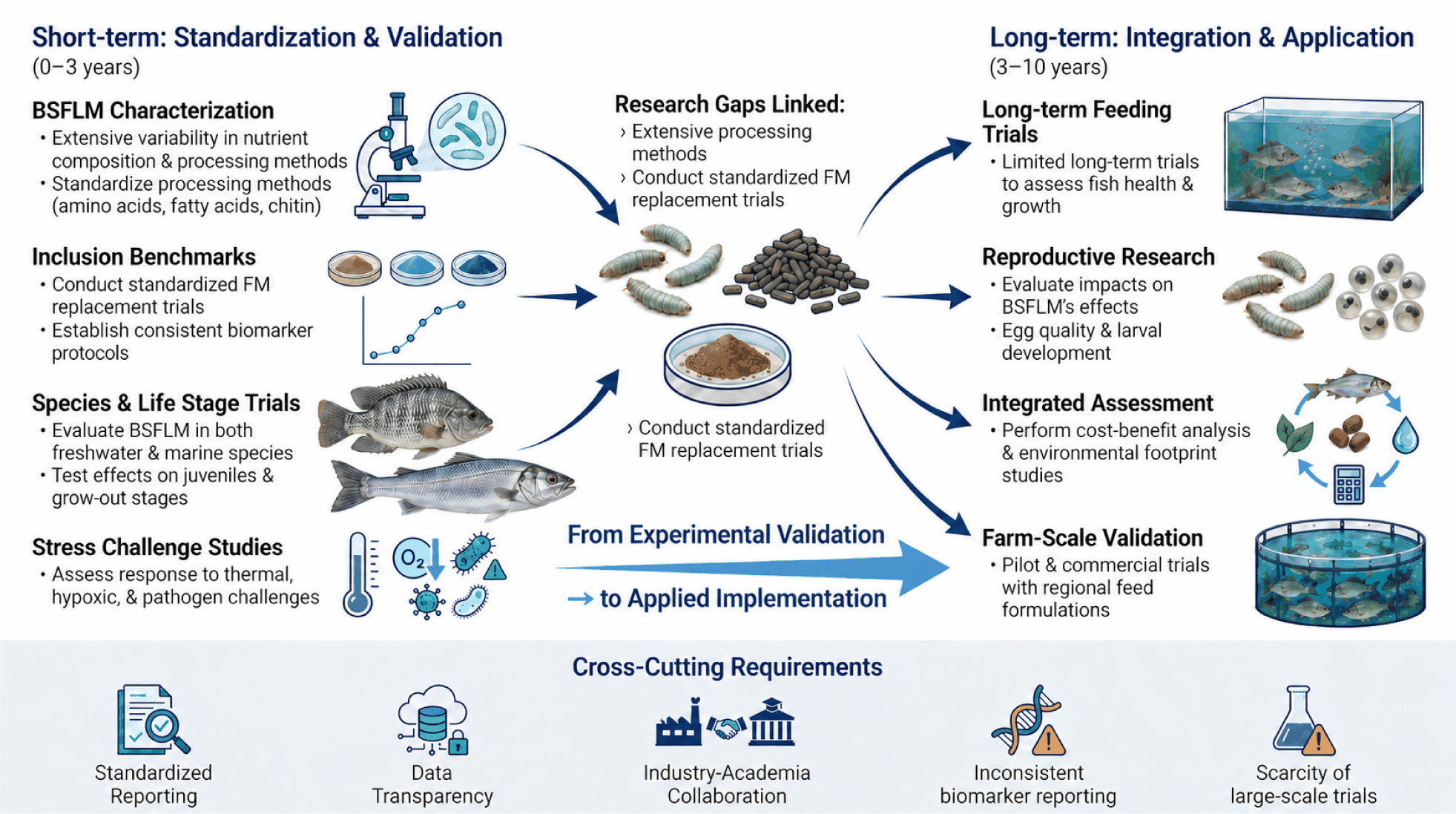
This section provides a forward-looking perspective on the application of BSFLM in crustacean aquaculture. It was not included in the formal study-selection process or qualitative evidence synthesis of this review, which was restricted to finfish studies. The following section is therefore presented as a narrative outlook on future research priorities, rather than as part of the formal evidence synthesis.
Within the broader aquaculture sector, crustacean aquaculture, particularly shrimp farming, represents an important yet comparatively underexplored context for the application of insect-based feed ingredients. Shrimp farming accounts for a substantial proportion of global aquaculture production and international trade, driven by strong consumer demand, high market value, and continued expansion in Asia, Latin America, and increasingly in intensive and biosecure production systems worldwide. As a result, the sustainability and cost efficiency of shrimp feeds are critical determinants of the long-term resilience of the global aquaculture sector.
Shrimp feed formulations rely heavily on high-quality protein sources, and fishmeal has traditionally served as a major dietary protein source because of its superior palatability, high digestibility, and well-balanced amino acid profile. However, increasing fishmeal prices and constrained supply present significant economic and environmental challenges for shrimp producers. In this context, BSFLM represents a particularly promising alternative protein source.
Despite this potential, the evidence base for crustaceans remains limited relative to finfish, both in the number of available studies and the diversity of evaluated biological endpoints. Existing shrimp-focused studies have largely focused on short-term growth responses and basic immune indicators, with insufficient attention to long-term physiological performance, stress tolerance, product quality, and economic outcomes under production-relevant conditions. Moreover, the effects of BSFLM on shrimp-specific physiological processes, including molting patterns, osmoregulatory capacity, and hepatopancreatic function, remain insufficiently characterized.
Future research should therefore prioritize systematic expansion of BSFLM feeding trials in shrimp and other crustaceans, using standardized experimental designs that facilitate cross-study comparability and quantitative synthesis. Particular emphasis should be placed on evaluating BSFLM not only as a fishmeal substitute, but also as a replacement for other major protein ingredients commonly used in shrimp feeds, such as soybean meal and poultry by-product meal. Such approaches would more accurately reflect commercial formulation strategies and generate more industry-relevant evidence.
In addition, shrimp aquaculture offers a valuable platform for evaluating the functional and resilience-enhancing properties of BSFLM under stressors that are highly relevant to commercial production, including thermal fluctuations, salinity stress, hypoxia, and pathogen exposure. Future studies should incorporate standardized stress and disease-challenge models to clarify the potential role of BSFLM in improving physiological resilience and survival in intensive shrimp culture.
From a synthesis perspective, subsequent systematic reviews and meta-analyses should stratify outcomes by taxonomic group and provide dedicated evaluation of crustacean data rather than treating shrimp as a minor component of broader aquaculture analyses. Given the scale, economic significance, and biological distinctiveness of shrimp production, a crustacean-focused evidence framework is essential for informing feed innovation, regulatory assessment, and industry adoption of insect-based ingredients.
Overall, expanding BSFLM research and evidence synthesis in shrimp and other crustaceans is both scientifically justified and strategically important for advancing sustainable aquafeed development. Addressing this gap will enable a more balanced, data-driven assessment of BSFLM across aquaculture sectors and support its integration into one of the world’s most important animal protein supply chains.
In conclusion, based on the collective findings of the reviewed studies, BSFLM generally maintains growth performance and frequently supports functional outcomes such as immunity and stress tolerance; however, the extent and nature of these responses vary according to species, developmental stage, and dietary composition. This PRISMA-guided systematic review indicates that BSFLM represents a promising and sustainable partial replacement for fishmeal in aquaculture feeds. Overall, BSFLM-based diets generally supported growth performance and feed utilization comparable to fishmeal controls when inclusion levels were appropriate for species and life stage and diets were nutritionally optimized. In contrast, higher inclusion levels more frequently produced variable responses, emphasizing the importance of ingredient quality and precise formulation. Evidence for functional effects indicates that BSFLM may modulate immune and antioxidant responses in some contexts, although these effects are not consistent across studies and are likely influenced by processing method, chitin-related fractions, basal diet composition, and rearing conditions. Confidence in specific inclusion recommendations remains limited by short trial duration, methodological heterogeneity, and inconsistent reporting of BSFLM characteristics and outcome measures. Accordingly, future research should focus on standardized characterization and reporting of BSFLM, adequately powered long-term trials with stress or disease challenge models, evaluation of product quality and safety, and validation under commercial farming conditions. Collectively, these findings provide an evidence base to guide future research and support responsible industry adoption of insect-based aquafeeds, while recognizing that translation to commercial systems will depend on formulation context, BSFLM processing type, and species-specific nutritional requirements.


