

Introduction
Anthropogenic activity, particularly the development of industrial production, agriculture, and urbanization has lead to environmental pollution, with water bodies being the ultimate sink for pollutants. Inland waters used for power generation, agriculture, drinking water, fisheries and aquaculture accumulate heavy metals that are harmful to living organisms (Abdel-Kader & Mourad, 2020; Kuton et al., 2021; Subotić et al., 2015). It is known that heavy metals, accumulating in the body of aquatic organisms, cause toxic effects, lead to metabolic disorders, a reduction in the rate of growth and development of individuals, impaired digestibility of food, adverse effects on the morphological and physiological parameters of fish, and a reduction in the survival rate of juveniles (Huang et al., 2022; Nin & Rodgher, 2021; Payuta et al., 2019; 2023; Taslima et al., 2022). Furthermore, since fish are at the top of the food pyramid in an aquatic environment, they can be one of the sources of heavy metal transfer to humans (Abdel-Kader & Mourad, 2020; Vu et al., 2017).
Due to the considerable anthropogenic impact on aquatic ecosystems, it is essential to investigate and monitor the physiological and biochemical parameters of aquatic organisms. Since fish are highly susceptible to the effects of pollutants, these indicators can be used for assessing the health of the water bodies they inhabit (Lloret et al., 2013; Yousafzai & Shakoori, 2009). For example, the condition factor reflects how much energy a fish stores, so it is considered an indicator of the health of the population as a whole and the health of its habitat (Baghel & Reddy, 2022; Payuta et al., 2019). Indicators that determine the relative mass of fish organs are considered to be more informative than the condition factor. The hepatosomatic index (HSI) makes it possible to estimate not only the energy reserves of fish, but also assess the quality of their habitat, since a decrease in liver mass indicates the organ depletion and environmental problems of the water body (Lloret et al., 2013; Łuczyńska et al., 2020; Monsefrad et al., 2012). Because contaminants can adversely affect the reproductive system of fish, the gonadosomatic index (GSI) is a useful tool for understanding the condition and development of the gonads (Korkmaz et al., 2020; Lloret et al., 2013).
Quantitative changes in the chemical composition of fish tissues can be an indicator of the ecological state of individual fish, fish populations, and their habitat. Under normal conditions, the water content of a fish body is maintained at stable levels, changes in this parameter may be associated with unfavorable habitat conditions (Payuta & Flerova, 2019). Reserve lipids and ash can serve as a criterion for assessing the state of fish under toxic conditions (Huang et al., 2022; Lloret et al., 2013; Payuta et al., 2019). The accumulation of various elements in fish tissues can also be used to monitor metal contamination of the aquatic environment (Authman et al., 2015; Botwe, 2021; Łuczyńska et al., 2020; Payuta et al., 2023).
There is a number of research works on simultaneous determination of proximate composition and metal content in the body of aquatic organisms. These indicators have been studied mainly in aquatic animals from African and Asian waters (Abdel-Kader & Mourad, 2020; Huang et al., 2022; Kuton et al., 2021; Payuta et al., 2024). In Europe, similar comprehensive studies are being carried out by a group of scientists in Poland (Łuczyńska et al., 2020; Nowosad et al., 2019).
This study is a continuation of the series of work on the chemical composition of muscle tissues of valuable commercial fish species from the Upper Volga reservoirs, and potential human health risk assessment associated with the consumption of these species (Payuta & Flerova, 2019; 2020; 2021; Payuta et al., 2019; 2023).
The sabrefish Pelecus cultratus is the object of our study. Since 2008, this fish has been included in the IUCN Red List of Threatened Species. Status – Least Concern. Therefore, this pelagic species is commercially fished in many countries due to the high nutritional value of its meat (Payuta & Flerova, 2019). In some Baltic States and Poland, the sabrefish is endangered and has a protected status (Bokor et al., 2024; Nowosad et al., 2019). In Russia, in the Ivankovo Reservoir, a ban on commercial fishing was introduced in 2007, which remains in effect until the present time. For this reason, there are no statistics on commercial catches of sabrefish. Recreational catch records for this fish species is only 0.1 tons per year, which does not reflect the scale of its actual catch. In the Uglich Reservoir, commercial fishing is conducted only in the territory of the Yaroslavl oblast. Recreational fishing and poaching in the reservoir is estimated at 1% of the commercial stocks (Goryachev et al., 2021). The Federal Agency for Fishery of the Russian Federation (Rosrybolovstvo) recommendation for 2021 sabrefish harvest was 2.8 tons per year.
The fast-paced lifestyle, lack of time, and the decline in popularity of restaurants and cafes after the pandemic have led to an increase in demand for homemade meal replacements (semi-finished products, ready-made meals) (Bumbudsanpharoke & Ko, 2022). Due to its high nutritional value and taste, sabrefish can be used as an ingredient in a modern homemade food substitute.
The aim of this work was to study the physiological (condition factor, hepatosomatic index, gonadosomatic index) and biochemical (content of major components and content of macro- and microelements in muscles) indicators of sabrefish and assess the risk to human health when consuming its meat.
Materials and Methods
All procedures with fish were carried out in accordance with ARRIVE recommendations for the use of animals in research, directive 2010/63/EU and the laws of the Russian Federation on the protection of animals. The animal study protocol was approved by the Ethics Committee of P.G. Demidov Yaroslavl State University (protocol number: 4, approved on 06 June 2024).
This study was conducted on the Upper Volga reservoirs - Ivankovo and Uglich, which are located in the territory of Moscow, Tver and Yaroslavl oblasts (Fig. 1).
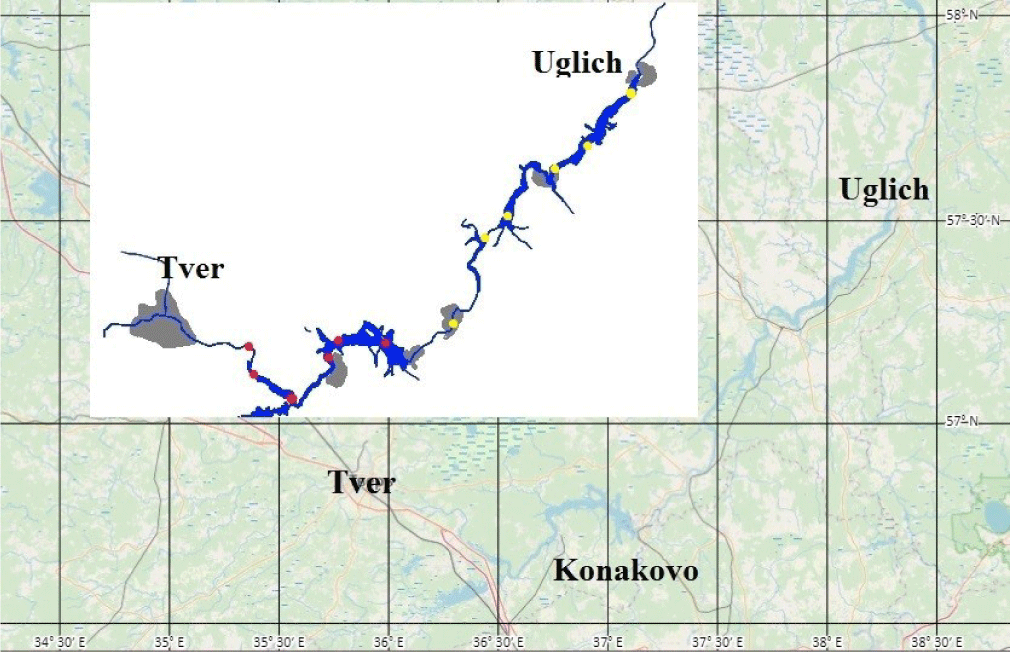
The reservoirs are the first link of the reservoir system of the Volga-Caspian basin and play a multifaceted role in human activity. They are used for navigation, power generation, recreation, agriculture and fishery. Moreover, the Ivankovo Reservoir serves as the primary source of drinking water supply for the city of Moscow (Grishantseva & Safronova, 2012; Goryachev et al., 2021).
The territories adjacent to the reservoirs are densely populated and actively developing areas. They are home to a diverse range of industrial activities, including machine-building, chemical, fuel, and food production. As a result, reservoirs are subject to a considerable anthropogenic load. Domestic, industrial, agricultural, and stormwater runoff are the primary sources of reservoir pollution (Grishantseva & Safronova, 2012). The Ivankovo and Uglich reservoirs are classified as “polluted” and “very polluted”. The maximum allowable concentrations (MACs) in the water of the Ivankovo Reservoir were found to be exceeded for Cu, Pb, Fe, Mn, and in the Uglich Reservoir for Cu, Zn, Mg, Fe, and Mn (Roshydromet, 2024). It is assumed that the main impact on the hydrochemical regime of the Uglich Reservoir is exerted by the water coming from the Ivankovo Reservoir. In earlier works on determining the elemental composition of water in reservoirs, researchers noted higher concentrations of Cd, Pb, Al, Cr, Ni, Cu, Mn, Fe and lower concentrations of Co, V, Zn, Mg, K in the Ivankovo Reservoir, compared to the Uglich Reservoir (Grishantseva & Safronova, 2012; Meysurova & Lopina, 2018; Tomilina et al., 2018).
In the Ivankovo Reservoir, there is a source of thermal pollution – one of the largest power plants in central Russia, near which water temperature exceeds acceptable norms (Lazareva et al., 2018).
During the feeding period (August), 23 individuals of sabrefish from the Ivankovo Reservoir and 40 individuals of sabrefish from the Uglich Reservoir were sampled using a trawl net (Table 1).
| Reservoir | n | Body length (mm) | Body weight (g) | Body weight without entrails (g) |
|---|---|---|---|---|
| Ivankovo | 23 | 255 ± 26 | 170 ± 57 | 154 ± 53 |
| Uglich | 40 | 259 ± 43 | 292 ± 176 | 262 ± 155 |
After capture, the fish were placed in containers with river water to allow for acclimatization. The following measurements were then taken: body length, body weight, and body weight without entrails.
Afterwards, the skin was separated from the bony muscles and muscle tissue was excised along the vertebral column. Then the tissue was weighed and frozen at –18°C until analysis.
The contents of water, dry matter, lipids, protein, ash, and carbohydrates, also called proximate composition, were determined in sabrefish muscles. A two-step method of water determination was used to measure the amount of water and dry matter. At first, the samples were dried in a laboratory drying cabinet SNOL 58/350 (AB Umega Group, Utena, Lithuania) at a temperature of 60°C to a constant mass. After that, the samples were crushed in a laboratory mill and subjected to further drying at a temperature of 105°C until they reach a constant mass. The amount of water and dry matter was determined by calculation. To measure the amount of lipids, the method of defatted residue in the fat extractor SER 148/3 (VELP Scientifica, Usmate Velate, Italy) was utilized. Petroleum ether was used as a nonpolar solvent. The principle of the Kjeldahl method was utilized to determine the amount of protein. Nitrogen content analysis was performed using a semi-automatic distillation unit UDK 139 (VELP Scientifica). Mineral substances were obtained using the gravimetric method of burning the sample in a muffle furnace SNOL 8.2/1100 LSM 21 (AB Umega Group) to white ash at 550°C (Cundiff, 1995). The amount of carbohydrates was calculated by subtracting the sum of percentages of water, protein, lipids, and ash from 100%.
The samples were analyzed for zinc (Zn), copper (Cu), manganese (Mn), iron (Fe), magnesium (Mg) using a atomic absorption spectrophotometer with flame atomization KVANT 2-AT (Kortec, Moscow, Russia) and for cadmium (Cd), lead (Pb), aluminum (Al), chromium (Cr), cobalt (Co), nickel (Ni), vanadium (V) using an optical emission spectrometer with inductively coupled plasma Optima 2000DV (Perkin-Elmer, Waltham, MA, USA). The ashes were dissolved in 5 mL of 20% hydrogen HCl and filtered through filter paper. The potassium (K) concentration was measured using flame emission spectrometry (Cundiff, 1995). To control the quality of element determination, standard state samples were used: for aquatic organisms – a standard sample of Baikal perchmuscles Perca fluviatilis (L.) (SRM, Baikal perch tissue, BOk-2, registration number COOMET CRM 0068-2009-Ru). The results were expressed in mg/kg wet weight.
In our study, the oral route of heavy metal intake was considered to assess the risk to human health. The target hazard quotients (THQ), hazard index (HI), margin of exposure (MOE), chronic daily intake (CDI), target cancer risk (TR), and total target cancer risk (TTR) were calculated using Equations (1)–(6), respectively, to assess the potential risks associated with the consumption of fish as food (Masoud et al., 2007; Pokorska-Niewiada et al., 2022; Vu et al., 2017).
where EF – exposure frequency (365 days/year), ED – exposure duration (70 years), Ir – daily fish consumption (according to FAO data for 2020 in Russian Federation 0.015kg/day for pelagic fish), C – metal concentration in fish, mg/kg, RfD – reference preoral dose, mg/kg/day, BW – average human weight (70 kg in Russian Federation), TA – average exposure time (365 days/year × ED), CSF – cancer slope factor for carcinogenic metals (mg/kg/day).
The RfD values for Cd, Pb, Al, Cr, Cu, Mn, Fe, Co, Zn and Ni are 0.001, 0.0035, 1.0, 0.003, 0.04, 0.14, 0.7, 0.0004, 0.3 and 0.02 mg/kg/day, respectively. The CSF for Cd is 15, 0.0085 for Pb, 0.021 for Al, and 0.5 mg/kg/day for Cr (Barone et al., 2022; Botwe, 2021; Pokorska-Niewiada et al., 2022; Vu et al., 2017).
The Fulton and Clark fatness coefficient, values of HSI and GSI indices was calculated as previously described (Korkmaz et al., 2020; Payuta & Flerova, 2020).
The Shapiro-Wilk test was used to check the data for normality of distribution. If normality was observed, then the significance of differences between the mean values was assessed using the Student’s test; if the data were not normally distributed, the nonparametric Mann-Whitney U test was used to assess the significance of the differences between the mean values. The results are presented as mean values and their standard deviations (x ± SD). Differences between the compared parameters were considered statistically significant at p < 0.05.
Results
The study showed that the Fulton and Clark condition factor was reliably higher in sabrefish individuals from the Uglich Reservoir than those from the Ivankovo Reservoir (Table 2).
The condition factor differed by more than 1.5 times. The HSI indicator in sabrefish from the Ivankovo Reservoir turned out to be statistically significantly lower, while the GSI was higher compared to sabrefish from the Uglich Reservoir.
The muscle tissue of sabrefish individuals from the Ivankovo Reservoir contained significantly more dry matter, including protein, lipids and minerals (Table 3).
Sabrefish from the Uglich Reservoir was characterized by increased amounts of water and carbohydrates in the muscles.
The muscles of sabrefish from the Ivankovo Reservoir contained significantly more Cd and Pb compared to this fish species from the Uglich Reservoir (Table 4). The concentration of Pb was 113 times higher and that of Cd was 7.8 times higher.
| Reservoir | Cd | Pb | Al |
|---|---|---|---|
| Ivankovo | 0.062 ± 0.039 | 0.565 ± 0.259 | 76.83 ± 84.80 |
| Uglich | 0.008 ± 0.004* | 0.005 ± 0.016* | 15.99 ± 7.49 |
No statistically significant differences were found between Al concentrations in the tissues of the studied individuals of sabrefish.
The muscle tissue of sabrefish from the Uglich Reservoir contained lower concentrations of Cr, Zn, Mn, Fe, and Mg in comparison to the muscle tissue of this species from the Ivankovo Reservoir (Table 5).
The V concentration in the muscles of sabrefish from both reservoirs was below the limit of detection.
Comparison of the data obtained from the two reservoirs revealed notable differences between the rates of metal accumulation in sabrefish muscles. The bioaccumulation of metals in the muscle tissue of sabrefish from the Ivankovo Reservoir increased in the series: V = Co < Ni < Cd < Cr < Pb < Mg < Cu < Mn < Zn < Fe < Al < K, while the following pattern was observed in individuals from the Uglich Reservoir: V < Co < Pb < Cd < Ni < Cr < Mg < Mn < Cu < Fe < Zn < Al < K.
The THQ and HI values for muscle tissues of sabrefish caught in the reservoirs are presented in Table 6.
| Reservoir | THQ | ||||||||||
|---|---|---|---|---|---|---|---|---|---|---|---|
| Cd | Pb | Al | Cr | Cu | Mn | Fe | Co | Zn | Ni | HI | |
| Ivankovo | 0.013 | 0.035 | 0.016 | 0.019 | 0.006 | 0.004 | 0.019 | 0.001 | 0.015 | 0.001 | 0.128 |
| Uglich | 0.002 | 0.000 | 0.003 | 0.009 | 0.004 | 0.001 | 0.002 | 0.0002 | 0.005 | 0.000 | 0.027 |
The results of the study showed that THQ and HI indices, which characterize non-carcinogenic risks associated with prolonged exposure to heavy metals, did not exceed the acceptable threshold (< 1) for all metals. The HI index for the muscles of sabrefish from the Ivankovo Reservoir was 4 times higher than that for the muscles of this fish species from the Uglich Reservoir.
MOE for assessing the annual, specific for sabrefish, non-carcinogenic risk from consumption of its meat is presented in Table 7.
| Reservoir | MOE | |||||||||
|---|---|---|---|---|---|---|---|---|---|---|
| Cd | Pb | Al | Cr | Cu | Mn | Fe | Co | Zn | Ni | |
| Ivankovo | 0.0132 | 0.0346 | 0.0165 | 0.0192 | 0.0062 | 0.0036 | 0.0186 | 0.0009 | 0.0149 | 0.0006 |
| Uglich | 0.0017 | 0.0003 | 0.0034 | 0.0090 | 0.0036 | 0.0009 | 0.0020 | 0.0002 | 0.0048 | 0.0002 |
The highest CDI value was determined for K when consuming sabrefish from the Ivankovskoye Reservoir, the lowest CDI value was determined for Co when consuming sabrefish from the Uglich Reservoir (Table 8).
In general, the CDI values for sabrefish follow the same trend of accumulation of the studied metals in the muscles of individuals.
The lowest value of the TR index was found for Pb and the highest for Al (Table 9).
| Reservoir | Target cancer risk index (TR) | ||||
|---|---|---|---|---|---|
| Cd | Pb | Al | Cr | TTR | |
| Ivankovo | 1.99 × 10⁻⁴ | 1.03 × 10⁻⁶ | 3.46 × 10⁻⁴ | 2.87 × 10⁻⁵ | 5.74 × 10⁻⁴ |
| Uglich | 2.50 × 10⁻⁵ | 9.70 × 10⁻⁹ | 7.19 × 10⁻⁵ | 1.35 × 10⁻⁵ | 1.10 × 10⁻⁴ |
However, the risk of cancer from other metals associated with the consumption of sabrefish meat from the Ivankovo and Uglich reservoirs exceeds 1 per 100,000. In addition, the TTR value exceeds the generally accepted norms (> 1 × 10⁻⁴). Carcinogenic risks turn out to be higher for the muscles of sabrefish from the Ivankovo Reservoir than from the Uglich Reservoir.
Discussion
It is recognized that the high variability of the studied physiological and biochemical parameters in a given species, subjected to different environmental conditions, could be a response of hydrobionts to water pollution and serve as specific indicators of anthropogenic pollution (Baghel & Reddy, 2022).
Physiological indices such as Fulton condition factor, Clark condition factor, GSI in individuals of sabrefish inhabiting rivers of the temperate geographic belt can vary over a wide range. Fulton condition factor of sabrefish ranges from 0.49 to 1.01, Clark condition factor – from 0.53 to 0.90, and GSI – from 0.92 to 1.50 (Bokor et al., 2024; Nowosad et al., 2019; Payuta & Flerova, 2019). Differences in the tissue content of fat, protein and mineral substances in skeletal muscles of sabrefish from water bodies of the Volga-Caspian basin varying in the degree of anthropogenic load are shown (Payuta & Flerova, 2019; Tsibizova, 2012). Studies on the accumulation of metals in the muscles of sabrefish both from inland and Caspian Sea waters convincingly demonstrate the dependence of metal content in the fish tissues on the level of anthropogenic load (Payuta et al., 2023; Subotić et al., 2015; Zarei et al., 2011). Therefore, the considered set of indicators provides a more precise characterization of the quality of sabrefish meat as a food product.
A higher value of condition factor in sabrefish from the Uglich Reservoir indicates a better condition of the fish population in this body of water compared to the Ivankovo Reservoir (Pokorska-Niewiada et al., 2022). However, the content of major components of the fish muscle tissues we studied indicates the opposite. The muscles of sabrefish from the Ivankovo Reservoir contained more dry matter, including protein and lipids, than the muscles of this fish species from the Uglich Reservoir. Previously, it has been shown in the case of bream Abramis brama and Nile tilapia Oreochromis niloticus that the condition factor of fish can increase due to elevated tissue water content and lipid replacement by water, since it has a higher specific gravity (Payuta & Flerova, 2020; 2021; Payuta et al., 2024). Apparently, a similar pattern can be observed in the body of sabrefish.
Previously, using the example of bream and largemouth bass Micropterus salmoides, it was shown that individuals exposed to prolonged exposure to elevated temperatures had higher lipid content in their bodies, which may be related to a decrease in the rate of lipid metabolism during heat acclimation (Payuta & Flerova, 2021; Tidwell et al., 2007). In summer, in the area of warm water discharge from the power plant at the Ivankovo Reservoir, above-norm water temperatures are recorded, the plume of which can be traced through the entire water column for 5 km downstream (Lazareva et al., 2018). Exposure to elevated water temperatures, for the reason described earlier, can lead to the accumulation of lipids in the muscles of the sabrefish.
Several studies have reported an increase in lipid content and a decrease in carbohydrates in fish living in polluted conditions (Javed & Usmani, 2019; Payuta & Flerova, 2021). The results of the current study are consistent with the literature. Nevertheless, numerous studies have demonstrated that elevated lipid levels in the bodies of hydrobionts are indicative of favorable habitat conditions for aquatic animals and their decrease is caused by the negative impact of pollutants (Authman et al., 2015; Lloret et al., 2013; Payuta et al., 2019).
The protein content is considered to be the most constant in the fish body compared to other components (Lloret et al., 2013). The depletion of protein reserves occurs in the absence of food and other negative factors, including exposure to heavy metals. This can lead to intensive consumption of proteins from the body itself in order to maintain the functions of tissues and organs (Payuta & Flerova, 2020; Yousafzai & Shakoori, 2009). However, there is both a lack of quantitative changes in this biochemical component under exposure to heavy metals, and an increase in protein content in fish in response to stress and for binding metals (Payuta et al., 2024; Yousafzai & Shakoori, 2009).
The elevated hepatosomatic index of sabrefish individuals from the Uglich Reservoir indicates more favorable habitat conditions for this fish species in the water body compared to the Ivankovo Reservoir (Lloret et al., 2013; Łuczyńska et al., 2020). The results of our study do not contradict other works on the effect of heavy metals on the HSI index in carp (Korkmaz et al., 2020). Loss of nutrients (carbohydrates and lipids) and, consequently, a decrease in liver mass due to toxic effects of heavy metals, is considered a normal morphological response of the organ to unfavorable conditions (Javed & Usmani, 2019; Lloret et al., 2013; Monsefrad et al., 2012).
In our work, the GSI value in the Ivankovo Reservoir turned out to be significantly higher than in the Uglich Reservoir. In most studies, this indicator decreases in case of heavy metal pollution (Korkmaz et al., 2020; Taslima et al., 2022). A study on the chub Squalius cephalus showed an increase in the GSI at low oxygen concentrations in the water. The authors explain this phenomenon by the fact that hypoxia can disrupt the functioning of sex hormones, delay gonad development, and lead to asynchrony of breeding seasons in populations exposed to different oxygen concentrations in the water (Wang et al., 2023). In summer, extremely low oxygen levels are recorded in the water column of the Ivankovo and Uglich reservoirs due to elevated temperatures. However, in the Uglich Reservoir, the occurrence of oxygen deficiency in the water is lower than in the Ivankovo Reservoir (Lazareva et al., 2018). Probably, for this reason the GSI in Ivankovo Reservoir was higher than in the Uglich Reservoir.
In comparison to the physiological and biochemical indices described above, the heavy metal content in the muscle of sabrefish can be used as an indicator for assessing the ecological condition of water bodies. Research on water and bottom sediment pollution in the Upper Volga reservoirs show higher concentrations of a number of metals in the Ivankovo Reservoir, compared to the Uglich Reservoir (Roshydromet, 2024; Grishantseva & Safronova, 2012; Meysurova & Lopina, 2018; Tomilina et al., 2018). In our study, the muscles of Sabrefish from the Ivankovo Reservoir contained significantly more heavy metals, including those toxic to living organisms (Cd, Pb, Cr, Cr, Zn, Mn, Fe). Moreover, comparison of our data with the data on metal accumulation in the water of Ivankovo and Uglich reservoirs indicates synchronous bioaccumulation of Cd, Pb, Al, Cr, Ni, Cu, Mn, Fe depending on their amount in the water mass.
The almost tenfold higher Fe concentrations in the muscle tissues of sabrefish from the Ivankovo Reservoir compared to the Uglich Reservoir may be attributed to the elevated water temperature. In a study on the spotted sea bass Lateolabrax maculatus, it was shown that with an increase in water temperature from 27°C to 33°C, the species had an increased demand for this element, since more Fe depositions were required in erythrocytes and tissues (Wang et al., 2023). Metals such as Cd, Al, Ni, Zn and Mn show similar trends of greater accumulation in fish with increasing water temperature, which is consistent with the results of our study. Thus, under conditions of water pollution, the effect of elevated temperatures, which causes additional stress, makes fish more susceptible to intoxication and can lead to more adverse consequences for the organism due to increased toxicity of heavy metals (Nin & Rodgher, 2021; Pinheiro et al., 2019; Tidwell et al., 2007).
In the muscle tissue of sabrefish from both the reservoirs, elements such as K, Al, Zn, Fe, Cu, and Mn exceeded the other substances studied. These metals, with the exception of Al, are essential for the functioning of body systems and must be accumulated in large amounts (Authman et al., 2015; Subotić et al., 2015; Taslima et al., 2022).
Al is a geno- and cytotoxic metal with no biological functions. Its toxicity to fish may result in impaired metabolism and osmoregulation, reduced brain neuroplasticity and reproductive function and histological damage (Authman et al., 2015; Pinheiro et al., 2019). The bioaccumulation of Al in fish can occur at elevated levels of its suspended forms in the water. This toxic metal was detected in the water of the Ivankovo Reservoir within the Tver oblast where Al concentrations in a local area exceeded national standards by a factor of almost eight, which may be attributed to emissions from specific metallurgical industries (Meysurova & Lopina, 2018).
In examining the content of heavy metal in edible parts of fish, it is essential to consider the risks associated with the duration of human health exposure to toxicants from fish consumption over a lifetime, which are assessed using THQ and HI. In our study these indices were less than one and did not exceed permissible levels, which indicates that there is no potential non-carcinogenic risk associated with the consumption of sabrefish meat from the Ivankovo and Uglich reservoirs (Pokorska-Niewiada et al., 2022).
In this study, the MOE value for the studied elements in the muscles of sabrefish from the Ivankovskoye and Uglich reservoirs did not exceed 1, which also indicates the absence of non-carcinogenic risk when consuming sabrefish meat (Masoud et al., 2007).
The CDI values for each micro- and macronutrient were much lower than the reference values of tolerable daily intake (TDI) and recommended dietary allowances (RDA) for the adult population. Therefore, based on the FAO/WHO JECFA guidelines, consumption of sabrefish meat cannot be considered as having an adverse effect on consumers, but sabrefish meat is also not able to cover the needs for macronutrient intake (Mg, K).
Heavy metals such as Cd, Pb and Al are not built into the cascade of biochemical reactions of the body that occur during its normal functioning. Their toxicity increases with increasing concentrations, and insufficient excretion of these metals has a carcinogenic effect on humans (Barone et al., 2022; Vu et al., 2017). Cd can cause chronic toxicity at low concentrations, affecting kidneys, lungs, liver, reproductive and nervous systems, and blood. Pb causes hearing impairment, leads to anemia, kidney failure and weakened immunity. Al can deposit in bone, brain, heart, spleen, and muscles, resulting in cumulative adverse effects on these systems with increasing exposure time. Potential carcinogenic effects are also reported for Cr, which affects lipid and sugar metabolism and can cause liver, kidney and lung damage (Masoud et al., 2007; Pinheiro et al., 2019; Vu et al., 2017; Zarei et al., 2011).
The results of our study indicate that there is a carcinogenic risk from Cd and Al in Ivankovo Reservoir associated with the consumption of sabrefish meat, as the target cancer risk for these metals exceeds the permissible norms (Barone et al., 2022; Vu et al., 2017).
Since fish consumption is associated with exposure to a mixture of the metals studied, cumulative cancer risks (TTRs) need to be assessed. This indicator is a cause for concern as it exceeds the upper limit set by regulations (> 1 × 10⁻⁴) for both reservoirs (Vu et al., 2017). The main contributor to its increase is Al.
In general, the values of the studied risk indicators for sabrefish consumption turned out to be higher in the Ivankovo Reservoir, compared to the Uglich Reservoir. These results are consistent with the patterns of heavy metal accumulation in sabrefish muscles and are in agreement with numerous data on the higher level of pollution in the Ivankovo Reservoir (Grishantseva & Safronova, 2012; Meysurova & Lopina, 2018; Roshydromet, 2024; Tomilina et al., 2018).
Conclusion
This comprehensive study investigated physiological (condition factor, hepatosomatic index, gonadosomatic index) and biochemical (content of major components and content of macro- and microelements in muscles) parameters of sabrefish from two reservoirs of the Upper Volga – Ivankovo and Uglich. The condition factor and hepatosomatic index values were higher, while the gonadosomatic index was lower, in sabrefish from the Uglich Reservoir, which is characterized by a lower level of pollution. The muscle tissues of sabrefish from the Ivankovo Reservoir accumulated significantly more dry matter, including protein and lipids, as well as toxic and essential metals (Cd, Pb, Cr, Cr, Zn, Mn, Fe, Mg). The study revealed a synchronous bioaccumulation of Cd, Pb, Al, Cr, Ni, Cu, Mn, and Fe, depending on the concentration of these elements in the water mass of the reservoirs. Under pollution conditions, the effect of elevated temperature increases the accumulation of Cd, Al, Zn, Mn, Fe, Ni. There is no potential non-carcinogenic risk to human health from heavy metals in sabrefish, but there is a carcinogenic risk from Cd and Al in the Ivankovo Reservoir and a risk from cumulative exposure to carcinogenic metals in both reservoirs (TTR > 1 × 10⁻⁴). The results showed that CDI values were lower than the reference values of TDI and RDA. Parameters such as condition factor and proximate composition are rougher indicators of sabrefish health and cannot be fully used for the comprehensive assessment of aquatic systems. The micro- and macronutrients considered in this study showed a number of patterns of accumulation in the muscle tissue of sabrefish, inhabiting waters subjected to different anthropogenic loads, and, therefore, their concentrations can be used as a bioindicator of water pollution.


