

Introduction
The global fisheries and aquaculture sectors produce approximately 200 million tonnes of aquatic products annually. However, only roughly 25%–30% of each fish is used for fillets and high-value products, while the remaining 50%–75% (heads, bones, skin, viscera, scales, etc.) becomes processing by-products (Ferraro et al., 2010). If not valorized, these discards represent a loss of valuable protein, lipid, and mineral resources and pose environmental burdens (Xia et al., 2024). In the context of a sustainable bioeconomy, fish by-products are now recognized as a rich source of high-value compounds. For example, fish skin and scales are abundant in collagen and gelatin; bones and frames contain calcium phosphate and collagen; viscera and heads remain reservoirs of digestive enzymes, proteins, peptides, and oils rich in eicosapentaenoic acid (EPA) and docosahexaenoic acid (DHA) (Jimenez-Champi et al., 2024; Xia et al., 2024). Notably, fish waste also contains polysaccharides such as chitin (from fish scales and from the shells and non-edible parts of crustaceans) and chitosan, as well as minor components like carotenoids and glycosaminoglycans (Noreen et al., 2025; Vieira et al., 2023). These generated bioactive compounds possess antioxidant, antihypertensive, and anti-inflammatory properties.
Valorizing fish by-products contributes to global sustainability by reducing waste and promoting circular use of biological resources. This approach supports the 2030 Agenda for Sustainable Development Goals, particularly responsible consumption and production and sustainable use of marine resources, while promoting sustainable fisheries and ecosystem conservation (Pinheiro & Symochko, 2025). Moreover, the valorization of fish waste not only improves economic efficiency but also contributes to environmental sustainability through waste minimization and circular resource use (Xia et al., 2024).
This review provides a comprehensive overview of fish by-product valorization, the principal fish by-product streams, their composition, extraction technologies, and the bioactive compounds derived from them. Moreover, the functional and biological properties of these compounds, their potential industrial applications, and the challenges and future prospects for sustainable, large-scale utilization are critically examined.
Types of Fish By-Products and Composition
Fish processing yields diverse by-product streams with variable composition. Fish heads contain protein, minerals, enzymes and significant oil content. Bones and frames are rich in mineralized collagen (hydroxyapatite) and protein. Skin, scales and fins are major sources of collagen and gelatin, with collagen yields commonly reported in the range of 20%–40%. However, these values vary depending on fish species, habitat, and the extraction method employed. Viscera (including guts, liver, and gonads) provide digestive enzymes, bioactive proteins and oil. Minor streams include frames, tails, and sludge from mechanical pressing. Together, these by-products can represent 50%–80% of fish weight (Gaikwad & Kim, 2024; Xia et al., 2024).
The biochemical composition of these residues complements that of the edible fraction. For example, fish by-products contain the proteins (including type I collagen), essential amino acids, polyunsaturated fatty acids (PUFAs, especially EPA, and DHA), vitamins (A, D, E, and B-group) and minerals (Ca, P, Mg, Zn, and Se, etc.) (Jimenez-Champi et al., 2024; Noreen et al., 2025). Specifically, approximately 30% of total fish processing waste consists of scales, bones, skin, and heads, which contain substantial amounts of proteins and can be utilized to produce collagen or gelatin. Visceral wastes contain oils (up to 20% lipid by wet weight) and diverse enzymes. These constituents underpin the value of fish waste as a source of nutraceutical and functional ingredients. Table 1 summarizes typical by-product types and their characteristic compounds.
| Main fishery by-products | Representative percentage (%) | Bioactive compounds | References |
|---|---|---|---|
| Skeletons | 10–15 | Minerals (calcium), Collagen, lipids | Coppola et al. (2021), Kandyliari et al. (2020) |
| Head | 10–15 | Proteins, peptides, lipids, gelatin | Zhang et al. (2021) |
| Scales | 2 | Collagen | Molina-Ramírez et al. (2021) |
| Skin | 3.5 | Collagen, gelatin, peptides | Atef & Mahdi Ojagh (2017), Caruso et al. (2020) |
| Viscera | 12–20 | Oil, enzymes, peptides | Li et al. (2022) |
Valorization of Fish By-Products
There are multiple pathways for the valorization of marine by-products through processing, ranging from the production of value-added ingredients to the extraction of specific high-value biomolecules. According to the European Union (EU) Directive 2008/98/EC, the hierarchy of waste management can be conceptualized as a prioritization pyramid, in which both the economic value of the derived products and the required quality of the raw materials decrease progressively from top to bottom. The central principle of this framework emphasizes the implementation of best practices aimed at preventing or minimizing waste generation. A significant proportion of the global fishery catch, amounting to millions of tons each year is discarded at sea because it fails to meet regulatory criteria such as minimum legal size, exceeds catch quotas, or does not meet commercial quality standards. To respond to this problem, the EU introduced a reformed Common Fisheries Policy that promotes a “zero-discard” strategy, aiming to eliminate unnecessary waste and encourage the sustainable use of marine resources (CINEA, 2021).
Innovative management measures need to be established in order to achieve the objectives set by the policy. The holding and discarding of by-products can be done in two ways. First is to commercialize the lower-value fraction for direct use and the second way is to convert the materials into high-value biomolecules or functional ingredients which are suitable to use in nutraceutical or pharmaceutical industries (Teves & Ragaza, 2016). These practices align closely with the principles of a sustainable circular economy, emphasizing the “green approach” to resource management. This strategy enables the efficient transformation of fish by-products into versatile raw materials suitable for the production of feed, food, and other high-value industrial products. Among existing valorization routes, the use of fish by-products in the manufacture of animal feed ingredients, particularly fish meal and fish oil remains the most common practice worldwide (Aspevik et al., 2018). In addition, residual waste streams from these processes can serve as feedstock for biofuel production or as agricultural amendments, such as organic fertilizers, thereby extending the utilization potential of marine resources across multiple industrial domains.
There are abundant health-promoting compounds present in fish by-products. A diverse arrays of molecules such as collagen, proteins, peptides, gelatins etc. (Samarajeewa, 2024). These compounds have shown wide spectrum of biological activities. These multifunctional properties underpin their increasing use in the pharmaceutical, nutraceutical, and cosmeceutical sectors, where they contribute to the development of bioactive formulations with health-promoting potential (Atef & Mahdi Ojagh, 2017). Beyond their physiological effects, ingredients derived from fish by-products also exhibit valuable technological functionalities when incorporated into food systems. Their emulsifying, foaming, fat-binding, and water-holding capacities can significantly improve the texture and stability of processed foods (Chen et al., 2024).
Extraction Methods
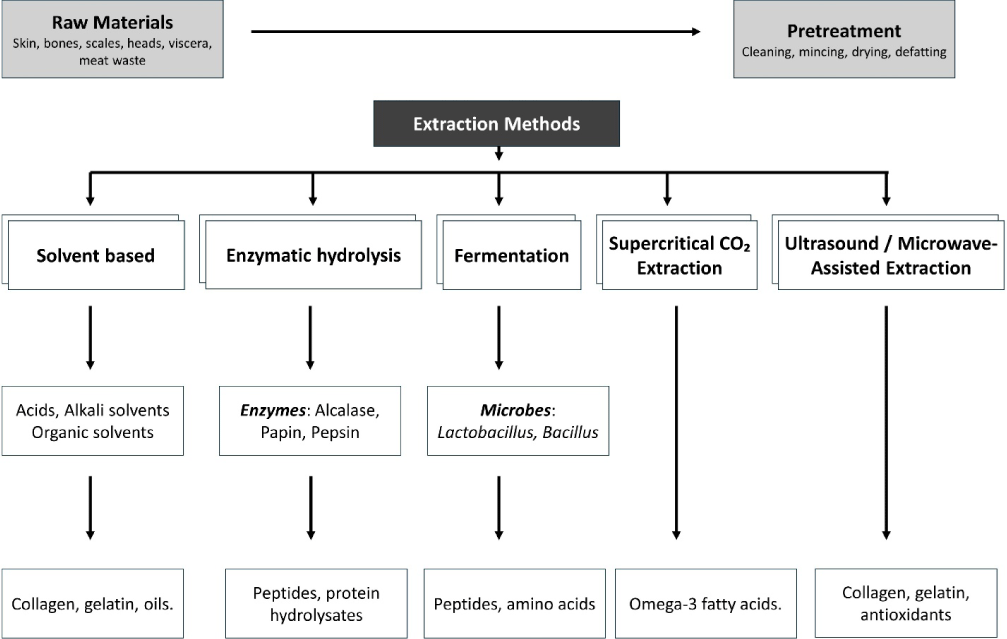
Recovering bioactive compounds from fish by-products requires appropriate processing. Traditional methods include mechanical separation (pressing fillet-cutting waste for oil), solvent extraction (using organic solvents or alkaline/acid digestion), and enzymatic hydrolysis (using proteases to liberate peptides and amino acids) (Gaikwad & Kim, 2024). However, such conventional methods can be time-consuming, energy-intensive, and may degrade sensitive compounds. Recent research emphasizes green and intensified extraction techniques. Notable approaches include microwave-assisted extraction, ultrasound-assisted extraction, and supercritical fluid extraction (CO2). Supercritical CO2 extraction efficiently isolates fish oil (omega-3 lipids) with minimal oxidation (Ferdosh et al., 2016). Subcritical water hydrolysis is used to recover peptides from bones and viscera without organic solvents (Pires et al., 2024).
Extraction of fish collagen typically uses acid-soluble or pepsin-soluble methods (Oslan et al., 2022). Mild acid (e.g., acetic acid) and pepsin pretreatment breaks collagen crosslinks, yielding gelatin-like solutions. Extraction parameters (time, temperature, solvent ratio) are optimized for each tissue. Other techniques for collagen include enzymatic solubilization, ultrasonication to improve mass transfer, and novel solvents (deep eutectic solvents [DES] or ionic liquids) for eco-friendly recovery (Ali et al., 2018). Enzymatic hydrolysis is widely used to produce protein hydrolysates and peptides. Proteases (e.g., alcalase, papain) applied to minced by-products (frames, viscera, skin) generate mixtures of small peptides and amino acids with preserved bioactivity (Araujo et al., 2021). Additionally, chitin is isolated from crustacean by demineralization (acid) and deproteinization (alkaline) treatments (Fotodimas et al., 2025). Extraction of chitin from fish scales has been reported for several species, including Cyprinus carpio (Soud et al., 2024), Labeo rohita (Kumari & Rath, 2014), and Lethrinus ornatus (Fatima et al., 2025). And then, the extracted chitin subsequently converted to chitosan via deacetylation. These green techniques together form an integrated strategy to extract maximal value from marine residues. The summary of the extraction methods are indicated in Fig. 1.
Bioactive Compounds from Fish By-Products and the Bioactivities
Collagen is the dominant structural protein present in the extracellular matrix of the animal body (Venkatesan et al., 2017). Its structure consists of three helical polypeptide chains with a repetitive tripeptide unit, Glycine-X-Y, where X and Y positions are generally occupied by proline (Pro) and hydroxyproline , respectively (Silva et al., 2014). Gelatin is a class of protein fraction that derived from collagen by thermal hydrolysis involving the breakage of hydrogen bonds between collagen polypeptide chains. Therefore, collagen and gelatin are two different forms of the same macromolecule (Karim & Bhat, 2009). Fish skins, scales and bones are a valuable source of collagen (mostly type I). Collagen extracted from fish waste has advantages of high biocompatibility and fewer cultural restrictions compared to mammalian sources (Silva et al., 2014). Fish collagen and its denatured form gelatin possess film-forming, gelling and emulsifying properties. Collagen obtained from fish by-products has been thought to have potential for use in tissue engineering, cosmeceuticals, and biomedical applications. The translucent, colorless, and flavorless gelatin is extracted from the bones and skin of fish. Although it can be considered a protein source in human nutrition, it cannot be considered as the sole source of protein in animal feed. Due to its lack of an amino acid known as tryptophan, gelatin is not considered a complete source of protein. It is instead a high source of methionine and lysine (Sultana et al., 2018).
To date, twenty-one distinct types of collagen molecules have been identified, each differing in structure and tissue distribution. The majority of collagens are localized in connective tissues such as skin and bone, whereas types IV, VI, VII, VIII, and X belong to the network-forming family, contributing to the formation of specialized extracellular matrices. These molecules are typically cross-linked within fibrillar networks, rendering them insoluble under physiological conditions. Commercially available collagen is widely utilized across medical, pharmaceutical, and cosmetic industries due to its excellent biocompatibility and biodegradability. In clinical practice, collagen-based materials are employed in diverse therapeutic applications, including pain management and the treatment of urinary incontinence associated with osteoarthritis. Moreover, collagen scaffolds have been used for cartilage repair and tissue regeneration, and emerging research suggests potential roles in inhibiting cancer metastasis through modulation of the extracellular microenvironment (Mandal et al., 2023).
Fish protein hydrolysates, for their amino acid composition and easily digestible proteins, are considered to have excellent quality, from a nutritional point of view. Nevertheless, due to the unpleasant fishy smell and flavor, they were mostly used for animal nutrition (Khalili Tilami & Sampels, 2018). Broad enzymatic hydrolysis of fish by-product proteins yields complex mixtures of peptides. Many isolated marine-derived peptides have documented functionalities: antioxidant (free-radical scavenging), angiotensin-converting-enzyme (ACE) inhibitory (antihypertensive), antimicrobial, anti-inflammatory, anticoagulant, immunomodulatory, antidiabetic and even antitumor effects (Ngo et al., 2013). Recent research has demonstrated that bioactive peptides derived from various marine organisms exhibit strong antioxidant potential by inhibiting lipid peroxidation and neutralizing reactive oxygen species. The free radical–scavenging capacity of these peptides has been largely attributed to the presence of specific hydrophobic and aromatic amino acid residues, such as alanine, phenylalanine, isoleucine, leucine, valine, glycine, Pro, methionine, tyrosine, histidine, lysine, and cysteine which enhance their antioxidant efficiency. These residues can act as proton or electron donors, or directly quench lipid radicals, thereby stabilizing oxidative reactions (Mendis et al., 2005).
As reported for the antioxidant properties, ACE inhibitory activity was also attributed to the differences in chain length and amino acids sequences of peptides, as well as, to their hydrophobicity (Lassoued et al., 2015). For instance, an ACE inhibitory Gly-Leu-Pro-Leu-Asn-Leu-Pro (M.W. 770 Da) hydrophobic peptide isolated from salmon skin (Oncorhynchus keta) was found to reduce systolic blood pressure after oral administration in rats, suggesting a possible use of this peptide as a functional food with anti-hypertensive effect (Lee et al., 2014). Table 2 summarizes the peptides and their bioactivity from several fish by-products.
| Species | By product | Compound | Biological activity | Reference |
|---|---|---|---|---|
| Johnius belengeri | Skin | Peptide | Antioxidant | Mendis et al. (2005) |
| Katsuwana pelamis | Muscle waste | Peptide | ACE inhibitory activity | Intarasirisawat et al. (2013) |
| Exocoetus volitans | Muscle waste | Hydrolysates and peptide fractions | Antioxidant and anti-tumor (Naqash & Nazeer, 2010) | Lee et al. (2014) |
| Rachycentron canadum | Skin | Gelatin derivative | Antioxidant, anti-inflammation | Yang et al. (2008) |
| Sepia officinalis | Skin and viscera | Protein hydrolysates | Antioxidant and anti-hypertension | Ktari et al. (2013) |
| Oncorhynchus keta | Skin | Peptides | Anti-hypertension | Lee et al. (2014) |
| Thunnus tonggol | Vicera, bone | Peptides | Antihypertensice, anti-inflammatory, cardioprotective | Jensen & Mæhre (2016) |
| Siberian sturgeon | Cartilages | Peptides | Antioxidant | Sheng et al. (2022) |
| Clupea harengus | Bone, skin, muscle | Peptides | Anti-inflammatory, | Durand et al. (2020) |
| S. pilchardus | Muscle | Protein hydrolysate | Anti-inflammatory, | Vieira et al. (2018) |
| Larimichthys crocea | Peptides | Antimicrobial | Zheng et al. (2020) | |
| Raja kenojei | Muscle | Collagen peptide | Anti-obesity | Woo et al. (2018) |
Many by-products, especially viscera and heads of oily fish (tuna, salmon, mackerel) are rich in lipids. Lipids belong to a fundamental group of nutrients for humankind since they contribute the structure of the biological membranes (Cullis & de Kruijff, 1979). Their components are fatty acids (FAs), which can be classified into saturated (SFAs-without double bonds), monounsaturated (MUFAs-with one double bond), and polyunsaturated (PUFAs-with two or up to six double bonds) (Mišurcová et al., 2011). These lipids are well known for cardiovascular and anti-inflammatory benefits. For example, fish oil supplementation lowers triglycerides and improves lipid profiles, and exhibits hepatoprotective effects in models of liver injury (Mišurcová et al., 2011). Among lipid constituents, lecithin is a viscous, fatty substance primarily composed of phospholipid mixtures, along with minor proportions of glycerides, neutral lipids, and other suspended components. Owing to its strong emulsifying and stabilizing properties, lecithin has found broad applications across multiple industrial sectors. In the nutraceutical field, lecithin-based nanovesicles are increasingly incorporated into functional foods and dietary supplements to enhance the bioavailability of lipophilic nutrients (Chotard et al., 2020). Within the pharmaceutical industry, lecithin is utilized in formulations aimed at managing hypercholesterolemia, supporting neurological function, and alleviating liver disorders (Higgins & Flicker, 2000). Furthermore, in the cosmetic sector, lecithin serves as a key ingredient in emulsions, beauty lotions, and cosmetic oils, where it contributes to improved texture, skin hydration, and product stability (Haq et al., 2017).
A deep red oil rich in omega-3 PUFAs, especially EPA and DHA, can be also obtained from theground skin of the Indian mackerel (Rastrelliger kanagurta). In particular, oil extracted from Indian mackerel had the highest recoveries of PUFAs (Sahena et al., 2010). Considering lipids from waste sources, it is important to underline the importance of squalene as a bioactive molecule. Squalene is a natural lipid belonging to the terpenoid family, which partly originates from endogenous cholesterol synthesis and partly from dietary sources, especially in populations consuming large amounts of olive oil or shark liver, olives, wheat germ, and rice bran. Squalene is considered an excellent emollient and moisturizer for the skin, also having antioxidant and anti-cancer properties, to relieve skin irritations and/or tumors (Kim & Karadeniz, 2012).
Challenges and Future Prospects
Despite the remarkable therapeutic and functional potential of bioactive compounds derived from fish by-products, their large-scale utilization and commercialization remain limited by several scientific, technological, and economic challenges. Fish processing residues, including skin, bones, scales, viscera, and heads, contain valuable biomolecules such as proteins, peptides, collagen, gelatin, lipids, polysaccharides, and minerals. However, the efficient extraction and purification of these compounds are often hindered by the complex structural composition and physicochemical variability of the raw materials. A major constraint in the valorization process lies in the variability and rapid spoilage of by-products. These materials typically have high moisture content and active endogenous enzymes, which accelerate degradation and require immediate processing or preservation (e.g., through freezing or lyophilization) to maintain quality. Food safety is another concern, as contaminants such as heavy metals, polychlorinated biphenyls, and antibiotic residues can accumulate in fish viscera or skin (Whitaker et al., 2021). This necessitates rigorous quality control, purification, and monitoring throughout processing to ensure the safety of products intended for human consumption.
From an economic standpoint, extraction processes must be both efficient and cost-effective. Many advanced and environmentally friendly techniques such as supercritical CO2 extraction, DES extraction, or membrane-assisted fractionation, require substantial capital investment and technical expertise, which can limit scalability for small or medium-sized enterprises. Regulatory challenges also arise when reclassifying fish by-products, traditionally regarded as waste, into raw materials for food, nutraceutical, or pharmaceutical use, as this redefinition demands strict compliance with safety and labeling standards.
On the technological side, conventional solvent-based extraction methods, such as acid or alkaline treatments, often yield low recovery rates for cross-linked structures like fish skin collagen, while potentially degrading sensitive bioactives. Enzymatic hydrolysis offers a gentler and more selective alternative, but its large-scale implementation remains hindered by the high cost of industrial-grade enzymes and the difficulty of achieving consistent product quality. Similarly, microbial fermentation, though cost-effective, frequently suffers from low yields and limited control over peptide specificity, which constrains its use in producing targeted high-value bioactive compounds. Moreover, downstream processing continues to pose a significant challenge for industrial scale-up. Laboratory-scale purification methods, including membrane filtration, dialysis, gel filtration, ion-exchange chromatography, and reverse-phase high-performance liquid chromatography, are effective in research. However, their industrial application is limited by high costs and the low concentrations of the most bioactive compounds in crude extracts (Whitaker et al., 2021). Even advanced separation systems, such as ultrafiltration and multi-step chromatographic techniques, require complex optimization and substantial energy input to be feasible at an industrial scale.
Fish by-products have emerged as a valuable source of bioactive compounds with potential health-promoting properties. From a biological and safety perspective, fish by-product-derived bioactives generally exhibit low allergenicity and minimal toxicity, making them favorable candidates for functional food and therapeutic use. Results from in vitro, in vivo, and clinical studies highlight the biological safety and functional potential of these compounds (Borra et al., 2025; Taroncher et al., 2021; Wunnoo et al., 2025). However, stability and bioavailability remain major obstacles. Many bioactive peptides, lipids, and polysaccharides degrade during processing, storage, or digestion, reducing their effectiveness. Innovative delivery systems such as nanoemulsions, nanoliposomes, and biodegradable polymeric nanoparticles are currently being explored to enhance stability, control release, and improve bioavailability. Nevertheless, comprehensive studies are required to assess their safety, interactions within food matrices, and long-term effects in humans.
Looking forward, research efforts are increasingly directed toward integrated biorefinery models that sequentially extract multiple valuable compounds such as proteins, lipids, and minerals from the same raw stream to maximize utilization and minimize waste. The implementation of green technologies (e.g., ultrasound-assisted extraction, enzymatic hydrolysis, and membrane filtration) is expected to enhance process efficiency, sustainability, and environmental compatibility. Moreover, there is growing interest in the discovery of novel bioactive molecules—such as peptides targeting chronic diseases and in the genetic optimization of microbial strains to improve enzyme production and yield.
Conclusion
In conclusion, fishery and aquaculture by-products represent underexploited yet highly promising resources. With continued innovation in extraction technologies, sustainable biorefinery design, and interdisciplinary collaboration, these materials can be transformed into high-value ingredients for the nutraceutical, pharmaceutical, and functional food industries. Overcoming current technical and regulatory hurdles will be key to unlocking the full potential of transforming “trash into treasure” within the global seafood sector.


