

Introduction
Ethiopia possesses significant fishery resources that have the potential to enhance economic growth by adding value along the fish value chain (Tesfaye & wolff, 2014). This value chain, which encompasses all stages from catch to consumption, involves multiple actors including fishers, processors, distributors, transporters, traders and consumers (Wilkinson, 2006). A comprehensive understanding of the local fish value chain is essential to identify inefficiencies, minimize waste, and maximize economic returns. Moreover, analysing its structure and processes fosters transparency and accountability, which are essential to combat illegal, unreported, and unregulated (IUU) fishing practices (Long et al., 2020). Beyond addressing these operational challenges, examining fish value chains provides opportunities for targeted interventions that enhance both sustainability and profitability. Such interventions can mitigate environmental degradation, protect aquatic ecosystems, and address the socioeconomic vulnerabilities faced by fishing communities (Chiwaula et al., 2012). Additionally, by investigating consumer preferences and market dynamics along the value chain, it becomes possible to strengthen the economic resilience of these communities (Robards & Greenberg, 2007). Orienting production systems toward market preferences can play a key role in enhancing community livelihoods, as market-oriented approaches foster stronger integration and cooperation among value chain actors (Kleih et al., 2003).
Given the significant potential of Ethiopia’s fishery resources to drive economic growth and improve rural livelihoods, it is crucial to examine how the fish value chain operates. This study focuses on Sehala, a district in the Wag Hemra zone where fishery is practiced for commercial purposes. However, there is a paucity of information regarding the contribution and relationships among the actors in the fish value chain as the product moves from fishers to consumers through processors and other intermediaries. Therefore, this study aims to investigate the structure and processes of the local fish value chain, with a particular focus on identifying key inefficiencies that affect its sustainability and economic performance. The underlying research question is: How does the fish value chain in Sehala (Ethiopia) operate, and what are the key inefficiencies affecting its sustainability and economic performance?
Background
Ethiopia’s average national annual harvestable fish potential is estimated to be 94,500 tons, a significant figure for a landlocked country with limited water bodies (Tesfaye & Wolff, 2014). This fish supply originates exclusively from lakes, rivers, streams, reservoirs, and extensive wetlands, which hold considerable socio-economic, ecological, and scientific importance. Key fishing areas include the rivers of the Gambella region, the Rift Valley lakes, and Lake Tana, which are among the primary sites for fishing activities in Ethiopia (Janko, 2014). Modern fishing techniques were introduced during the 1980s and 1990s through fisheries development programs by the Ethiopian Orthodox Tewahido Church (EOTC) and later by the Lake Fisheries Development Project funded by the European Economic Commission (EEC) (Tewabe, 2015).
Despite recent efforts to advance the sector, Ethiopia’s fishery industry remains overshadowed by the country’s dominant agricultural sector (Ashine, 2003). Actual fish production consistently falls below the estimated potential, largely due to unsustainable fishing practices. The sector’s growth is further constrained by a lack of experience, technology, and infrastructure (Janko, 2014). Additionally, limited access to markets and financial services poses significant challenges for fishers seeking to expand their businesses and increase their income (Kebede et al., 2017). Nevertheless, the Ethiopian government increasingly recognizes the fishery sector’s potential to contribute to national economic growth and food security. In fact, to promote sustainable capture fisheries and modernize existing practices, the Ethiopian government has established legal frameworks (ANRS, 2003; Ministry of Justice, Ethiopia, 2003). Additionally, capacity-building programs led by both the government and non-governmental organizations (NGOs) aim to enhance fishers skills and raise awareness about sustainable fishing practices. Collaboration with international organizations and funding bodies, such as DanChurchAid (DCA), has facilitated the exchange of information and technology within the sector (e.g., DCA, 2020). However, despite these initiatives, significant challenges remain before the sector can reach its full potential.
Materials and Methods
Tekeze Reservoir, an artificial lake, covers a total area of 16,000 ha. Its location is characterized by rouged lowlands an altitude of 1,145 m above sea level, an annual average rainfall of 150–700 mm and temperature of 15°C–40°C (Teame et al., 2016). It is bordered by five districts namely Abergele, Ziqwala, Sehala from Wag Hemra zone; Tselemt from North Gonder zone in Amhara region and Tsanqwa-Abergele from Tigray region. Sekota town is the capital of the Wag Hemra zonal administration whereas Bahir Dar is the capital city of the Amhara National Regional State (Fig. 1).
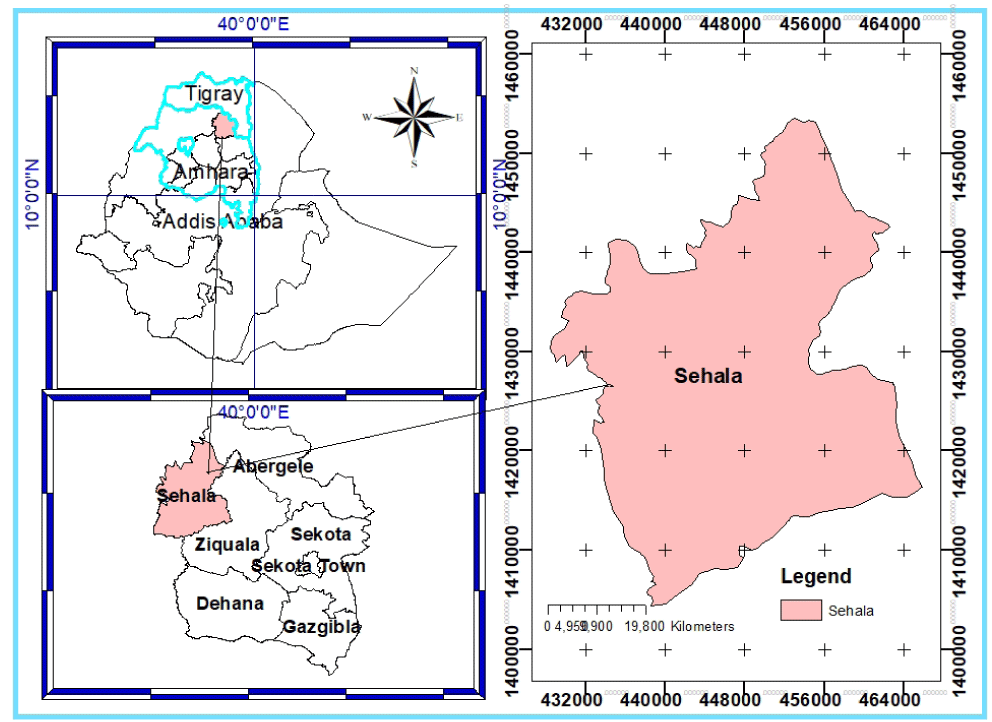
Nile tilapia (Oreochromis niloticus), African catfish (Clarias gariepinus) and catfish (Bagrus docmak) are the main three fish species that are targeted by the small-scale fishery in Sehala district (Goshu et al., 2010). Sehala district has a total of 12 sub-districts, of which only six sub-districts are surrounded by Tekeze reservoir. This study was conducted primarily on two of these sub-districts, namely Silazgie and Mesheha. The presence of armed conflict during the study period limited the number of sub-districts that could be accessed.
A fieldwork that targeted chain actors, transporters, supporting entities and consumers was conducted encompassing areas from landing sites to the regional market in July 2022. Qualitative data collection tools (i.e., focus group discussions [FGD], key informant interviews [KIIs] and in-depth interviews [IDIs]) were employed to gather data on the overall functioning of the fish value chain at Sehala district. Guides containing both open- and close-ended questions were used for the KIIs and IDIs. Training was provided to data collectors prior to the start of the fieldwork. Each FGD was conducted with two individuals (i.e., one facilitator and one note taker) while taking audio recordings. A team of eight experts were deployed to run and supervise the discussions and interviews.
A total of three FGDs, 20 KII and 35 IDIs were conducted during the fieldwork (Tables 1–3). The FGDs involved fishers of different age groups. Fishers within the age range of 18–29 were considered as a ‘youth fisher’; whereas fishers above the age of 29 were considered as ‘adult fisher’. Two FGDs involving fishers representing the two specified age groups were run in Silazgie sub-district. Contrastingly, only one FGD encompassing youth fishers was conducted in Mesheha sub-district as the number of youth fishers is greater than the adult fishers. The total sample size was determined based on theoretical saturation—the point at which additional data collection no longer provides new insights into the questions asked by the interviewers.
| Respondents (FGDs) | Silazgie | Mesheha | Total |
|---|---|---|---|
| Youth male fishers | 1 | 1 | 2 |
| Adult male fishers | 1 | 0 | 1 |
| Total | 2 | 1 | 3 |
Overall, all participants and informants were chosen purposefully based on their participation in the district’s fishery sector. Participants from Sehala district were exclusively drawn from villages bordering the reservoir, as those living near landing sites are more likely to be engaged in the fish value chain. Additional informants were selected from zonal and regional cities where fish produced in Sehala is presumed to be sold.
Responses of interviews and discussions were transcribed and analysed thematically after coding them into different groups and themes following observation of the broader patterns in the collected data. Excerpts and narratives generated from the analysis were expanded and used to write the report. Description of themes was supported by elaborative quotes. All texts under quotation represent direct voice of the study participants directly translated to the English language.
Results
Sehala district, located in the Wag Hemra zone, is home to a small-scale fishery operated by a cooperative of local fishers. This cooperative consists of 479 members, including 7 women and 472 men, who actively engage in fishing as a livelihood. They collectively manage and utilise 78 boats, 954 gillnets, and 670 hooks and lines to harvest fish from local water bodies. The fish they catch are supplied to nearby and few distant markets, contributing to food security and the local economy. This organised approach enables efficient resource use, enhances fishers’ livelihoods, and supports the sustainability of small-scale fisheries in the region.
Fishers in Sehala district use small, mostly non-motorised boats made of sheet metal to catch fish. Most of these boats were supplied by traders (input suppliers) from Tigray region. Fishers often use monofilament nets with stretched mesh sizes ranging from 2.5 cm to 4 cm to harvest Nile tilapia and Labeobarbus spp. In addition, fishers employ hook and line fishing to catch African catfish and catfish. One supplier in Bahir Dar supplies multifilament gillnets. In addition, there are two boat builders in Bahir Dar who supply both motorised and non-mortised fishing boats. Monofilament gillnets are supplied via illegal channels as the use of these nets is prohibited by the law. Plastic basin, freezers, plastic bags, generators and plastic crates are inputs for fish processing mostly sourced from Addis Ababa. Wooden plates used for lining up of fillets in freezers are purchased from Ziway (Batu) town, Oromia region. The supply of most of the inputs does not target the fish value chain apart from the inputs required for fishing (i.e., boats and gears). Given the small number of suppliers, the fishing equipment market can be characterised as a thin market with little competition.
The overall fish yield of the Tekeze Reservoir is estimated at approximately 968 tones per year, based on the average results from five different empirical models (Goshu et al., 2009). However, the specific contribution of Sehala district to this potential, as well as its actual annual fish production, remains to be accurately assessed. Observations from the field suggest that Sehala holds considerable production potential, possibly surpassing that of some zones located near Lake Tana. For instance, during a visit to the Mesheha sub-district, we met Assefa Wolde, a 19-year-old high school student who harvests around 60 kg of fish per trip. Notably, Assefa fishes for only ten days each month due to school commitments, which indicates that even limited effort can yield significant catches. This example underscores the importance of conducting detailed, district-level production assessments to inform sustainable resource planning. It also highlights the need for targeted support to enhance local fishing capacity and improve the accuracy of fish yield data, which are critical for aligning policy and management interventions with actual on-the-ground potential.
Assefa said that:
“I would have harvested a lot of fish and gained better financial benefits if I wasn’t busy with my study and family. My plan is to be a fulltime fisher after finishing high school.”
If a part-timer fisher can catch this much fish during a single fishing trip, one can understand that the amount of fish that can be supplied to the market from Sehala district is considerable. The recurrence of drought in the district and the resultant limited engagement of individuals in agricultural activities led the local people to be engaged in fish harvesting, processing and trading.
Four fish species were found to be commercially important, namely: Nile tilapia, catfish, Labeobarbus spp. and African catfish. However, the demand for Nile tilapia is much higher than the rest of commercially important fish species. A single catfish could weigh more than 10 kg and fetches the highest market price than other commercially important fish species that are produced in the district. The interest of the local people to be engaged in fishery was high until the start of northern Ethiopia conflict which led to the closure of the landing sites.
Fishers use monofilament gillnets with mesh size of 2.5–4 cm to catch Labeobarbus spp. and Nile tilapia. Longline fishing is used to catch catfish. The process of fish harvesting in Sehala district involves deploying fishing gears around 7 am and assessing the gears several times throughout the day to check whether they catch fish or not. Then, the fisher collects the fish the next morning (~2 am) and starts transporting his harvest to the market while leaving the gear socked in the water after emptying it. In case of unavailability of transporting boat or if the gears did not catch enough fish, the fishers leave the gears in the water sometimes for days. Mosquito nets are used to keep fish fresh in the water if collected from the gears alive.
According to the district Livestock and Fishery Development Office, the number of fishers in Sehala district is estimated to be more than 3,500. From which, 200 are illegal as they do not have commercial license to fish. Fishers interviewed in this study mentioned that up to 60 kg of fish can be caught in a single fishing trip. Most fishers go fishing for nine months of the year, seven days a week. The fishery is closed for three months (i.e., July–September) every year so that the stock can replenish. However, the amount of fish fishers harvest fluctuates substantially probably due to reasons associated with the efforts exerted by fishers, physicochemical conditions of the water and the carrying capacity of the fishery.
Filleting and degutting are the processing techniques commonly practiced by fishers at Sehala district. Fishers process their own catch by themselves. This is done either while traveling to the market by boat or at landing sites. Processing while traveling by a crowded boat used to be practiced before 2020 when the destination market was Chila district of Tigray region. Processing on the landing sites started in 2020 after the closure of the Chila district due to the northern Ethiopia conflict. Bahir Dar and Addis Ababa were the destination markets for fish from Sehala district from 2020 onwards until the closure of the fishery in mid-2021 due to the onset of the northern Ethiopia war. Solar drying of fillets is sometimes practiced by fishers at times when there is no buyer. Fishers stated that producing a kg of dried fish could take up to 3 kg of fillets (Table 4). Nile tilapia and African catfish are the fish species that are commonly dried by fishers. Fishing and processing is often done by men.
Degutting, filleting, and drying are carried out in an unsanitary environment. Fish processing is often done without any shelter while exposed to the sun directly. The river water is often used to clean fish and processing equipment (knives, perforated jerry cans, plastic crates and sacks). Similarly, drying is done by hanging fillets on a rope without any cover that can prevent house flies and dust. Fishers do not have access to freezers, processing sheds, clean water and appropriate drying equipment. Fishers dump offal and unsold fish back to the river.
The destination market where most of the fish harvested from Sehala district traded was Chiresh market, Chila district of Tigray region until 2020. Fishers explained that inequality of bargaining power was common during the fish trade. This has led to the price of fish to be very low, causing bankruptcy to the fishers. At times, the fishers could discard their harvest as there was nothing they can do with the fish. Some fishers practice fish drying as a mechanism to make money from their harvest when there is no buyer. The trading was on a credit basis where the fishers deliver their product to the traders and receive the money later. The number of fishers who had suffered losses due to the denial of traders was not insignificant.
The market shifted to Bahir Dar and Addis Ababa due to the onset of the northern Ethiopia war. These markets primarily prefer filleted and degutted fish. Filleted fish is used by restaurants and consumers to prepare dishes such as fish stew, fish goulash, fish cutlet, grilled fish and fish skewers, while degutted is fish is mainly used to make fried fish. Fish traders play a key role in the value chain, purchasing fillets from fishers at landing sites, rinsing them with water, freezing, packing, and selling them. Plastic crates are commonly used by traders to transport fish fillets. These activities are performed by traders based in the Sehala district.
Traders at Sehala district use large plastic basins to rinse fillets. They hire exclusively women for fillet rinsing job. Fish traders line up rinsed fillets in a freezer separately using a wooden plate made of Wanza tree (Cordia africana). Once the fillets are frozen, they will be weighed and packed with plastic bags. Each pack of frozen fillets weighs 1 kg. A machine is used to seal plastic packs. According to the traders, a sealed frozen fillet can stay in the freezer for about 15 days without changing colour.
They try to maintain good product quality by selecting and buying fresh fillets from fishers. Traders employ from 4 to 20 employees. The role of the employees include selecting and loading the fillets to trucks at landing sites, rinsing fillets, lining fillets in freezers and packaging. There are about eight traders with commercial license in the district. From which, we interviewed six of them. A trader buys 1–10 quintals of fillets every day. The amount of fish traders buy per day is driven by market demand. In general, a trader could sell up to 20 quintals of frozen fillets per week.
Traders at Sehala district buy a kg of fillet from fishers with an average price of USD 0.9 (Ethiopian Birr [ETB] 50). This price is often set through a negotiation with the cooperative. Illegal fishers sell their harvest with low price (i.e., USD 0.63 or ETB 35) compared to legal fishers. District level traders sell frozen fillets with an average price ranging from USD 1.08 to 1.17 (ETB 60 to 65) to traders that come from Bahir Dar and Addis Ababa. But this price could get as high as USD 2.16 (ETB 120) given the story we heard from traders at Bahir Dar (Table 5). Some of the district level traders deliver their own products to Bahir Dar and Addis Ababa. However, they mentioned that they pay an average fee of USD 900 (ETB 50,000) to transport 20 quintals of frozen fillets by Isuzu freight trucks to Addis Ababa. Traders in Bahir Dar pay USD 0.10–0.14 (ETB 6–8) to transport a kg of frozen fillets to Addis Ababa by a refrigerated truck. An exchange rate (1 ETB = 0.018 USD) during the study period was used to estimate the prices in USD.
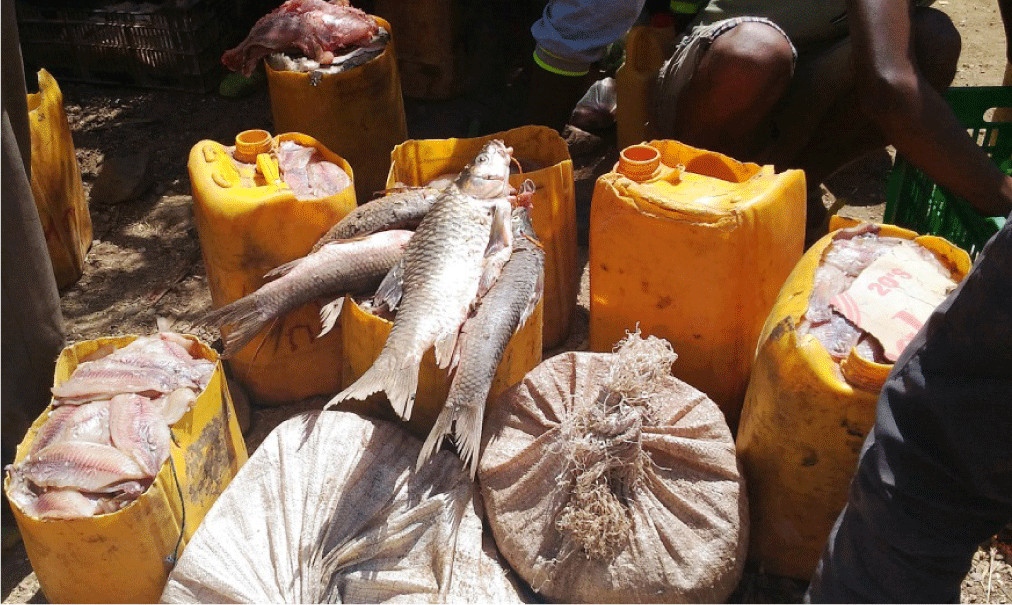
Fish transporters who own motorised boats provide transporting service from Sehala to Chila district. The entire journey takes 8–12 hours of boat travel. Fish transporters receive the transporting fee mostly in kind (fish). A transporting fee of 2–3 kg of fish composed of Nile tilapia and catfish is often paid to transport a harvest of a single fisher. The transporters often load their boats with > 50 fishers and their harvests. Fishers use perforated 20 litre cooking oil jerry cans after cutting the top part of the cans. Plastic sacks are also used to transport fish (Fig. 2).
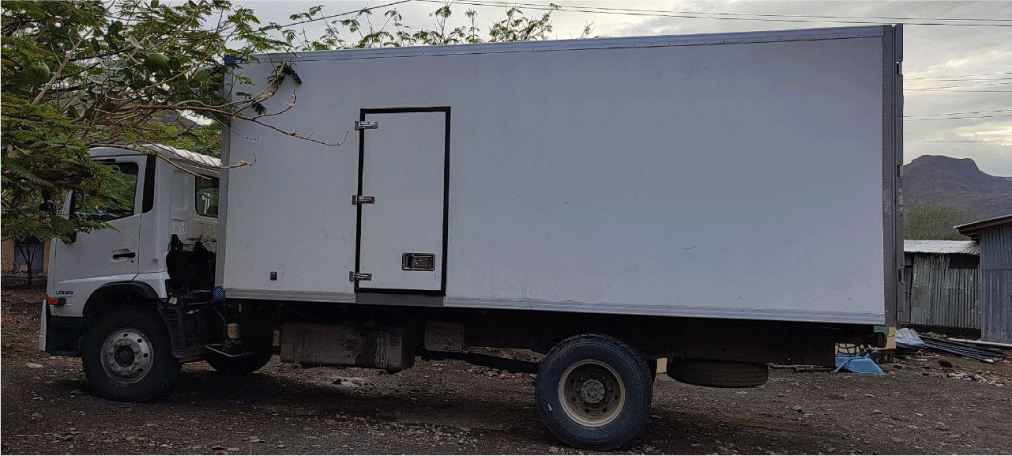
Fish is transported to Bahir Dar and Addis Ababa mostly using freight trucks. Only one trader and Fish Production and Marketing Enterprise of Ethiopia Enterprise own refrigerated trucks. The regional government bought one refrigerated truck for the district a couple of years ago. However, the district agricultural office is currently using the truck to transport people and other goods. It costs fish traders at Sehala USD 900 (ETB 50,000) to transport 20 quintals of frozen fillets to Addis Ababa. Fish traders in Bahir Dar bring fish from Sehala and sell it to traders in Addis Ababa. They pay an average of USD 0.09–0.14 (ETB 5 and 8) per kg of frozen fillet to transport to Addis Ababa by Isuzu freight trucks and refrigerated trucks respectively. Traders in Bahir Dar also pay USD 1,260–1,440 (ETB 70,000–80,000) to transport 40 quintals of frozen fillets from Sehala to Bahir Dar. The regional government purchased refrigerated truck for the district fishery although it was not functional during the period of the present study (Fig. 3).
The table below (Table 6) shows the price patterns of fish as it moves from fishers to consumers across traders.
Fish from Sehala is primarily sold in distant urban markets. Local consumption remains limited due to weak purchasing power and cultural preferences. Market demand is strongest for processed (filleted and degutted) fish products. According to restaurant owners, fish traders and staffs of NGOs are the main customers of restaurants in Sehala district. One fisher that we interviewed in this study told us that they make soup from fish heads they keep after making fillets. Fishers consume dry flat bread made of maize flour (i.e., Birkuta) when fishing instead of fish. Some fishers mentioned that they consume an average of 2 kg of fish per week. However, fish is not consumed regularly in non-fishing households. The prices of fish dishes included in this report (Table 7) are mainly from conventional restaurants in Sehala, Sekota and Bahir Dar. These prices could vary depending on the star rating and location of hotels in Bahir Dar.
The Livestock and Fisheries Development Office is the major public organisation that oversights the fishery sector of the region. This office has organisational structure that extends to sub-district level across zones and districts. It is this office that mainly works closely with NGOs in selecting and delivering supports to beneficiaries in the fishery sector. The office also polices the implementation of the legal frameworks that are put in place by the government on fish resource utilisation in collaboration with the security apparatus. Interestingly, the use of gillnets with mesh sizes less than 8 cm is prohibited by the Fish Resource Utilisation Proclamation of the Amhara region which was ratified in 2003. Almost all the fishers we interviewed use the illegal fishing gear despite the prohibition.
This office sometimes receives funds from organisational donors and supports the fishery sector of the region. The office has constructed a fish processing facility at Meharit kebele of Sehala district using the funds from one of its projects called Livestock and Fisheries Sector Development Project (LFSDP). Nevertheless, the facility is not well equipped to provide service to fishers. In addition, this office has procured and supplied one refrigerated truck to Sehala district. The regional cooperative bureau follows up the functioning of fisher cooperatives and small and medium-sized enterprises (SMEs).
Bahir Dar Fish and Other Aquatic Life Research Centre (BFaOALC) is the pioneer organisation that attempted to study the fish composition of the artificial lake. Sekota Agricultural Research Centre also collaborated with BFaOALC on several occasions to conduct preliminary studies on the Tekeze fishery. In fact, these two research centres conducted most of the trainings provided by NGOs. Researchers in these centres were the trainers commissioned by the NGOs.
As a research university with an academic unit that specialises in fishery science, BDU is interested to launch a mega research project that focuses on assessing the fish stock of Tekeze. The research is aimed at exploring the potentials of the fishery and suggesting measures that can ensure sustainability. However, BDU could not conduct the research due to the conflict in the area.
Discussion and Conclusion
The fish value chain in Sehala district operates through a series of interconnected activities involving fishers, traders, and consumers. This chain includes fish harvesting, processing, transportation, and marketing, with much of the fish being sold in urban centers like Bahir Dar and Addis Ababa. Despite its potential to contribute to local livelihoods and food security, the findings of this study reveal that the fish value chain in this district faces several structural challenges, including a limited number of input suppliers and thin markets characterized by low competition. These challenges align with broader market inefficiencies observed in fish value chains across developing countries, which hinder sectoral growth and economic viability (FAO, 2024).
First of all, there is a shortage of essential inputs such as fishing gear, cold storage, and processing equipment. This limits fishers’ ability to scale their operations and meet market demand consistently. The high capital requirements for entering the input supply business serve as a significant barrier to entry, thereby further restricting the availability of essential fishing inputs. This financial constraint has been recognized as a limiting factor in small-scale fisheries, preventing access to appropriate fishing gear and leading to the use of suboptimal or illegal methods (FAO, 2005). Limited access to essential fishing inputs may drive fishers toward the use of illegal fishing gear, such as small-mesh monofilament nets, which pose a threat to fish stocks through overfishing and the capture of juvenile fish (Allison & Ellis, 2001). In Sehala district, this phenomenon is evident, as fishers resort to non-compliant gears due to affordability and accessibility challenges. Similar challenges have been reported in other African fisheries, where economic constraints and regulatory gaps drive fishers toward unsustainable practices (Sowman & Cardoso, 2010). Addressing these concerns requires targeted interventions, including financial support schemes that enable fishers to transition to legal and sustainable fishing methods. Ensuring a sustainable input supply is crucial for maintaining fish stocks in the Tekeze reservoir. Properly regulated access to fishing gear, particularly multifilament gillnets with a mesh size greater than 8 cm, aligns with national and regional fish resource utilization proclamations (ANRS, 2003, 2007). Such measures help control fishing effort and reduce pressure on fish populations, ultimately supporting long-term fisheries sustainability. Research by McClanahan & Cinner, (2008) highlights that adaptive gear-based management systems, when effectively enforced, contribute to notable improvements in fish stock recovery and ecosystem resilience.
Although regulations exist to promote sustainable fishing, including the 2003 Amhara Fish Resource Utilisation Proclamation that prohibits gillnets with mesh sizes under 8 cm, enforcement on the ground remains weak (ANRS, 2007). The responsible office, supported by the security apparatus, is mandated to implement these laws, yet compliance is low. Almost all interviewed fishers reported using gear that does not meet legal standards. This widespread non-compliance reflects both limited regulatory reach and deeper structural issues, such as economic constraints and lack of affordable legal gear. When enforcement is perceived as inconsistent or absent, fishers may prioritise short-term gains over long-term sustainability, accelerating the depletion of fish stocks through the capture of juvenile individuals. Addressing these issues requires not only stronger enforcement mechanisms but also greater community engagement and education to improve awareness and shift behaviour towards more sustainable practices.
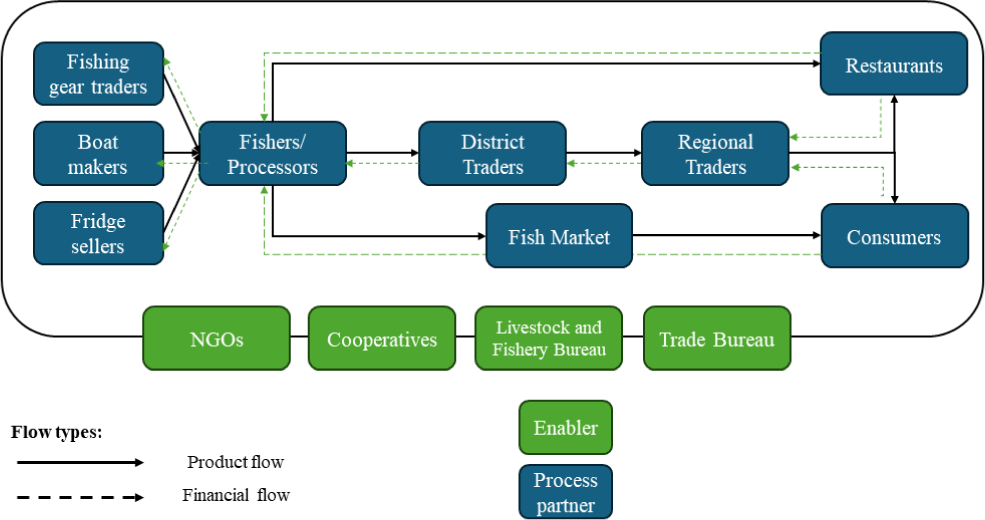
Secondly, in Sehala district, fishers fillet their own catch and supply it to small traders at the district level, local restaurants, or traders from nearby cities (Fig. 4). The fishing and initial processing activities are predominantly carried out by men, while women’s involvement in the fish value chain remains limited. Women in the district are mainly engaged in household responsibilities and livestock rearing, with minimal participation in fish processing or marketing. This contrasts with other parts of Ethiopia, such as the Lake Tana region, where women play a more active role in fish processing and trade. The limited involvement of women in Sehala reflects local social norms that define fishing and related activities as male domains, often reinforced by the physically demanding nature of fish harvesting and the cultural expectation that women remain within the domestic sphere. This gendered division of labor mirrors trends observed in many rural settings, where women’s roles are often focused on domestic responsibilities and agricultural tasks, limiting their participation in the fisheries sector (Weeratunge & Snyder, 2009). In addition to social norms, structural barriers such as limited access to gear, credit, and market information constrain women’s ability to participate in fisheries-related enterprises. Enhancing women’s involvement in the value chain requires not only addressing economic and logistical constraints but also engaging communities to challenge gender stereotypes and promote inclusive participation. Tailored interventions that build women’s skills, improve access to finance, and create safe, culturally appropriate spaces for involvement in processing and trade could help unlock their potential contribution to the sector.
Third, Poor Road networks and limited cold-chain facilities increase post-harvest losses and reduce product quality during transportation. This affects the competitiveness of Sehala’s fish in larger markets. Hygienic handling of fish remains a critical issue in the district, as both fishers and processors lack adequate access to proper storage and processing equipment. Poor post-harvest handling practices contribute to significant losses in fish quality and market value, a problem widely documented in artisanal fisheries (Maulu et al., 2020). Limited input availability, such as ice, cold storage, and sanitary processing facilities, further exacerbates this challenge. Improving access to essential inputs such as ice, cold storage, and sanitary processing facilities has been shown to enhance product quality and increase profitability along fish value chains. For instance, targeted interventions in small-scale fisheries have demonstrated that better post-harvest handling can significantly reduce spoilage rates and enhance market value (FAO, 1999). Strengthening infrastructure and input supply chains in Sehala district is, therefore, essential for improving fish handling standards and market competitiveness.
Poor transportation practices further exacerbate post-harvest losses and health risks associated with fish consumption in Sehala district. Fish is often transported using unsuitable equipment such as plastic sacks and perforated jerry cans, exposing them to contamination and rapid spoilage. This method not only degrades fish quality but also poses consumer health hazards. The use of insulated and hygienic containers is crucial to maintaining fish quality and reducing postharvest nutritional loss. Moreover, refrigerated trucks should replace freight trucks currently used to transport fish, ensuring product integrity from the district to both nearby and distant markets.
Forth, seasonal fishery closures during the spawning period represent another important management intervention. Enforcing these closures in accordance with existing proclamations could significantly contribute to stock replenishment while ensuring that fishing-dependent households maintain their livelihoods. Evidence from Lake Victoria, East Africa, indicates that well-enforced seasonal closures lead to increased fish biomass and improved catch rates over time (Njiru et al., 2008). Similarly, implementing such measures in Sehala district could enhance fishery sustainability and ensure continued economic benefits for local communities.
Fifth, the value chain relies heavily on distant urban centres like Bahir Dar and Addis Ababa. Fish consumption remains low among fishers and other segments of the value chain in Sehala district. This geographic concentration makes the sector vulnerable to external shocks, such as conflict or logistical disruptions. In addition, eating fish is a valuable source of protein, making it important from a nutritional point of view. Community engagement and advocacy activities promoting household diet diversification through the inclusion of fish-based dishes could be instrumental in addressing this issue. Introducing simple fish recipes that require minimal ingredients could encourage fish consumption, as traditional Ethiopian fish dishes often require extensive preparation and large amounts of cooking oil, which may deter some households.
Lastly, there is limited technical knowledge and training on sustainable fishing practices, value addition, and market strategies. This hampers innovation and the adoption of more efficient production methods. Especially the integration of integrated fish farming, which links fish farming with crop and animal farming could be advantageous for the sector due to increased farm productivity and cheaper input through the usage of by-products, waste materials and other on-farm resources.
Economic benefits along the fish value chain in Sehala are unevenly distributed. Small-scale fishers receive relatively low prices for their catch, while district-level traders face high transportation costs that reduce their profit margins. The greatest economic gains tend to be captured by traders and retailers operating in urban markets such as Bahir Dar and Addis Ababa, where fish prices are significantly higher. Similar trends, where traders make more profit than fishers, have been reported in other African countries such as Tanzania and Nigeria (Edet Bassey et al., 2014; Ibengwe et al., 2022). Consumer preferences in these cities show a strong demand for processed and frozen fish products, which are preferred for their convenience and longer shelf life. Dietary patterns influenced by cultural and religious practices, especially the Orthodox Christian fasting periods, lead to increased fish consumption as households seek alternatives to meat and dairy. This seasonal demand places additional pressure on the value chain to supply sufficient quantities. However, limited local consumption and dependence on a few urban markets make the system vulnerable to market fluctuations. Understanding these dynamics is essential to design interventions that promote fairer income distribution, improve market access for producers, and align production with consumer needs.
This all together threatens sustainability and economic performances within the sector. Market inefficiencies reduce margins for fishers and traders, limiting reinvestment in better technology or practices, which eventually reduces profitability. Unsustainable fishing, driven by economic pressures, threatens fish stocks and the long-term viability of the sector, leading to environmental risks. Moreover, dependence on a few urban markets and weak local consumption make the value chain susceptible to conflict, climate, and economic disruptions. Addressing these inefficiencies through policy reforms, investment in infrastructure, and capacity-building initiatives is essential for improving the sustainability and economic resilience of the fish value chain in Sehala (Table 8). This, however, requires the committed engagement of all enabling actors, including public organizations, research centres, universities, and development partners. Collaborative efforts should focus on improving access to quality inputs, enforcing sustainable fishing regulations, and strengthening post-harvest handling practices. By fostering multi-stakeholder involvement, the district can develop a more efficient and competitive fish value chain that supports economic growth and environmental sustainability.
The presence of armed conflict during the study period had a notable impact on the scope and depth of the research. Due to security concerns, access to several sub-districts within Sehala was restricted, which limited the geographical coverage of data collection. As a result, the findings presented here may not fully capture the variability in fishing practices, production levels, and input challenges across the entire district. It is possible that areas not included in the sample have different levels of fishing activity, compliance with regulations, or resource access. While the insights gathered offer valuable initial understanding, the conflict-related constraints highlight the need for further research when conditions allow broader coverage. Such follow-up studies would help to validate and refine current estimates and contribute to more comprehensive fisheries planning in the Tekeze reservoir area.
In conclusion, addressing the challenges faced by the fish value chain in Sehala district requires a comprehensive and multi-faceted approach. Strengthening input supply systems, enforcing sustainable fishing regulations, improving fish handling and transportation, promoting fish consumption, and offering technical training are crucial steps toward enhancing the sector’s efficiency and sustainability. Collaboration among policymakers, researchers, and development partners is essential to implement these interventions successfully. Furthermore, the current biological knowledge of fish stocks and ecosystem dynamics in the Tekeze reservoir remains limited. Future ecological studies should focus on assessing fish population status, breeding patterns, and habitat conditions to inform adaptive management strategies. By adopting best practices, investing in the necessary infrastructure, and advancing scientific understanding, Sehala district can develop a more resilient and profitable fish value chain that benefits both local communities and the broader economy.

