

Introduction
Stress is a response to any stimulus that threatens an organism’s homeostasis (Wielebnowski, 2003). During stressful conditions, several systems such as the endocrine and immune systems can be activated to help an organism cope. An important part of the stress response system in fish is the activation of the hypothalamic-pituitary- interrenal axis, which elevates cortisol levels to combat stressors (Aerts & De Saeger, 2015; Zhang et al., 2023).
Aquaculture is essential for global food security, and understanding fish stress and health is critical for ensuring welfare and product quality; however, quantifying stress remains challenging. Cortisol is widely used to monitor physiological responses to stress in fish species and serves as an indicator of animal welfare and production quality (Oliveira et al., 2024). Cortisol, a primary stress hormone, regulates various physiological and metabolic processes in animals and fish (Daskalova, 2019). Fish appear to lack specific corticosteroid-binding proteins in the plasma, allowing cortisol to diffuse freely out of blood vessels (Ellis et al., 2012).
Measurement of blood cortisol has long been the standard approach in stress physiology research. However, this method has significant limitations, as it requires repeated sampling, is invasive, and may induce stress (Carbajal, 2018; Ghassemi Nejad et al., 2019; O’Toole et al., 2023). In addition, blood collection from live fish is technically challenging, requiring skilled personnel, specialized equipment, and strict storage conditions, while providing only a snapshot of acute stress rather than chronic stress (Bertotto et al., 2010). Conventional cortisol assessment in fish therefore extend beyond blood to the other biomatrices such as eggs, scales, fins, jawbones or mucus (Martínez-Rodríguez et al., 2025; Sadoul & Geffroy, 2019; Samaras & Pavlidis, 2022; Tan et al., 2024). Moreover, single-point cortisol measurements often reflect only acute stress and do not provide information on the cumulative stress levels relevant to long-term fish welfare and production outcomes (Ataallahi et al., 2022; Ding et al., 2023). To overcome these limitations and enable assessment of chronic stress, researchers increasingly utilize biomatrices that archive hormone deposition over extended periods such as fins and jawbones in sturgeon (Ghassemi Nejad et al., 2019), flathead grey mullet fish (Martínez-Rodríguez et al., 2025) and Asian sea bass (Tan et al., 2024), as well as scales in carp, chub, and pike fish (Ghazal et al., 2025; O’Toole et al., 2023). These matrices record endocrine activity over weeks to months and provide reliable alternatives to blood for evaluating chronic stress.
According to Konrad & Pietsch (2024), fin condition is one of the most frequently used welfare parameters for farmed fish. However, fin condition alone may not fully capture overall health status, and correlations with other welfare indicators are necessary. Fin cortisol analysis offers several advantages as it can be measured at the individual level, reflecting both basal and stress-induced levels with high accuracy. Although sampling fins in live fish requires handling that may induce stress (Sadoul & Geffroy, 2019), fins are essential external structures supporting swimming, balance, and maneuvering. These include paired fins (pectoral and pelvic) and unpaired fins (dorsal, anal, caudal, and the small adipose fin), all directly exposed to the aquatic environment. This accessibility, along with their simple anatomy and cortisol sensitivity, makes fins a practical, minimally invasive matrix for assessing cortisol (Sadoul & Geffroy, 2019; Wang et al., 2017).
Moreover, fins and scales are widely available and can be sampled non-lethally, even from dead or market fish, without affecting product quality as they are often trimmed or discarded during processing. Their continuous growth throughout life allows assessment of cumulative stress, offering a retrospective view of chronic exposure, that is not provided by other biomatrices (Schumann et al., 2024).
Therefore, other methods should be developed and validated when cortisol levels are used as a single stress indicator of long-term stress events in aquaculture. Measuring cortisol residues in frozen fish meat offers a non-invasive solution that can be integrated into post-harvest quality control, providing insights into fish health during rearing, transportation, and processing. This approach is aligned with efforts to reduce production losses and enhance product quality, thus supporting ethical and resource-efficient aquaculture practices (Prestes dos Santos et al., 2024; Sadoul & Geffroy, 2019). The presence of cortisol residues in frozen fish meat is yet to be widely studied; however, it could pave the way for better management practices and fish health rankings in the markets.
The rainbow trout (Oncorhynchus mykiss) is an ideal model species for studying stress-related effects in aquaculture, because of its sensitivity to environmental fluctuations (Bae et al., 2019; Banaee et al., 2023; Ma et al., 2024). Despite the growing need for sustainable monitoring solutions, few studies have explored cortisol residue analysis in frozen fish meat. The current study aims to fill this gap by focusing on cortisol residue in the fins of frozen rainbow trout to validate a practical retrospective stress assessment protocol. The results of this study are expected to assist researchers and aquaculture managers in marketing and promoting seafood consumption.
Materials and Methods
Sixteen frozen rainbow trout fish (labeled T1 to T16) with an average weight of 362 ± 95 g were purchased from a local market in Chuncheon, Korea, in April 2023. All the fish originated from the same aquaculture farm, ensuring uniform rearing conditions. In study I, five fish (T1 to T5) were randomly selected from the 16 samples to compare cortisol concentrations across 6 fin types (adipose, pelvic, pectoral, dorsal, anal, and caudal). Fish were selected without specific biological or physiological criteria to reduce sampling bias and minimize inter-individual variability. This approach enabled feasibility in a pilot study focused on intra-individual fin comparisons. While formal power analysis was not conducted, this limitation is acknowledged and future studies with larger sample sizes are necessary. In study II, caudal fins from all 16 fish (T1 to T16) were analysed to assess the utility of this fin type as a representative cortisol biomarker for fish stress.
The rainbow trout were reared at an organic-certified raceway farm (32 × 4.3 × 1.5 m) in Korea, operating a flow-through system with mixed river and underground water sources. Seasonal water temperatures ranged from 2°C–6°C (winter), 15°C–17°C (spring), to 19°C–20°C (summer). The fish were fed commercial pellets (Suhyup Feed, Uiryeong 52159, Korea) twice daily at 09:30 and 15:30 over an 18-month growth period. The nutrient compositions are shown in Table 1.
| Feed stage | Form | Size (mm) | Packaging | Minimum (%) | Maximum (%) | ||||
|---|---|---|---|---|---|---|---|---|---|
| CP | CF | Ca | P | CA | CFi | ||||
| Early stage | Extruded pellet | 1–2 | 20 kg | 50.0 | 8.0 | 1.5 | 2.7 | 17.0 | 3.0 |
| Adult stage | 3–7.5 | 42.0 | 18.0 | 1.5 | 2.7 | 15.0 | 3.0 | ||
For a comprehensive comparisons, all fin types were collected from each of the five selected fish. Caudal fins from all 16 fish were sampled to validate whether cortisol levels in this fin reflected overall fish stress. The caudal fin was selected for a broader analysis because of its larger size, which facilitates repeated sampling without compromising measurement integrity.
Cortisol extraction was conducted following the protocol previously described by Ghassemi Nejad et al. (2019), with modifications to suit the frozen fin samples. Fin tissues were washed, and the skin was cleaned to remove surface contaminants. The fins were collected using scissors and dried in an incubator at 38°C (Fig. 1), and pulverized using a bead beater (tacoTM Prep, GeneReach Biotechnology, Taichung City, Taiwan). A 50 mg portion of the pulverized sample was mixed with 1.0 mL of extra pure methanol (99.5%; Daejung Chemicals & Metals, Siheung, Korea) for hormone extraction. The samples were vortexed for 1 min and agitated in a tube rotator (Scilogex MX-RL-Pro, SCILOGEX, Rocky Hill, CT, USA) at 40 rpm (0.09 ×g) for 24 h at room temperature. The mixture was centrifuged at 14,000 rpm (21,124 ×g) for 1 min (1730R, GYROZEN, Gimpo, Korea), and 0.6 mL of the supernatant was transferred to microtubes, evaporated at 38°C, and stored at –21°C for analysis.
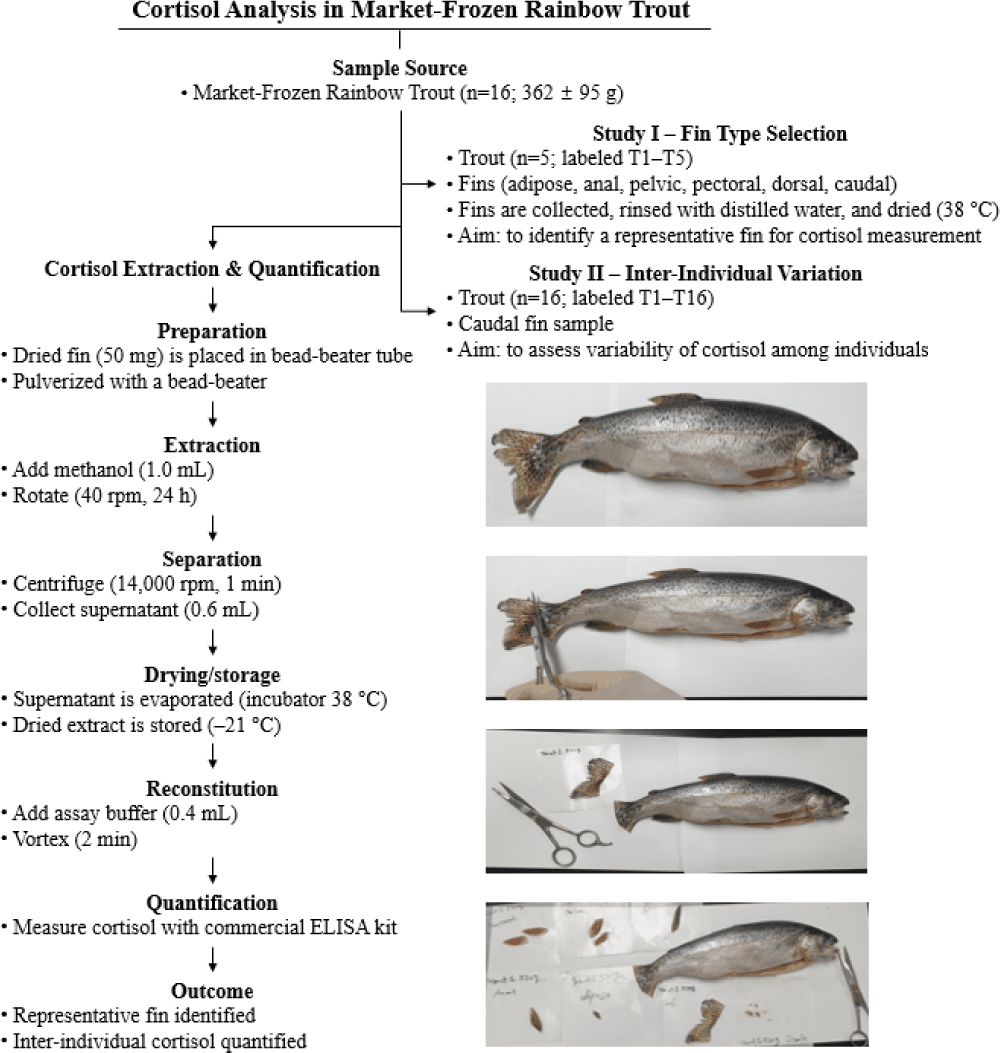
Cortisol levels were measured using a colorimetric competitive enzyme-linked immunosorbent assay (ELISA) kit (Salimetrics, State College, PA, USA) with a sensitivity below 0.007 μg/dL and a detection range of 0.012–3.000 μg/dL. Each sample was analyzed in duplicate, yielding a total of 64 observations (16 fish × four replicates each). Units were converted from μg/dL to pg/mg using sample weight, extraction volume, and assay buffer volume using the following formula (Ghassemi Nejad et al., 2019):
Cortisol concentration (pg/mg) = [assay output (μg/dL) per well ÷ weight (mg) of pulverized fin sample] × [volume (mL) of methyl alcohol added as extraction solvent ÷ volume (mL) of methyl alcohol recovered from the extraction and subsequently dried down] × volume (mL) of assay buffer diluent used to reconstitute the dried extract × 10,000 (unit conversion factor).
Results
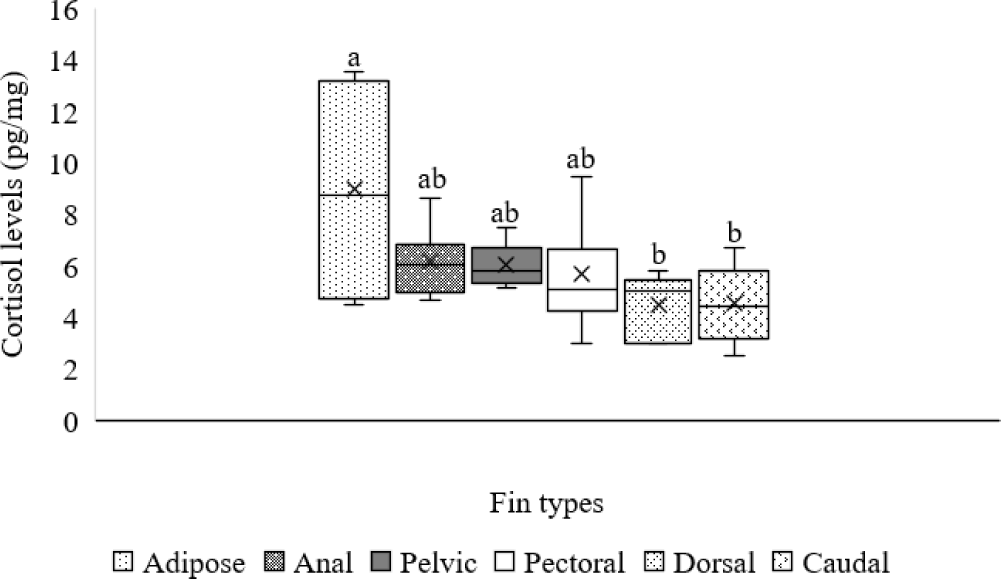
Cortisol levels varied significantly among the fin types in the five selected fish (p < 0.05). The adipose fin showed the highest cortisol levels, significantly greater than those in the caudal and dorsal fins (p < 0.05; Fig. 2). The caudal and dorsal fins consistently showed the lowest concentrations, while the anal, pelvic, and pectoral fins displayed intermediate values. These intermediate fins did not differ significantly (p > 0.05) from either the adipose or the caudal/dorsal fins.
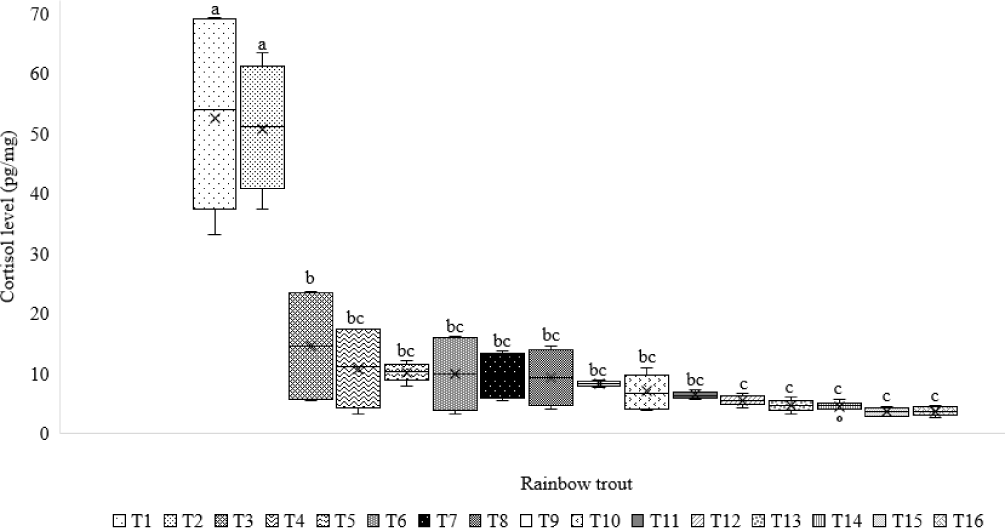
The caudal fin showed consistent cortisol levels in all samples. Caudal fin cortisol levels across 16 frozen rainbow trout meat samples ranged from 2.4 to 69.1 pg/mg, with a mean of 13.1 ± 16.2 pg/mg (Fig. 3). Among the rainbow trout meat samples, two showed higher cortisol levels (p < 0.05) than the other samples (Fig. 3).
Discussion
This study demonstrates the feasibility of using frozen fish fins, particularly caudal fins, for retrospective cortisol residue analysis. The significant differences between the fin types underscore the importance of sample site selection in stress assessments. Consistent cortisol levels in the caudal fins suggest their suitability as noninvasive indicators for monitoring fish welfare in commercial settings. Implementation of cortisol residue analysis in frozen fish meat could enhance post-harvest quality control and promote responsible aquaculture practices (Daskalova, 2019). These findings align with those previous studies emphasizing the relevance of cortisol in aquaculture stress monitoring (Ghassemi Nejad et al., 2019; Oliveira et al., 2024) and address a critical gap by providing a practical, non-invasive assessment method applicable to market-available fish. The adoption of this approach may improve supply chain transparency, reduce production losses, and support sustainable fish consumption.
Cortisol is widely used as a physiological biomarker to assess stress and welfare in fish and other animals (Ataallahi et al., 2022; Ellis et al., 2012). Although fish are one of the most common food sources globally, concerns about fish stress and welfare have grown among the scientific community and consumers in recent years (Aerts & De Saeger, 2015; Ellis et al., 2012). Typically, fish welfare assessments are conducted prior to bringing aquaculture products to the market when the fish are alive, and behavioral and physiological indicators can be directly evaluated (Martins et al., 2012). However, there is often a lack of practical and reliable welfare information for aquaculture products once they reach the market. Thus, monitoring biomarker residues, such as cortisol, in the final fish meat offers a potential solution for retrospectively assessing fish health and the stress levels experienced by farmed fish during their lifecycle. In the current study, cortisol was initially measured in the different fins of rainbow trout. Rainbow trout is a typical cold-water fish that stops eating when the water temperature is higher than 18°C, and begins to die at the water temperatures above 25°C (Wu et al., 2021). The rainbow trout adjusted through compensation or adaptation mechanisms to overcome environmental stress, such as high temperature and transportation (Wu et al., 2021). They have fins of different sizes and functions. The adipose fin does not have fin rays, and its small size makes it less practical for routine sampling compared to the other fin types (Hisar et al., 2013). Interestingly, in this study, cortisol levels were highest in the adipose fins, intermediate in the anal, pelvic, and pectoral fins, and lowest in the caudal and dorsal fins. This pattern likely reflects differences in tissue composition, vascularization, and exposure to physiological stressors across fin types (Mazzi et al., 2023; Weirup et al., 2021). Such variability in cortisol levels among fin types has also been observed in scales and other keratinized tissues, where anatomical and metabolic differences influence cortisol accumulation (Carbajal et al., 2019; O’Toole et al., 2024). For inter-individual comparison, the caudal fin was selected primarily for its ease of access and sampling practicality. In small live fish, the caudal fin can be sampled non-lethally with minimal impact, making it a widely used site for tissue collection in fish welfare studies (Sadoul & Geffroy, 2019). In the present study, frozen market- source trout were analyzed; thus, invasiveness and handling stress were not concerns. Nonetheless, the use of the caudal fin aligns with standard practices and supports the feasibility of this approach for future live-fish studies. Importantly, our analysis showed that cortisol levels in the caudal fin were among the lowest and most consistent across individuals. These low and stable values suggest that the caudal fin represents a reliable and standardized reference matrix for inter-individual comparison in stress biomarker assessments (Kennedy & Janz, 2023).
Typically, fish under stressful conditions have increased cortisol levels (da Santa Lopes et al., 2023; Jentoft et al., 2005) which depends on the season, reproductive stage, and other natural factors (Hartmann et al., 1998). The analysis revealed individual differences in cortisol levels between rainbow trout fish samples and two fish samples indicated higher cortisol levels than the others, which indicates they may have experienced environmental or handling stressors during breeding on the farm, whereas the other fish may have experienced minimal stress or had better welfare conditions. Basal steroid hormones in fish plasma have been reported ranging from approximately 0.5–3 ng/mL to more than 100 ng/mL (Hartmann et al., 1998). Salivary cortisol was stable for three months at 4°C and for at least 1 y at –20°C (Choi, 2022), therefore, cortisol structure is not easily degraded during the freezing process in fish meat. This finding may help farmers and researchers improve the welfare of farmed fish and the quality of their products. In recent years, consumer awareness of meat quality and welfare concerns have increased (Azizi-Lalabadi & Pirsaheb, 2021; Hoga et al., 2018). Monitoring cortisol levels in fish meat products may provide consumers with assurance regarding the welfare conditions and overall health of the fish they purchase. When cortisol levels fall within normal ranges, this may indicate that the fish were raised under less stressful conditions, potentially leading to better meat quality. In this study, except for two rainbow trout samples, the cortisol levels in the other rainbow trout samples were low and may not be related to any inflammatory or physiological problems. Higher cortisol levels indicate that fish experience acute stress conditions, such as injury, disease, and poor water quality, or chronic stress conditions, such as overcrowding, repetitive handling, deficient water and diet, and hypoxia before harvesting (Carrera et al., 2020; da Santa Lopes et al., 2023; Perry & Bernier, 1999; Seo et al., 2023). In previous studies higher cortisol levels in rainbow trout exposed to transport and environmental stress were observed in the plasma, followed by the fins, gut content, muscles, and skin mucus, showing inter-species variations (Bertotto et al., 2010; Lemos et al., 2023). At the same time, it is important to recognize that cortisol variation may not exclusively reflect environmental or handling stress. Cortisol dynamics are also influenced by biological characteristics of the fish, including sex, reproductive stage, and metabolic condition, all of which can alter endocrine status and stress responsiveness (Barton, 2002; Mommsen et al., 1999; Pottinger, 2008). For example, sexually maturing salmonids often show elevated baseline cortisol levels associated with reproductive development (Kubokawa et al., 1999), while nutritional status or growth rate can modulate cortisol metabolism and clearance (Mommsen et al., 1999). Thus, while the elevated cortisol observed in two individuals is possibly linked to farming-related stress, other intrinsic factors may also have contributed (Zhang et al., 2023). Our study revealed cortisol levels in caudal fins of rainbow trout averaging 12.7 ± 16.1 pg/mg that appear relatively low, when compared to the plasma cortisol levels reported in previous studies. Jentoft et al. (2005) observed plasma cortisol levels of 177 ± 18 ng/mL in rainbow trout under stress conditions. Bertotto et al. (2010) investigated the effects of transportation stress and reported different cortisol levels in the fish biomatrices before and after stress exposure. They reported cortisol levels ranging from 4.8 ± 4.0 to 138.7 ± 48.2 (ng/mL) in plasma, 0.2 ± 0.1 to 3.3 ± 2.2 (ng/mL) in mucus, 0.7 ± 0.2 to 8.6 ± 7.0 (ng/mL) in gut content, 0.2 ± 0.03 to 3.8 ± 1.6 (ng/mL) in muscle, and 0.7 ± 0.3 to 19.4 ± 7.1 (ng/g) in fin biomatrices. The cortisol levels in the caudal fin samples of our study (12.7 ± 16.1 pg/mg) fall within the range reported by Bertotto et al. (2010) for rainbow trout fish in both unstressed (0.7 ± 0.3 ng/g) and stressed (19.4 ± 7.1 ng/g) conditions. This suggests that the fish in this study may have experienced some degree of stress.
Measuring cortisol residues in frozen fish meat offers several advantages for assessing fish health and stress conditions. This method is not more stressful than live sampling, allows for retrospective evaluation of fish conditions on the farm, and provides a comprehensive view of the fish physiological state, even in imported fish products from other countries. However, some limitations have noted, such as the influence of various factors on cortisol, uncertainty about the source of the observed stress, and the inability to assess behavioral indicators. We suggest conducting further extensive research with a larger sample size across different fish farming operations and analyzing multiple stress biomarkers that may help distinguish between pre- and post-freezing stress sources.
Conclusion
In this study, the adipose fins showed the highest cortisol levels among the fins analyzed, where caudal fins consistently showed stable cortisol levels in all samples. Measuring cortisol levels in frozen fish meat has proven to be a reliable method for assessing fish welfare before harvest and evaluating meat quality in aquaculture, with potential applications beyond live fish assessments. The validated protocol demonstrates its potential for integration into aquaculture quality control systems, supporting responsible production and consumer trust. Nevertheless, fish cortisol levels may be affected by intrinsic factors (e.g., species, sex, age, genetic background, reproductive stage, weight at slaughter) as well as extrinsic factors (e.g., environmental effects, farm management, water quality, diet, stocking density, handling, harvesting). Further studies with larger sample sizes and more diverse fish species are recommended to enhance the applicability of this method.


